
IHR WARENKORB IST AKTUELL LEER.
Haben Sie noch nichts passendes gefunden? Stöbern Sie durch unser komplettes Sortiment.
Oder melden Sie sich an bzw. registrieren Sie sich.
- Kostenlose Lieferung
- Kauf auf Rechnung
- Ex Libris Tiefpreis
- Filiallieferung und 650+ Abholorte
- Rabatt-Bons als Club-Mitglied
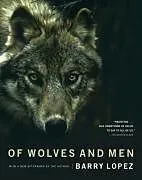
Of Wolves and Men
Beschreibung
Zusatztext Whitley Streiber Washington Post Brilliant...a work of intelligence! dedication and beauty! deserving the widest possible attention not only for the sake of wolves but also for the sake of men. Informationen zum Autor Barry Lopez (19452020) was the ...Format auswählen
- BroschiertCHF 22.70

Wird oft zusammen gekauft
Andere Kunden kauften auch
Beschreibung
Zusatztext Whitley Streiber Washington Post Brilliant...a work of intelligence! dedication and beauty! deserving the widest possible attention not only for the sake of wolves but also for the sake of men. Informationen zum Autor Barry Lopez (19452020) was the author of three collections of essays, including Horizon ; several story collections; Arctic Dreams , for which he received the National Book Award; Of Wolves and Men , a National Book Award finalist; and Crow and Weasel , a novella-length fable. He contributed regularly to both American and foreign journals and traveled to more than seventy countries to conduct research. He was the recipient of fellowships from the Guggenheim, Lannan, and National Science Foundations and was honored by a number of institutions for his literary, humanitarian, and environmental work.Nate Blakeslee is a writer-at-large for Texas Monthly in Austin. He is the author of the New York Times bestseller American Wolf. Klappentext "The wolf exerts a powerful influence on the human imagination. It takes your stare and turns it back on you." In this astonishing classic, Barry Lopez draws upon an impressive range of natural history, scientific fieldwork, and traditional folklorealong with his own personal experience living among captive and free-ranging wolvesto reveal the curious, controversial nature of Canis lupus . Now with a new preface by bestselling author Nate Blakeslee, Of Wolves and Men is wildlife literature at its finest. Chapter One ORIGIN AND DESCRIPTION Imagine a wolf moving through the northern woods. The movement, over a trail he has traversed many times before, is distinctive, unlike that of a cougar or a bear, yet he appears, if you are watching, sometimes catlike or bearlike. It is purposeful, deliberate movement. Occasionally the rhythm is broken by the wolf's pause to inspect a scent mark, or a move off the trail to paw among stones where a year before he had cached meat. The movement down the trail would seem relentless if it did not appear so effortless. The wolf's body, from neck to hips, appears to float over the long, almost spindly legs and the flicker of wrists, a bicycling drift through the trees, reminiscent of the movement of water or of shadows. The wolf is three years old. A male. He is of the subspecies occidentalis, and the trees he is moving among are spruce and subalpine fir on the eastern slope of the Rockies in northern Canada. He is light gray; that is, there are more blond and white hairs mixed with gray in the saddle of fur that covers his shoulders and extends down his spine than there are black and brown. But there are silver and even red hairs mixed in, too. It is early September, an easy time of year, and he has not seen the other wolves in his pack for three or four days. He has heard no howls, but he knows the others are about, in ones and twos like himself. It is not a time of year for much howling. It is an easy time. The weather is pleasant. Moose are fat. Suddenly the wolf stops in mid-stride. A moment, then his feet slowly come alongside each other. He is staring into the grass. His ears are rammed forward, stiff. His back arches and he rears up and pounces like a cat. A deer mouse is pinned between his forepaws. Eaten. The wolf drifts on. He approaches a trail crossing, an undistinguished crossroads. His movement is now slower and he sniffs the air as though aware of a possibility for scents. He sniffs a scent post, a scrawny blueberry bush in use for years, and goes on. The wolf weighs ninety-four pounds and stands thirty inches at the shoulder. His feet are enormous, leaving prints in the mud along a creek (where he pauses to hunt crayfish but not with much interest) more than five inches long by just over four wide. He has two fractured ribs, broken by a moose a year before. They are ...
Whitley Streiber Washington Post Brilliant...a work of intelligence, dedication and beauty, deserving the widest possible attention not only for the sake of wolves but also for the sake of men.
Autorentext
Barry Lopez (1945–2020) was the author of three collections of essays, including Horizon; several story collections; Arctic Dreams, for which he received the National Book Award; Of Wolves and Men, a National Book Award finalist; and Crow and Weasel, a novella-length fable. He contributed regularly to both American and foreign journals and traveled to more than seventy countries to conduct research. He was the recipient of fellowships from the Guggenheim, Lannan, and National Science Foundations and was honored by a number of institutions for his literary, humanitarian, and environmental work.
Nate Blakeslee is a writer-at-large for Texas Monthly in Austin. He is the author of the New York Times bestseller American Wolf.
Klappentext
"The wolf exerts a powerful influence on the human imagination. It takes your stare and turns it back on you."
In this astonishing classic, Barry Lopez draws upon an impressive range of natural history, scientific fieldwork, and traditional folklore—along with his own personal experience living among captive and free-ranging wolves—to reveal the curious, controversial nature of Canis lupus. Now with a new preface by bestselling author Nate Blakeslee, Of Wolves and Men is wildlife literature at its finest.
Zusammenfassung
Originally published in 1978, this classic exploration of humanity’s complex relationship with and understanding of wolves returns with a new afterword by the author.
Humankind's relationship with the wolf is the sum of a spectrum of responses ranging from fear to admiration and affection. Lopez’s classic, careful study has won praise from a wide range of reviewers and improved the way books on wild animals are written. Of Wolves and Men explores the uneasy interaction between wolves and civilization over the centuries, and the wolf's prominence in our thoughts about wild creatures. Drawing upon an impressive array of literature, history, science, and mythology as well as extensive personal experience with captive and free-ranging wolves, Lopez argues for the wolf's preservation and immerses the reader in its sensory world, creating a compelling portrait of the wolf both as a real animal and as imagined by different kinds of men. A scientist might perceive the wolf as defined by research data, while an Eskimo hunter sees a family provider much like himself. For many Native Americans the wolf is also a spiritual symbol, a respected animal that can strengthen the individual and the community. With irresistible charm and elegance, Of Wolves and Men celebrates careful scientific fieldwork, dispels folklore that has enabled the Western mind to demonize wolves, explains myths, and honors indigenous traditions, allowing us to understand how this remarkable animal has become so prominent for so long in the human heart.
Leseprobe
Chapter One
ORIGIN AND DESCRIPTION
Imagine a wolf moving through the northern woods. The movement, over a trail he has traversed many times before, is distinctive, unlike that of a cougar or a bear, yet he appears, if you are watching, sometimes catlike or bearlike. It is purposeful, deliberate movement. Occasionally the rhythm is broken by the wolf's pause to inspect a scent mark, or a move off the trail to paw among stones where a year before he had cached meat.
The movement down the trail would seem relentless if it did not appear so effortless. The wolf's body, from neck to hips, appears to float over the long, almost spindly legs and the flicker of wrists, a bicycling drift through the trees, reminiscent of the movement of water or of shadows.
The wolf is three years old. A male. He is of the subspecies occidentalis, and the trees he is moving among are spruce and subalpine fir on the eastern…