
IHR WARENKORB IST AKTUELL LEER.
Haben Sie noch nichts passendes gefunden? Stöbern Sie durch unser komplettes Sortiment.
Oder melden Sie sich an bzw. registrieren Sie sich.
- Kostenlose Lieferung
- Kauf auf Rechnung
- Ex Libris Tiefpreis
- Filiallieferung und 650+ Abholorte
- Rabatt-Bons als Club-Mitglied
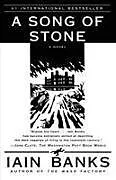
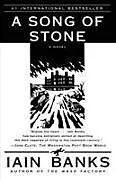
A Song of Stone
Beschreibung
Kirkus Reviews A daring, deeply unsettling meditation On the very human face of evil. Autorentext The Wasp Factory Klappentext "Publishers Weekly"[Banks's] impeccable prose undulates with poetry and sensuality that transform the most ordinary movements of his ...Format auswählen
- Kartonierter EinbandCHF 26.70

Wird oft zusammen gekauft
Andere Kunden kauften auch
Beschreibung
Kirkus Reviews A daring, deeply unsettling meditation On the very human face of evil.
Autorentext
The Wasp Factory
Klappentext
"Publishers Weekly"[Banks's] impeccable prose undulates with poetry and sensuality that transform the most ordinary movements of his tale into resonant images of beauty and terror.
Zusammenfassung
A European nation not unlike Bosnia: armed forces roam the lawless land where dark columns of smoke rise up from the surrounding farms and houses. The war is ending, perhaps ended. But for the castle and its occupants, a young lord and lady, the trouble is just beginning.
Fearing an invasion of soldiers, the amorous couple takes to the road with the other refugees, disguised in rags. But the brutal female lieutenant of an outlaw band of guerrillas has other ideas. Just hours into their escape, the fleeing aristocrats are delivered back to the castle, where, now prisoners in their own home, they become pawns in the lieutenant's dangerous game of desire, deceit, and death.
A Song of Stone demonstrates Iain Banks's unique ability to combine gripping narrative with a soaring, voyaging imagination. This noir fable confirms his reputation as the master of things dark and debauched. Singular, haunting, and viciously wry, A Song of Stone is a tour de force of contemporary fiction.
Leseprobe
Chapter One
Winter always was my favourite season. Is this yet winter? I do not know. There is some technical definition, something based on calendars and the position of the sun, but I think one simply becomes aware that the tide of the seasons has irrevocably turned; that the animal in us smells winter. Disregarding the imposed grid of our chronology, winter is something inflicted upon our half-world, something taken away from the land by the cold and cooling sky and the low and lowering sun, something that permeates the soul, and enters the mind through the nose, between the teeth and across the porous barrier of the skin.
A raw wind picks and stirs small spirals of leaves across the broken grey surface of the road and dumps them scattering in the cold puddles of water at the bottom of the ditches. The leaves are yellow, red, ochre and brown; the colours of burning in the midst of this damp chill. Some leaves remain on the trees overlooking the road; no ice rims the ditches' mean trickle, and on both sides of the plain the hills are free of snow under a mid-day sun within a wide slice of cloud-free sky. But still it feels like all autumn's past. Northwards, in the distance, a few mountains hide behind a grey besieging fleet of clouds. Perhaps there is snow there, on those peaks, but we are not allowed to see it yet. The wind comes from the north, pushing veils of rain down the hills towards us. Across the fields to the south -- some trample-blonde and wasted, some harvested and earth-bare, a few pitted with craters -- columns of smoke climb, shifted aslant by the freshening breeze. For a moment, the wind smells both of rain and burning.
Those around us, our fellow refugees, mutter and stamp their feet on the greasy surface of the road. We are, or were, a stream of humanity, a surge of outcast people, arterial and quick in this quiet landscape, but now something holds us up. The wind dies again, and on its ebb I smell the sweat of unwashed bodies and the scent of the two horses pulling our makeshift wagon.
You reach up from behind me and hold my elbow, squeezing.
I turn back to you, brushing a wisp of jet-black hair away from your brow. Around you are clustered the bags and chests we thought to take, stuffed with whatever we hoped might prove useful for us but not too tempting to others. A few more precious items are hidden within and beneath the carriage. You have been sitting with your back to me in the open carriage, looking back along our route, perhaps trying to see the home we left, but now you are twisting round on the seat, trying to see past me, a frown troubling your expression like a flaw in a statue's marble face.
'I don't know why we've stopped,' I tell you. I stand up for a moment, looking out over the heads of the people in front of us. A tall-bodied truck fifty metres ahead hides the view beyond; the road here is straight for a kilometre or so, between the fields and the woods (our fields, our woods, our lands, as I still think of them).
This morning, when we and our few servants joined the flow of people, carts and vehicles, it stretched unbroken out of sight both up and down the road; a continuity of the displaced, all moving, shuffling, eyes cast downwards, trundling from roughly west to vaguely east. I had never seen such a mass of people; a river of souls upon that road. They reminded me of childhood paper-people, outlines cut from compressed newspapers and then pulled out, all linked, all similar, all slightly different, all taking their shape from what has been removed and -- fragile, flammable, disposable -- by their nature demanding some suitable ill-use. We joined them easily enough, fitting in yet standing out.
Some noises come from ahead. They may be shouts; then I hear the dry crackle of small-arms fire, sparse and sharp in the resuming wind. My mouth becomes dry. The people around us -- families, mostly, little groups of kin -- seem to shrink in on themselves. I can hear a child crying. A couple of our servants, leading the horses, glance back at us. After a while, a new, closer smudge of smoke rises from beyond the tall truck ahead. A little later still, the queue of people and vehicles starts to move again. I flick the reins and the two brown mares clop onwards. The tall truck's exhaust gives up a cloud of smoke.
'Were those shots?' you ask, turning and standing and looking past my arm. I smell your scent, the soap from your last bath this morning in the castle, like a floral memory of summer.
'I think so.'
The mares edge us onward. The smell of the truck's diesel fumes lies briefly across the wind. Tied, hidden, under the carriage there are six drums of diesel, two of petrol and one of oil. We left our vehicles in the castle yard, reckoning the horses and this carriage could take us further towards whatever safety's to be found than could the motors. There is more to that calculation than just miles per gallon or kilometres per litre; from all the rumours, and indeed from the little we've seen so far, working vehicles, and particularly those capable of going off-road, attract the attention of exactly those we are currently trying to avoid. Just so the castle, seemingly so strong, only draws trouble to it. I have to keep telling myself -- and you -- that we have done the best thing, leaving our home to save it; those no doubt already picking over it are welcome to what they can carry.
The smoke ahead of us grows thicker, comes closer. I think perhaps a more possessive, less protective soul than mine would have burned the castle, this morning, when we left. But I could not. It would, no doubt, have felt good to deprive those threatening us their stolen reward, but still I could not do it.
Uniformed men with guns -- uniforms and weapons both various, irregular -- are shouting at the tall truck ahead of us. It lumbers off the road and into the entrance to a field, letting those behind it pass on by. The column of refugees ahead, a stream of folk, all heads and hats and hoods and wobbling piled-up carts, stretches towards the horizon.
We come to the source of the smoke, and by that rising column, ours stops again. By the road there is a burning van; it lies tipped in the ditch, not quite on its side; an open trailer behind it sticks its rear into the air, its contents spilled from beneath a dark tarpaulin. The van pulses with fire, flames spilling from its broken screen and windows, smoke bustling from its flung-open rear doors. Our fellow travellers, at least those on foot, bunch to the…