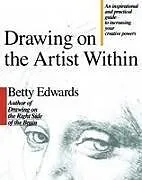
Drawing on to the Artist within
Beschreibung
Informationen zum Autor Dr. Betty Edwards is Professor of Art at California State University, Long Beach. Her original contributions to the art of drawing and creativity have reached far beyond the college classroom where she has taught for many years. Her wor...Format auswählen
- BroschiertCHF 21.85

Wird oft zusammen gekauft
Andere Kunden kauften auch
Beschreibung
Informationen zum Autor Dr. Betty Edwards is Professor of Art at California State University, Long Beach. Her original contributions to the art of drawing and creativity have reached far beyond the college classroom where she has taught for many years. Her work has been praised by a wide range of distinguished psychologists and educators, and she has conducted creativity seminars and workshops for leading businesses including IBM and General Electric. Klappentext The brilliant sequel to Edwards' bestselling classic Drawing on the Right Side of the Brain, now in paperback. Here, Edwards expands on her earlier techniques, using the visual language of drawing to unlock the full creative potential of the human unconscious and apply that power to everyday problems. Black-and-white drawings and photographs throughout. Chapter 1 Creativity: The Chameleon Concept What on earth is creativity? How can a concept be so important in human thinking, so crucial to human history, so dearly valued by nearly everyone yet be so elusive? Creativity has been studied, analyzed, dissected, documented. Educators discuss the concept as if it were a tangible thing, a goal to be attained like the ability to divide numbers or play the violin. Cognitive scientists, fascinated by creativity, have produced volumes of bits and pieces, offering tantalizing glimpses and hints, but have not put the parts together into an understandable whole. To date we still have no generally accepted definition of creativity -- no general agreement on what it is, how to learn it, how to teach it, or if, indeed, it can be learned or taught. Even the dictionary finesses definition with a single cryptic phrase: "creativity: the ability to create," and my encyclopedia avoids the difficulty altogether with no entry, even though another admittedly elusive concept, "intelligence," is allotted a full-length column of fine print. Nevertheless, books abound on the subject as seekers after creativity pursue a concept that seems paradoxically to recede at the same pace at which the pursuers advance. Drawing on Treasure-Hunt Notes The trail, fortunately, is at least marked with pointers to guide the chase. Letters and personal records, journals, eyewitness accounts, descriptions, and biographies are in abundance, gathered from creative individuals and their biographers over past centuries. Like clues in a treasure hunt, these notations spur the quest, even though (as in any good treasure hunt) they often seem illogical and indeed frequently contradict each other to confuse the searcher. Recurring themes and ideas in the notes, however, do reveal some hazy outlines of the creative process. The picture looks like this: the creative individual, whose mind is stored with impressions, is caught up with an idea or a problem that defies solution despite prolonged study. A period of uneasiness or distress often ensues. Suddenly, without conscious volition, the mind is focused and a moment of insight occurs, often reported to be a profoundly moving experience. The individual is subsequently thrown into a period of concentrated thought (or work) during which the insight is fixed into some tangible form, unfolding, as it were, into the form it was intended to possess from the moment of conception. This basic description of the nature of the creative process has been around since antiquity. The story of Archimedes´ sudden insight, while he was sitting in the bathtub mulling over the problem of how to determine the relative quantities of gold and silver in the king´s crown, has put his exclamation "Eureka!" (I have found it!) permanently into the language as the "Ah-Ha!" of creativity. A Scaffolding of Stages Successive steps in the creative process, however, were not categorized until late in the nineteenth century, when the German physiologist and physicist Herman He...
Autorentext
Dr. Betty Edwards is Professor of Art at California State University, Long Beach. Her original contributions to the art of drawing and creativity have reached far beyond the college classroom where she has taught for many years. Her work has been praised by a wide range of distinguished psychologists and educators, and she has conducted creativity seminars and workshops for leading businesses including IBM and General Electric.
Klappentext
The brilliant sequel to Edwards' bestselling classic Drawing on the Right Side of the Brain, now in paperback. Here, Edwards expands on her earlier techniques, using the visual language of drawing to unlock the full creative potential of the human unconscious and apply that power to everyday problems. Black-and-white drawings and photographs throughout.
Zusammenfassung
Whether you are a business manager, teacher, writer, technician, or student, you'll find Drawing on the Artist Within the most effective program ever created for tapping your creative powers. Profusely illustrated with hundreds of instructional drawings and the work of master artists, this book is written for people with no previous experience in art.
AH-HA! I SEE IT NOW!
Everyone has experienced that joyful moment when the light flashes on -- the Ah-Ha! of creativity.
Creativity. It is the force that drives problem-solving, informs effective decision-making and opens new frontiers for ambition and intelligence. Those who succeed have learned to harness their creative power by keeping that light bulb turned on.
Now, Betty Edwards, author of Drawing on the Right Side of the Brain, the million-copy best-seller that proved all people can draw well just as they can read well, has decoded the secrets of the creative process to help you tap your full creative potential and apply that power to everyday problems. How does Betty Edwards do this? Through the power of drawing -- power you can harness to see problems in new ways.
You will learn how the creative process progresses from stage to stage and how to move your own problem-solving through these key steps:
- First insight
- Saturation
- Incubation
- Illumination (the Ah-Ha!)
Verification
Through simple step-by-step exercises that require no special artistic abilities, Betty Edwards will teach you how to take a new point of view, how to look at things from a different perspective, how to see the forest and the trees, in short, how to bring your visual, perceptual brainpower to bear on creative problem-solving.
Leseprobe
Chapter 1Creativity: The Chameleon Concept
What on earth is creativity? How can a concept be so important in human thinking, so crucial to human history, so dearly valued by nearly everyone yet be so elusive?
Creativity has been studied, analyzed, dissected, documented. Educators discuss the concept as if it were a tangible thing, a goal to be attained like the ability to divide numbers or play the violin. Cognitive scientists, fascinated by creativity, have produced volumes of bits and pieces, offering tantalizing glimpses and hints, but have not put the parts together into an understandable whole. To date we still have no generally accepted definition of creativity -- no general agreement on what it is, how to learn it, how to teach it, or if, indeed, it can be learned or taught. Even the dictionary finesses definition with a single cryptic phrase: "creativity: the ability to create," and my encyclopedia avoids the difficulty altogether with no entry, even though another admittedly elusive concept, "intelligence," is allotted a full-length column of fine print. Nevertheless, books abound on the subject as seekers after creativity pursue a concept that seems paradoxically to recede at the same pace at which the pursuers advance.
Drawing on Treasure-Hunt Notes
The trail, fortunately, is at least marked with pointers to guide the chase. Letters and personal records, journals, eyewitness accounts, descriptions, and biographies are in abund…