
IHR WARENKORB IST AKTUELL LEER.
Haben Sie noch nichts passendes gefunden? Stöbern Sie durch unser komplettes Sortiment.
Oder melden Sie sich an bzw. registrieren Sie sich.
- Kostenlose Lieferung
- Kauf auf Rechnung
- Ex Libris Tiefpreis
- Filiallieferung und 650+ Abholorte
- Rabatt-Bons als Club-Mitglied
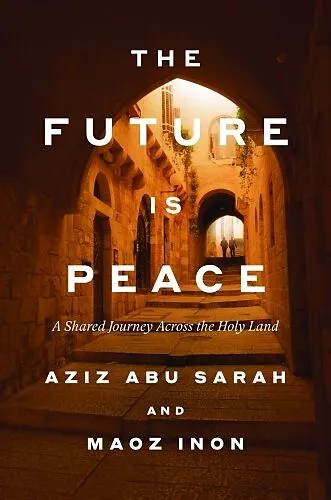
The Future Is Peace
Beschreibung
Two lifelong peace activists and guides to Israel/Palestine, both of whom have lost family in the conflict, take readers on a revealing life-changing journey across this holy, bloodstained land and discover the mythic, political, and personal history that divi...Format auswählen
- Kartonierter EinbandCHF 23.50
- BroschiertCHF 36.70
Wird oft zusammen gekauft
Andere Kunden kauften auch
Beschreibung
Two lifelong peace activists and guides to Israel/Palestine, both of whom have lost family in the conflict, take readers on a revealing life-changing journey across this holy, bloodstained land and discover the mythic, political, and personal history that divides but also binds them and their peoples.
<“We live next to one another, yet we are segregated by roadblocks and checkpoints. We share the same dream of a better future for our children, but we are so divided by fear and anger that we cannot recognize one another''s humanity. The wounds of our history run deep, but if we are to build a shared future, we must bring down the walls of ignorance and hatred that divide us.”<
Palestinian Aziz Abu Sarah and Israeli Maoz Inon are unlikely peacemakers, dedicated to finding a solution to the bitter war that has decimated historical, ancient land and ended family lines. Despite the losses they have suffered, the resolve of their friendship has taught them that strength and unity are more powerful than the violence of separation. Throughout their travels, they have been constantly asked: In the face of so much pain and suffering on both sides, when there have been so many lives lost and families shattered, how can they ever find hope? Their answer is always the same. One cannot find hope. We must create it.
In <The Future Is Peace<, Sarah and Inon take readers on their unforgettable weeklong journey across the holy land while exploring each other''s personal and national histories in a land of competing narratives, amid the turbulent push and pull of near constant war, and the recent devastation that has rocked the world. Their mission—to explain the naivete in believing that more violence can bring security and prosperity to either people while in search of a true and lasting peace. Pairing unapologetic candor and inspirational prose, Sarah and Inon are sending a message to humanity that the people have the power to make change. Peace is achievable, not just between the river and the sea, but throughout the world....
Autorentext
Aziz Abu Sarah is a peace builder, cultural educator, entrepreneur, author, and international speaker. Aziz’s educational and conflict resolution work throughout the world has earned him the titles of National Geographic Explorer and TED Fellow. He has spoken at international organizations and conferences including The United Nations, Nexus, and the European Parliament. He has written opinion pieces for The New York Times, The Washington Post, Al-Quds, Haaretz, and has been published by CNN and Al Arabiya.
Maoz Inon is an Israeli peace activist and entrepreneur. He was honored with the prestigious Franco-German Human Rights Prize and the Shared Living Award from Abraham Initiatives. He has spoken at organizations like Capitol Hill, U.S. universities, and the European Parliaments. He has written pieces for Washington Post, Guardian, Al Jazeera, Haaretz, and more. He has founded several peace-focused initiatives within Israel and the Middle East, including the Jesus Trail, Fauzi Azar Inn, and Abraham Hostel & Tour brands.
Klappentext
**NEW YORK TIMES BESTSELLER • Two lifelong peace activists and guides to Israel/Palestine, both of whom have lost family in the conflict, take readers on a revealing life-changing journey across this holy, bloodstained land and discover the mythic, political, and personal history that divides but also binds them and their peoples.
“[A] short but immensely poignant account of a shared journey across Israel and the West Bank . . . raw with pain and rage and yet bravely insistent on the imperative of hope.”—*The New York Times
“We do not see ourselves as Palestinians and Israelis, or as Jews and Arabs, but as human beings who believe in fostering a culture of dialogue, a culture of forgiveness, and a culture of peace. To those who see only division lines, we say: If you must divide us, let it be as those who believe in peace and equality and those who don’t ... yet.”
Palestinian Aziz Abu Sarah and Israeli Maoz Inon forged a bond of brotherhood when the world expected them to be enemies. Both have lost family to the conflict. Both have known the bitterness of righteous anger. Yet, they chose a different path.
In The Future Is Peace, Sarah and Inon take readers on a transformative weeklong journey across a sacred and bloodstained land. Facing competing narratives, they explore how compassion and unity can pull humanity back from the precipice of blind hatred. Throughout their travels, they have been constantly asked: In the face of so much loss, how can we ever find hope? Their answer is always the same. One cannot find hope. We must create it.
This book is a rebuttal to a broken world and a bold challenge to the belief that more violence can ever bring security. Told with unflinching honesty, their story is proof that peace is not a naive dream, but a courageous choice—for reconciliation to heal the wounds of revenge, for partnerships to change a destiny of war, and for empathy to save us from drowning in sorrow.
Pairing unapologetic candor and inspirational prose, Sarah and Inon are sending an urgent message that the people have the power to make change. Peace is inevitable. For Palestinians, for Israelis, and for the world that awaits their example, it is not just possible—it is the future.
Leseprobe
Day 1
Origins and Aftermath
Western Negev
נגבמערבי النقب
Maoz
מָעוֹז
The last time I talked to my father was at 7:31 a.m. on October 7, 2023. I was still in bed that Saturday morning when I checked my phone and saw that my father had sent a message on WhatsApp. “Morning. Sitting in the safe room,” he had written an hour earlier. “We locked the house. Hearing missiles firing. Not sure what’s going on.”
I got up and went to the kitchen to make a cup of coffee. As crazy as that sounds, I wasn’t initially alarmed by his message. When I was fourteen my family had moved from Kibbutz Nir Am, the community inside the Gaza Envelope where I was born and raised, to Netiv HaAsara, the closest Israeli community to the Gaza Strip. The house my parents built there together was less than a quarter mile from the northern border fence. For the past twenty years, a steady soundtrack of rockets, sirens, and gunfire had been the reality for Israelis and Palestinians living close to the border. This kind of thing had become “normal.”
After seeing footage on social media of pickup trucks with masked gunmen driving through Sderot, a city five miles southeast of their home, I called my father. He answered right away and said they could hear air-raid sirens and gunfire, but that he and my mother were fine. He sounded calm, so we agreed to talk again in a little while. “I love you,” we both said, and ended the call. Within minutes, my phone was flooded with news alerts reporting that Hamas militants had crossed the border fence on motorized paragliders. I called my father back. This time, he did not answer.
As word spread of attacks on Israeli communities along the border with Gaza and clashes between Hamas and IDF (Israel Defense Forces) soldiers, my siblings and I gathered with our partners and children at my sister Maayan’s house in Avi’el, a village in northern Israel about halfway between Tel Aviv and Haifa. Our younger brother, Magen, who lives in London with his wife and children, booked a flight and was on his way home to join us. All morning our phones were buzzing with alerts, messages, and calls. We stayed g…