I, Medusa
Beschreibung
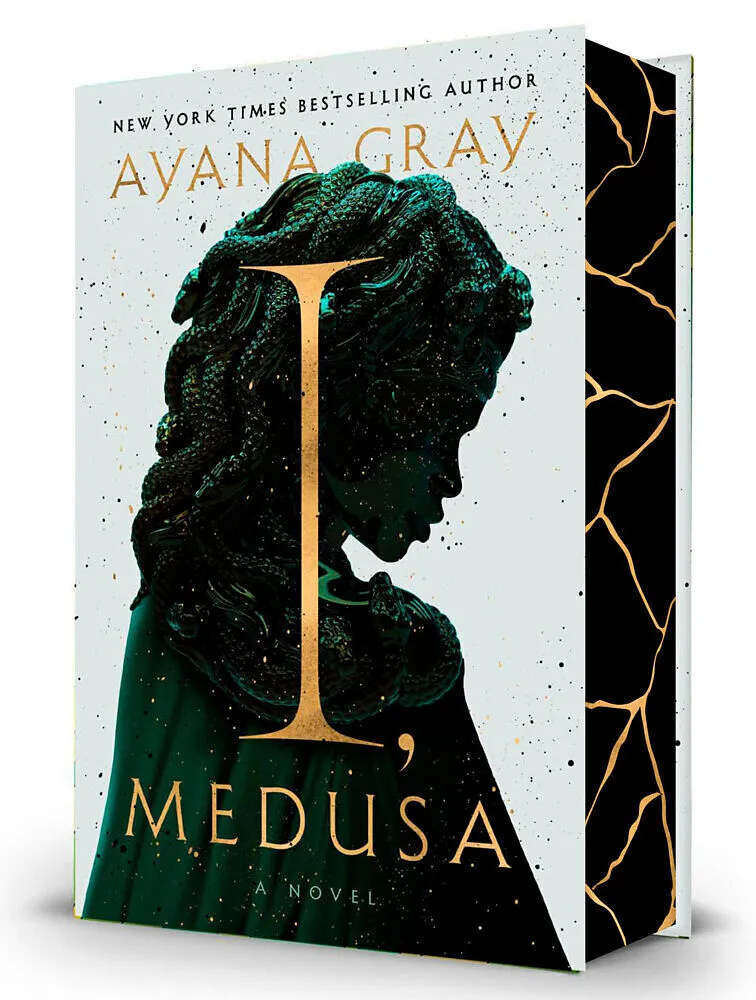
From The first edition hardcover will feature stunning sprayed edges, a premium dust jacket with foil, and a gorgeous custom-stamped case--while supplies last! “Ayana Gray brings her fresh, dynamic storytelling to one of the most monstered, maligned, and...Format auswählen
- Fester EinbandCHF 31.60
- Kartonierter EinbandCHF 34.00

Wird oft zusammen gekauft
Andere Kunden kauften auch
Beschreibung
From The first edition hardcover will feature stunning sprayed edges, a premium dust jacket with foil, and a gorgeous custom-stamped case--while supplies last! “Ayana Gray brings her fresh, dynamic storytelling to one of the most monstered, maligned, and misunderstood women of Greek myth, imagining all the girls that Medusa was and could have been.”--Jennifer Saint, bestselling author of Meddy has spent her whole life as a footnote in someone else’s story. Out of place next to her beautiful, immortal sisters and her parents--both gods, albeit minor ones--she dreams of leaving her family’s island for a life of adventure. So when she catches the eye of the goddess Athena, who invites her to train as an esteemed priestess in her temple, Meddy leaps at the chance to see the world beyond her home. In the colorful market streets of Athens and the clandestine chambers of the temple, Meddy flourishes in her role as Athena’s favored acolyte, getting her first tastes of purpose and power. But when she is noticed by another Olympian, Poseidon, the course of Meddy’s promising future is suddenly and irrevocably altered. When her locs are transformed into snakes as punishment for a crime she did not commit, Medusa must embrace a new identity--not as a victim, but as a vigilante--and with it, the chance to write her own story as mortal, martyr, and myth. Exploding with rage, heartbreak, and love, <I, Medusa< portrays a young woman caught in the crosscurrents between her heart’s deepest desires and the cruel, careless games the Olympian gods play.
Autorentext
Ayana Gray
Klappentext
**NEW YORK TIMES BESTSELLER • A “captivating villain origin story” (People Book of the Week) reimagining one of the most iconic monsters in Greek mythology as a provocative and powerful young heroine
This hardcover edition features a premium dust jacket with foil and a gorgeous custom-stamped case!**
“Ayana Gray brings her fresh, dynamic storytelling to one of the most monstered, maligned, and misunderstood women of Greek myth, imagining all the girls that Medusa was and could have been.”—Jennifer Saint, bestselling author of Ariadne
AN NPR BEST BOOK OF THE YEAR
Meddy has spent her whole life as a footnote in someone else’s story. Out of place next to her beautiful, immortal sisters and her parents—both gods, albeit minor ones—she dreams of leaving her family’s island for a life of adventure. So when she catches the eye of the goddess Athena, who invites her to train as an esteemed priestess in her temple, Meddy leaps at the chance to see the world beyond her home.
In the colorful market streets of Athens and the clandestine chambers of the temple, Meddy flourishes in her role as Athena’s favored acolyte, getting her first tastes of purpose and power. But when she is noticed by another Olympian, Poseidon, the course of Meddy’s promising future is suddenly and irrevocably altered.
When her locs are transformed into snakes as punishment for a crime she did not commit, Medusa must embrace a new identity—not as a victim, but as a vigilante—and with it, the chance to write her own story as mortal, martyr, and myth.
Exploding with rage, heartbreak, and love, I, Medusa portrays a young woman caught in the crosscurrents between her heart’s deepest desires and the cruel, careless games the Olympian gods play.
Leseprobe
I
“Meddy!”
I straighten at the sound of my name, doing my best to look attentive. The effort is entirely wasted on my mother. Her dark, glittering eyes are already fixed on me, and narrowed with familiar disapproval.
“You aren’t paying attention,” she accuses. “Do it again.”
I stifle a whine as she ushers me, none too gently, to the center of our veranda. Once I am in the correct stance, she claps.
“Begin.”
A slave seated nearby on a wooden stool starts to pluck a short-necked lute, filling the warm morning air with a sweet melody. On cue, I pivot, raising my arms and clapping in time with the music while attempting to ignore the stiff ache in my biceps. I focus on the heady scent of flowers in the distance, on the hard press of the tile against the ball of my foot. I try to lose myself in the song’s rhythm, and when I close my eyes, I pretend I’m somewhere else, anywhere else. Barely a minute passes before my mother tuts. The music halts.
“Stop grimacing,” she says irritably. “You’re moving like you’re in pain.”
“I am in pain,” I mutter. “I’ve done this dance a hundred times.”
My mother remains unmoved. “You’ll do it a hundred more times, if that’s what it takes,” she warns. “You must be perfect. The gods gracing our halls will expect nothing less.”
This is a reminder I do not need.
Tomorrow night, my parents will host a feast under the guise of celebrating the start of spring, but I’ve spent enough time watching the political games of gods to understand the real reason for the occasion. My sisters and I are now all of age, which means it is time to see us made useful. For my parents, this means married.
“The gods of the Sea Court won’t be the only ones in attendance.” My mother speaks as though she were privy to my thoughts. “There may very well be potential suitors present, men of high and noble birth in search of a young bride. It’s all the more reason for you to be at your best.”
“Do any of these men of high and noble birth come from an interesting place?” I ask.
My mother assesses me anew, suspicious. “They could.”
“Do you suppose any of them might bring anything interesting with him, like maps or scrolls from his homeland? I’d love something new to read.” As soon as the words leave my mouth, I know they are a mistake. A young male slave sweeping at the other end of the veranda shakes his head, visibly amused. The two female slaves flanking my mother with sunshades exchange looks of uncertainty.
“Of course not,” my mother snaps. “And I don’t want to hear another word about maps, scrolls, or any other nonsense. Start again.”
I return to the dance’s first position and wait for the lute player to resume. This time, I stumble as I pivot, then trip on the hem of my tunic. Behind me, there’s a poorly disguised snort from one of my sisters. A tingling heat that has nothing to do with the sun overhead creeps up my neck.
“You’re not trying hard enough,” my mother scolds. “Each step should appear light, effortless. I want you to try to move with more grace, like—” She catches herself, but I finish her sentence in my mind.
Like Stheno and Euryale.
I turn to look at my older sisters, not far off, reclined on chaises in the sunlight. Plenty of goddesses—our own mother included—prefer to manipulate their appearances so as to seem ever young. But my sisters truly are twenty-one and nineteen, only a few years older than me. Stheno is like a gazelle—tall, supple, and fine-featured. Euryale is of a more petite build, but she has inherited our mother’s round cheeks and dimpled smile. I don’t like to imagine how I look when I stand next to them. My sisters and I share the same dark, sun-blazed skin. We all favor our parents, but there, our similarities end. At seventeen, I’m still skinny, devoid of any feminine softness about my hips, and I once overheard a slave call my wide-set brown eyes “owlish.”
I sigh. In these moments, I f…