
IHR WARENKORB IST AKTUELL LEER.
Haben Sie noch nichts passendes gefunden? Stöbern Sie durch unser komplettes Sortiment.
Oder melden Sie sich an bzw. registrieren Sie sich.
- Kostenlose Lieferung
- Kauf auf Rechnung
- Ex Libris Tiefpreis
- Filiallieferung und 650+ Abholorte
- Rabatt-Bons als Club-Mitglied
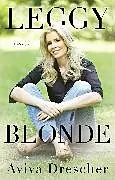
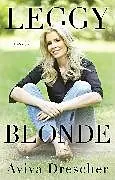
Leggy Blonde
Beschreibung
"Aviva Drescher, the REAL Housewife of New York City, born and bred in Manhattan, shares her REAL story in this tell-all memoir. Aviva Drescher is elegant, sophisticated, well educated, and drop-dead gorgeous. And although we all know her as the newest upstart...Format auswählen
- Kartonierter EinbandCHF 17.00

Wird oft zusammen gekauft
Andere Kunden kauften auch
Beschreibung
"Aviva Drescher, the REAL Housewife of New York City, born and bred in Manhattan, shares her REAL story in this tell-all memoir. Aviva Drescher is elegant, sophisticated, well educated, and drop-dead gorgeous. And although we all know her as the newest upstart from the Real Housewives reality show, there is much more to her than meets the eye.While Aviva is no stranger to controversy, the person beneath the persona is a woman of substance with a fascinating past that is told for the first time in this smart, funny, and beautifully written memoir. Aviva Drescher is far more than just a Leggy Blonde"--
Autorentext
Aviva Drescher is the newest cast member of the hit Bravo TV series The Real Housewives of New York City. Born and raised in Manhattan, Aviva attended The Fieldston School and has a BA from Vassar College. She went on to get her Masters in French Literature from NYU and her JD from Benjamin Cardozo School of Law. Aviva has four children and is married to Reid Drescher, a Wall Street investment banker.
Klappentext
For the first time ever, Drescher, the breakout star of "The Real Housewives of New York City," shares her story in this tell-all memoir.
Zusammenfassung
Blond, beautiful, and brazenly honest, Aviva Drescher—one of the boldest cast members of Bravo’s The Real Housewives of New York City and most talked-about stars of reality TV—shares her REAL story in this tell-all memoir.
From the moment Aviva Drescher stepped her prosthetic leg into the spotlight, she sparked controversy and ratings. Now, for the first time, the native New Yorker stands on her own two feet to speak out on her fascinating life and expose the truth about her many medical and elective surgeries, and what really happens behind the scenes of reality TV.
Aviva tells the story of how she lost her foot in a barn accident at the age of six and the numerous—sometimes bizarre—attempts to reattach it. After a trip to India to be “cured” by a famous mystic, young Aviva learned to use fashion and style to draw attention away from her prosthesis. She fled to Paris in her early twenties, where she transformed herself into a wild club chick and danced on tables with the crème de la crème of the big-hair supermodel era. Then, through a series of tumultuous relationships, Aviva had four children by two husbands, changed religions, got a law degree, and became an entrepreneur. And since getting elective surgery at the age of twenty-six, she has become a powerhouse at raising money for amputees everywhere.
Not only is she elegant, sophisticated, well educated, and drop-dead gorgeous, but Aviva knows how to tell a story—her story—in this beautifully written memoir. Leggy Blonde tells how, through struggle and success, drama and determination, Aviva finally found the strength to show the world who she really is.
Leseprobe
Leggy Blonde
• CHAPTER ONE •
It Only Takes a Second
When I was growing up, my parents had a country house in Delaware County in upstate New York near Oneonta. It used to be a barn. From the outside, the building looked pedestrian in this rural setting. But when you entered the house, you entered a world of ultracozy urban sophistication. My parents renovated it into a 1970s-style retreat with shag carpets, a pit fireplace, water beds, and Danish modern furniture. They dug a pond for swimming, and kept a chicken coop. As a child, few things were more gratifying than reaching into the trap door of the hen house and pulling out a still-warm egg. We had pigs and riding horses, and the garage housed a pair of snowmobiles.
My dad, George, was a Jewish kid from Brooklyn, who had become a successful Manhattan accountant. My mom, Ingrid, was German, a child of wartime who had come to America as a teenager and eventually became a model and Pan Am stewardess. She used to joke that he wanted her for the free travel. Dad was rough around the edges, always cursing and usually shocking people. Mom was elegant and refined, a stunning blond classic beauty. She was constantly saying, “Gorsghe!” with the sweetest German accent whenever he was inappropriate. They met when he was sleeping with one of her model roommates. It was love at first sight. By the time Dad told Mom about his wife and three children, she was already hooked. (Dad’s first marriage ended soon after. He had three young children, my half-siblings. Barbara, the oldest, lives in Oklahoma and has four children. Michele has one child and lives in New York. Her husband runs the Brotherhood Synagogue on Gramercy Park. Billy is an on-again-off-again drug addict and lives alone in Florida.)
My father’s partner in one of his businesses was a man named George Morgan. He lived full time in Delaware County, about fifteen minutes away from our house. The Morgans’ wasn’t just a country retreat; it was a working dairy farm. Picture cows and horses, rolling grazing hills, a city kid’s fantasy of the country.
Dad and George ran tax shelters through some of the local farms. Don’t ask me to explain how that all worked. I have no idea. If it sounds a bit shady, that’s because it was a bit shady. But back in 1977, it was completely legal.
When I was six, our family moved from our Manhattan apartment to our country house for the summer. It began well, with my dad teaching me to ride a two-wheeler. The final test was to ride down the steep hill and brake at the bottom right before hitting the pond. In typical-me fashion, I went right into the pond, bike and all. Dad ran into the water to save me from drowning (luckily, I had just learned how to swim), and the bike from disappearing in the muck.
One night in June, my parents decided I was old enough for a sleepover at the Morgans’ with their daughter Becky. Our families had dinner together at their place, then my parents went home and I stayed. Becky, one of five kids, was seven, and her friend Dawn, who was sleeping over, too, was eleven—which made her four years cooler than Becky. It was one of my first sleepovers. There would be seven kids under one roof, most of them older than me. I was used to nights with my parents and baby brother. This would be a lot more fun.
I don’t remember much about the sleepover itself. There was a storm that night but I wasn’t scared. It must have been okay, because Becky and Dawn still wanted to hang out with me in the morning. The rain had stopped. It was a perfect blue-sky summer day.
Becky said, “Let’s sneak out of the house and ride the barn cleaner in the barn.”
Dawn said, “Cool!”
I said, “Cool!” I would have done whatever they wanted. I had no idea what a barn cleaner was, but I liked the sound of “sneak out” and “ride.” I threw on jeans, a T-shirt, and my favorite Mickey Mouse sneakers. The sneakers were among my most treasured possessions and I wore them proudly. We ran to the barn, laughing. We jumped in muddy puddles and called them chocolate milk. Becky was barefoot.
The barn had a heavy sliding red door. We went inside and saw a lot of cows. Specifically, a lot of cow tochis (Yiddish for behind). The animals were lined up in two rows of about twenty on the left and right sides of the barn. The cows faced the barn wall with their tails toward a center walkway. Positioned right underneath the cows’ backsides was an oblong oval made of steel planks inside a metal casing. It reminded me of a baggage carousel at an airport, except this one was multilayered, narrow, and dirty.
Becky flipped a switch right next to the entrance, and the steel oval started moving. It was surprisingly loud, first clanging into operation and then making a grinding sound as it rotated clockwise. I d…