
IHR WARENKORB IST AKTUELL LEER.
Haben Sie noch nichts passendes gefunden? Stöbern Sie durch unser komplettes Sortiment.
Oder melden Sie sich an bzw. registrieren Sie sich.
- Kostenlose Lieferung
- Kauf auf Rechnung
- Ex Libris Tiefpreis
- Filiallieferung und 650+ Abholorte
- Rabatt-Bons als Club-Mitglied
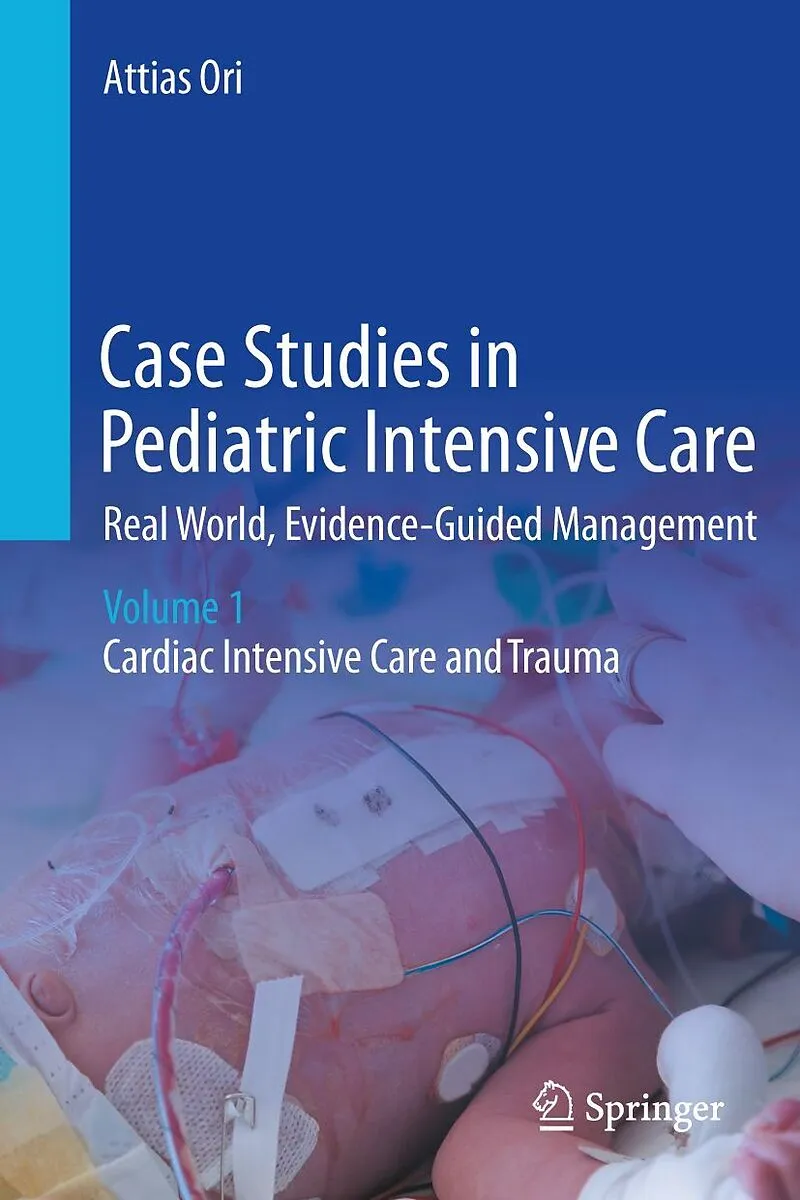
Case Studies in Pediatric Intensive Care-Real World, Evidence-Guided Management
Beschreibung
This book is a comprehensive, case-based exploration of the major and most common life-threatening conditions faced by pediatric intensivists in daily clinical work. The selected topics reflect conditions that demand complex physiologic reasoning, multidiscip...
Format auswählen
- Fester EinbandCHF 186.00

Wird oft zusammen gekauft
Andere Kunden kauften auch
Beschreibung
This book is a comprehensive, case-based exploration of the major and most common life-threatening conditions faced by pediatric intensivists in daily clinical work. The selected topics reflect conditions that demand complex physiologic reasoning, multidisciplinary decision-making, and timely escalation of care. The chapters are built mostly around fictionalized clinical cases that were developed on the basis of authentic patient encounters and, in many instances, integrate elements from more than one real case into a single narrative in order to represent clinical complexity. Complications and management challenges were intentionally embedded throughout the chapters, allowing the book as a whole to address a wide range of diagnostic dilemmas, therapeutic decisions, and adverse events that pediatric intensivists must be prepared to manage. Topics that are introduced briefly in one chapter may be expanded upon in greater depth in others, reflecting a deliberate pedagogical approach that emphasizes cumulative learning, cross-referencing, and conceptual integration across disease categories.
The book is organized into thematically linked sections encompassing major domains of pediatric intensive care, including congenital and acquired cardiac disease, neurocritical care, respiratory failure, shock, trauma, complex infectious syndromes, metabolic and toxicologic emergencies, renal failure, and advanced airway management. Clinical trajectories typically follow patients from initial presentation through intensive care management, the development of complications, advanced organ support, and longer-term outcomes. Each chapter integrates pathophysiologic explanation with evidence-informed diagnostic and therapeutic reasoning, allowing readers to follow the dynamic evolution of critical illness in a clinically authentic manner. Figures and dedicated boxes are used to reinforce key concepts and to highlight essential mechanisms, common pitfalls, and areas of ongoing uncertainty.
This book is intended for pediatric intensivists, fellows in pediatric critical care and related subspecialties, emergency physicians, anesthesiologists, surgeons, and advanced practice providers involved in the care of critically ill children. It is designed not as a protocol manual, but as a case-driven educational and clinical companion that mirrors real-world reasoning, evolving physiology, and the complexity of decision-making in the pediatric intensive care unit. Through its structured yet flexible approach, the book aims to support both advanced training and reflective clinical practice in pediatric critical care.
Bridges guidelines with real-world pediatric ICU decision-making Highlights how to adapt protocols in unstable or uncertain scenarios Strengthens clinical reasoning through expert-guided commentary
Autorentext
Dr. Ori Attias is a consultant in Pediatric Critical Care Medicine at the Ruth Rappaport Children's Hospital, Rambam Health Care Campus, Haifa, Israel, with more than 20 years of clinical experience in the care of critically ill infants and children. Rambam Health Care Campus is one of Israel's largest tertiary academic medical centers and serves as the major referral center for northern Israel. Its Pediatric Intensive Care Unit is a 15-bed multidisciplinary unit that provides advanced care for more than 1,000 critically ill children with complex medical and surgical conditions each year, including patients requiring extracorporeal membrane oxygenation (ECMO) and transplantation.
Dr. Attias received his medical degree from the Hebrew University of Jerusalem and completed his residency in pediatrics and fellowship in pediatric intensive care at Rambam, followed by an advanced clinical fellowship at Great Ormond Street Hospital in London, United Kingdom. Rambam Health Care Campus is affiliated with the Bruce Rappaport Faculty of Medicine, Technion Israel Institute of Technology, where Dr. Attias participates in the teaching and mentoring of medical students as part of his clinical practice.
Dr. Attias's academic work includes peer-reviewed publications in pediatric critical care, nephrology, oncology, and metabolic disease. He has also authored and co-authored chapters in Springer publications, including Abdominal Compartment Syndrome in Pediatric Critical Care Medicine and Easing of Physical Distress in Pediatric Cancer in Palliative Care in Pediatric Oncology . His work focuses on pediatric critical care, evidence-based medicine, and the application of clinical guidelines to complex real-world scenarios.
Klappentext
This book offers a detailed, case-based approach to pediatric intensive care, uniquely bridging the gap between standardized guidelines and the real-time complexity of bedside decision-making. Each chapter presents an in-depth narrative of a critically ill child, from initial presentation to final outcome, highlighting stepwise clinical decisions, evolving diagnostics, and nuanced management strategies. Rather than offering simplified overviews, the cases unfold in rich detail, addressing dynamic physiology, comorbidities, treatment complications, and response to interventions. Management approaches are explicitly mapped to international guidelines (AHA, SCCM, ILCOR, CDH EURO, and others), while also addressing how these frameworks adapt under uncertainty, limited resources, or unexpected deterioration.
Authored by a practicing pediatric intensivist and extensively reviewed by leading pediatric intensivists and subspecialists from around the world, this book integrates expert commentary with academic rigor. Designed for pediatric intensivists, fellows, pediatricians, emergency physicians, pediatric critical care nurse practitioners, critical care nurses, and trainees, this resource enhances clinical reasoning, promotes diagnostic clarity, and supports guideline-informed, context-sensitive care in pediatric intensive care.
Inhalt
Chapter 1: Stage 1 Norwood Palliation with a Sano Shunt in a Neonate with Hypoplastic Left Heart Syndrome.- Chapter 2: Stage 3 Fontan Completion in a Toddler with Hypoplastic Left Heart Syndrome.- Chapter 3: Coarctation of the Aorta in a Newborn.- Chapter 4: d-Transposition of the Great Arteries with Ventricular Septal Defect.- Chapter 5: Tetralogy of Fallot with Pulmonary Atresia.- Chapter 6: Acute Fulminant Myocarditis Due to Influenza B Infection.- Chapter 7: Post-Cardiac Arrest Syndrome and Brain Death/Death Using Neurological Criteria Following Drowning.- Chapter 8: Severe Traumatic Brain Injury in a Pediatric Pedestrian.- Chapter 9: Severe Chest Trauma in a Teenage Athlete.- Chapter 10: Blunt Abdominal Trauma Due to Handlebar Injury.- Chapter 11: Burns, Smoke Inhalation, and Carbon Monoxide Poisoning in a Child.