Beschreibung
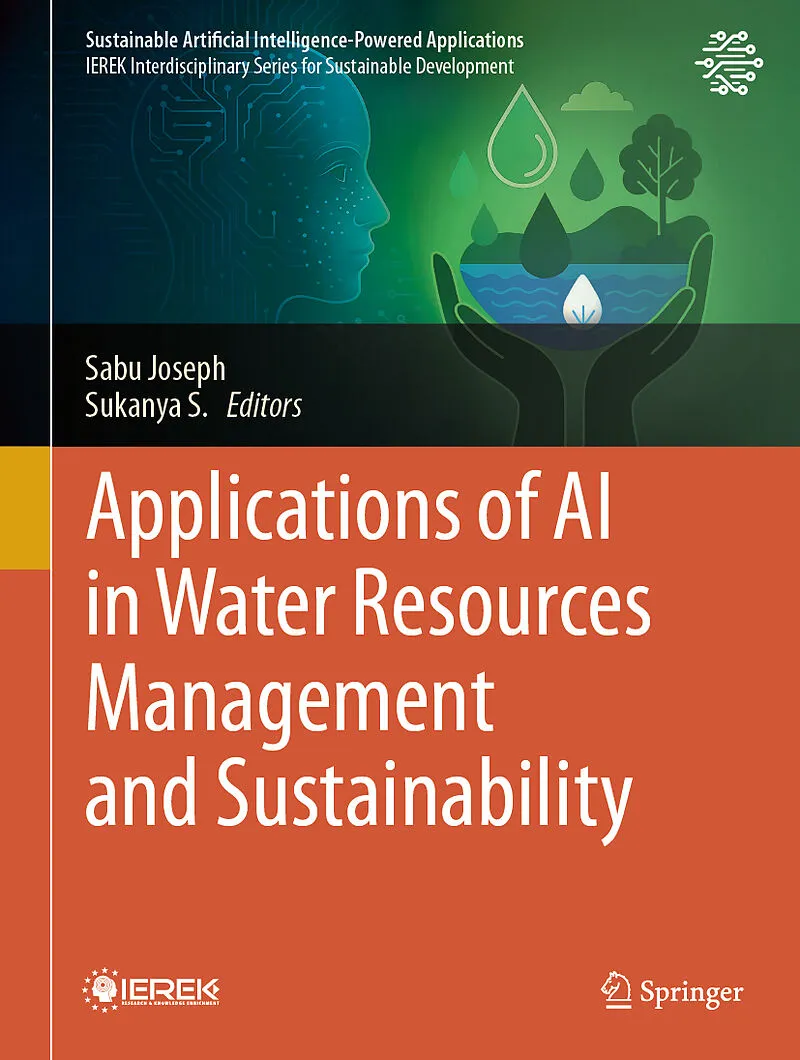
This book offers a comprehensive exploration of the transformative potential of robust, innovative AI techniques like machine learning and deep learning in revolutionizing water management to achieve UN sustainability goals. It highlights AI's pivotal role in...
This book offers a comprehensive exploration of the transformative potential of robust, innovative AI techniques like machine learning and deep learning in revolutionizing water management to achieve UN sustainability goals. It highlights AI's pivotal role in ensuring the efficient, equitable, and sustainable use of water resources, aligning particularly with Sustainable Development Goal 6 (SDG-6) ensuring the availability and sustainable management of water and sanitation for all. Beyond SDG-6, this book highlights AI's critical contributions to other goals, such as promoting sustainable agriculture (SDG-2), building resilient infrastructure and fostering innovation (SDG-9) and creating inclusive, safe, resilient, and sustainable cities (SDG-11), with a special focus on water-stressed regions in the context of climate change.
The book delves into the integration of AI in various aspects of water resource management including enhancing data science processing capabilities, protecting public health and understanding societal impacts. The multifaceted challenge this book addresses is the global issue of water scarcity, quality and distribution, and how AI technologies can be leveraged to provide innovative solutions. It blends theoretical insights with practical applications, serving as a vital resource for those seeking to harness AI for effective water management. Through its comprehensive scope and forward-looking perspective, this book aims to inspire innovation and drive significant progress toward a sustainable water future, ensuring that water resources are managed with efficiency and equity.
Organized into several chapters, each section provides an in-depth analysis and practical insights into specific AI applications within water management domain. Key topics include water quality management, groundwater and surface water resources management, urban and agricultural water solutions, coastal aquifer management, industrial water and wastewater treatment and desalination processes. The book also explores AI's role in promoting a circular water economy and its applications in crucial areas such as hydroclimatology.
Presents the transformative potential of AI technologies in various facets of water resources management Covers applications of AI in Water Resources Management and Sustainability Offers an extensive analysis of the transformative potential of robust, high-tech, AI technologies like machine learning
Autorentext
Dr. Sabu Joseph is Professor and Head of the Department of Environmental Sciences and Dean of the Faculty of Applied Sciences and Technology at University of Kerala, India. He earned his Ph.D. in Geology from the University of Kerala in 1997 and is widely recognized for his expertise in water resources management, isotope hydrology, ecosystem service valuation, remote sensing, and, more recently, the application of artificial intelligence (AI) and machine learning (ML) techniques in water resources research. He has successfully completed six major research projects funded by national and international agencies, including an Indo–Israel collaboration under the UGC Joint Research Program and a project funded by the Board of Research in Nuclear Sciences (BRNS), Government of India.
Dr. Joseph has mentored 14 Ph.D. scholars to completion, guided several postdoctoral fellows, currently supervises eight doctoral candidates and a postdoctoral fellow. His scholarly output includes over 100 peer-reviewed publications, books, and numerous handbook chapters, with recent works such as Environmental Radon: A Tracer for Hydrological Studies (Springer, 2023) and the edited volume Ecosystem Services Valuation for Sustainable Development (Springer, 2024). He serves as Chairman of the Board of Studies in Environmental Sciences, is a member of the Academic Council and Innovation Council of the University of Kerala. In recognition of his contributions, he received the 2024 ‘Paristhidi Mitram’ (Environmental Steward) Award, in environmental research, instituted by Govt. of Kerala, India. He contributes as an expert to various government committees, including the National River Conservation Directorate (NRCD), Ministry of Jal Shakti Department of Water Resources, Government of India. He also coordinates the Department’s Village Adoption Program, serves on editorial boards, reviews for leading journals, and has represented India in academic exchanges and conferences across more than 30 countries. Further, as the Director, Centre for Global Academics, he has been visiting many universities abroad for global academic excellence.
Inhalt