Beschreibung
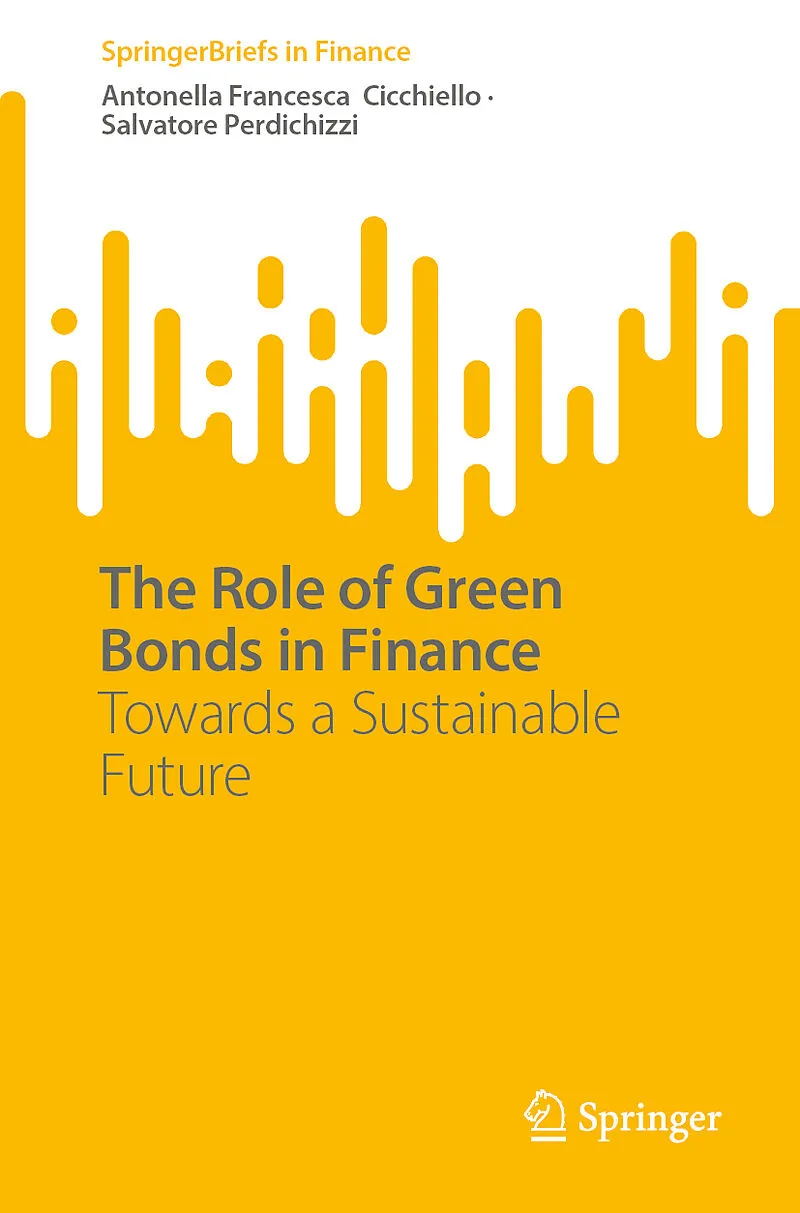
Green bonds have evolved from niche to systemically relevant instruments for reallocating capital toward a low-carbon, circular economy. This book offers a rigorous, accessible guide to green financeusing Europe as the main laboratoryand maps the landscape of...
Green bonds have evolved from niche to systemically relevant instruments for reallocating capital toward a low-carbon, circular economy. This book offers a rigorous, accessible guide to green financeusing Europe as the main laboratoryand maps the landscape of labelled instruments while addressing risks such as greenwashing and data fragmentation. It traces the regulatory architecturefrom the EU Taxonomy to the European Green Bond framework and supervisory standardsshowing how credible definitions, disclosure, and verification underpin market integrity.
The book also clarifies how green bonds differ from conventional debt through use-of-proceeds discipline, ex-ante/post-issuance reporting, and independent external review. Its empirical core examines primary-market issuance yields (the greenium): once controlling for rating, sector, size, and timing, the average greenium is not statistically different from zero; any discount is concentrated in the market's early expansion and appears tied to scarcity and disclosure credibility rather than the label per se.
Finally, the book provides a forward agenda on taxonomy alignment, decision-useful MRV/assurance, and the role of AI in impact measurement and risk management. The volume serves scholars, students, regulators, and practitioners financing environmentally sustainable projects.
Examines the role of green bonds in the fight against climate change Analyses the key factors affecting green bonds issuance and greenium Studies the growth of the green bonds market over time and regulation issues
Autorentext
Antonella Francesca Cicchiello is Associate Professor of Finance at the IAE Business School -Buenos Aires (Argentina). Dr. Cicchiello s teaching and research activities focus on entrepreneurial finance, FinTech, and corporate finance. She also takes an interest in Corporate Social Responsibility (CSR), green finance, and sustainable finance. She has published extensively in both academic and practitioner journals, including the European Journal of Finance, Energy Economics, International Review of Financial Analysis, Finance Research Letters, Journal of Business & Industrial Marketing, Journal of International Financial Management & Accounting, Journal of Emerging Market Finance, and the Journal of International Financial Markets, Institutions & Money. Additionally, Dr Cicchiello serves on the editorial boards of the International Review of Environmental and Resource Economics, the International Journal of Emerging Markets, the European Journal of International Management, the International Journal of Applied Management Science, the World Review of Entrepreneurship, Management and Sustainable Development, and Cogent Economics & Finance. She is also a Research Associate at the Banks Banking Research School Centre of Piacenza, Italy.
Salvatore Perdichizzi is an Associate Professor of Finance in the Department of Economics and Management Marco Fanno at the University of Padua. He is also a Research Fellow at SCANCOR, Stanford University, and serves as an Associate Editor of Finance Research Letters. His research spans monetary policy transmission, empirical banking, green and sustainable finance, and credit and sovereign debt dynamics. He has published in leading journals such as the Journal of Banking & Finance, British Accounting Review, Energy Economics, Industrial and Corporate Change, International Review of Financial Analysis, Economics Letters, and Finance Research Letters. Dr. Perdichizzi is a Research Associate and member of the steering committee of the Yunus Social Business Centre (Bologna). He was a visiting research fellow at Stanford University, Bayes Business School, and the University of Exeter.
Inhalt
Chapter 1: Introduction to green finance and sustainable financing.- Chapter 2: The role of green bonds in the fight against climate change.- Chapter 3: Green versus Brown bonds: are they really priced differently?.- Chapter 4: Conclusion.