
IHR WARENKORB IST AKTUELL LEER.
Haben Sie noch nichts passendes gefunden? Stöbern Sie durch unser komplettes Sortiment.
Oder melden Sie sich an bzw. registrieren Sie sich.
- Kostenlose Lieferung
- Kauf auf Rechnung
- Ex Libris Tiefpreis
- Filiallieferung und 650+ Abholorte
- Rabatt-Bons als Club-Mitglied
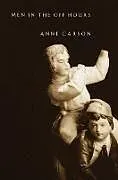
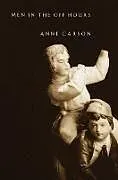
Men in the Off Hours
Beschreibung
Zusatztext "Carson's reputation has soared to a level equal to that of the half-dozen most admired contemporary American poets." The New York Times Book Review Informationen zum Autor ANNE CARSON was born in Canada and has been a professor of Classics for over...Format auswählen
- Poche format BCHF 13.75

Wird oft zusammen gekauft
Andere Kunden kauften auch
Beschreibung
Zusatztext "Carson's reputation has soared to a level equal to that of the half-dozen most admired contemporary American poets." The New York Times Book Review Informationen zum Autor ANNE CARSON was born in Canada and has been a professor of Classics for over thirty years. Her awards and honors include the Lannan Award, the Pushcart Prize, the Griffin Trust Award for Excellence in Poetry, and fellowships from the Guggenheim and MacArthur Foundations. Klappentext Anne Carson has been acclaimed by her peers as the most imaginative poet writing today. In a recent profile, The New York Times Magazine paid tribute to her amazing ability to combine the classical and the modern, the mundane and the surreal, in a body of work that is sure to endure. In Men in the Off Hours, Carson offers further proof of her tantalizing gifts. Reinventing figures as diverse as Oedipus, Emily Dickinson, and Audubon, Carson sets up startling juxtapositions: Lazarus among video paraphernalia, Virginia Woolf and Thucydides discussing war, Edward Hopper paintings illuminated by St. Augustine. And in a final prose poem, she meditates movingly on the recent death of her mother. With its quiet, acute spirituality and its fearless wit and sensuality, Men in the Off Hours shows us a fiercely individual poet at her best. TV Men: Lazarus DIRECTOR OF PHOTOGRAPHY: VOICEOVER Yes I admit a degree of unease about my motives in making this documentary. Mere prurience of a kind that is all too common nowadays in public catastrophes. I was listening to a peace negotiator for the Balkans talk about his vocation on the radio the other day. "We drove down through this wasteland and I didn't know much about the area but I was fascinated by the horrors of it. I had never seen a thing like this. I videotaped it. Then sent a 13-page memo to the UN with my suggestions." This person was a member of the International Rescue Committee, not a man of TV. But you can see how the pull is irresistible. The pull to handle horrors and to have a theory of them. But now I see my assistant producer waving her arms at me to get on with the script. The name Lazarus is an abbreviated form of Hebrew 'El'azar, meaning "God has helped." I have long been interested in those whom God has helped. It seems often to be the case, e.g. with saints or martyrs, that God helps them to far more suffering than they would have without God's help. But then you get someone like Lazarus, a man of no particular importance, on whom God bestows the ultimate benevolence, without explanation, then abandons him again to his nonentity. We are left wondering, Why Lazarus? My theory is God wants us to wonder this. After all, if there were some quality that Lazarus possessed, some criterion of excellence by which he was chosen to be called back from death, then we would all start competing to achieve this. But if God's gift is simply random, well for one thing it makes a more interesting TV show. God's choice can be seen emerging from the dark side of reason like a new planet. No use being historical about this planet, it is just an imitation. As Lazarus is an imitation of Christ. As TV is an imitation of Lazarus. As you and I are an imitation of TV. Already you notice that although I am merely a director of photography, I have grasped certain fundamental notions first advanced by Plato, e.g. that our reality is just a TV set inside a TV set inside a TV set, with nobody watching but Sokrates, who changed the channel in 399 B.C. But my bond with Lazarus goes deeper, indeed nausea overtakes me when faced with the prospect of something simply begi...
Autorentext
ANNE CARSON was born in Canada and has been a professor of Classics for over thirty years. Her awards and honors include the Lannan Award, the Pushcart Prize, the Griffin Trust Award for Excellence in Poetry, and fellowships from the Guggenheim and MacArthur Foundations.
Klappentext
Anne Carson has been acclaimed by her peers as the most imaginative poet writing today. In a recent profile, The New York Times Magazine paid tribute to her amazing ability to combine the classical and the modern, the mundane and the surreal, in a body of work that is sure to endure.
In Men in the Off Hours, Carson offers further proof of her tantalizing gifts. Reinventing figures as diverse as Oedipus, Emily Dickinson, and Audubon, Carson sets up startling juxtapositions: Lazarus among video paraphernalia, Virginia Woolf and Thucydides discussing war, Edward Hopper paintings illuminated by St. Augustine. And in a final prose poem, she meditates movingly on the recent death of her mother. With its quiet, acute spirituality and its fearless wit and sensuality, Men in the Off Hours shows us a fiercely individual poet at her best.
Zusammenfassung
FROM ANNE CARSON, WINNER OF THE 2026 NOBEL PRIZE IN LITERATURE
Anne Carson has been acclaimed by her peers as the most imaginative poet writing today. In a recent profile, The New York Times Magazine paid tribute to her amazing ability to combine the classical and the modern, the mundane and the surreal, in a body of work that is sure to endure.
In Men in the Off Hours, Carson offers further proof of her tantalizing gifts. Reinventing figures as diverse as Oedipus, Emily Dickinson, and Audubon, Carson sets up startling juxtapositions: Lazarus among video paraphernalia, Virginia Woolf and Thucydides discussing war, Edward Hopper paintings illuminated by St. Augustine. And in a final prose poem, she meditates movingly on the recent death of her mother. With its quiet, acute spirituality and its fearless wit and sensuality, Men in the Off Hours shows us a fiercely individual poet at her best.
Leseprobe
TV Men: Lazarus
DIRECTOR OF PHOTOGRAPHY: VOICEOVER
Yes I admit a degree of unease about my
motives in making
this documentary.
Mere prurience of a kind that is all too common nowadays
in public catastrophes. I was listening
to a peace negotiator for the Balkans talk
about his vocation
on the radio the other day.
"We drove down through this wasteland and I didn't know
much about the area but I was
fascinated by the horrors of it. I had never
seen a thing like this.
I videotaped it.
Then sent a 13-page memo to the UN with my suggestions."
This person was a member
of the International Rescue Committee,
not a man of TV.
But you can see
how the pull is irresistible. The pull to handle horrors
and to have a theory of them.
But now I see my assistant producer waving her arms
at me to get
on with the script.
The name Lazarus is an abbreviated form of Hebrew 'El'azar,
meaning "God has helped."
I have long been interested in those whom God has helped.
It seems often to be the case,
e.g. with saints or martyrs,
that God helps them to far more suffering than they would have
without God's help. But then you get
someone like Lazarus, a man of no
particular importance,
on whom God bestows
the ultimate benevolence, without explanation, then abandons
him again to his nonentity.
We are left wondering, Why Lazarus?
My theory is
God wants us to wonder this.
After all, if there were some quality that Lazarus possessed,
some criterion of excellence
by which he was chosen to be called
back
from death,
then we would all start competing to achieve this.
But if
God's gift is simply random, well
for one thing
it makes a
more interesting TV show. God's choice can be seen emerging
from the dark side of reason
like a new planet. No use being historical
about this planet,
it is just an imitation.
As Lazarus is an imitation of Christ. As TV is an imitation of
Lazarus. As you and I are an imitation of
TV. Already you notice that
although I am merely
a director of photography,
I have grasped certain fundamental notions first advanced by Plato…