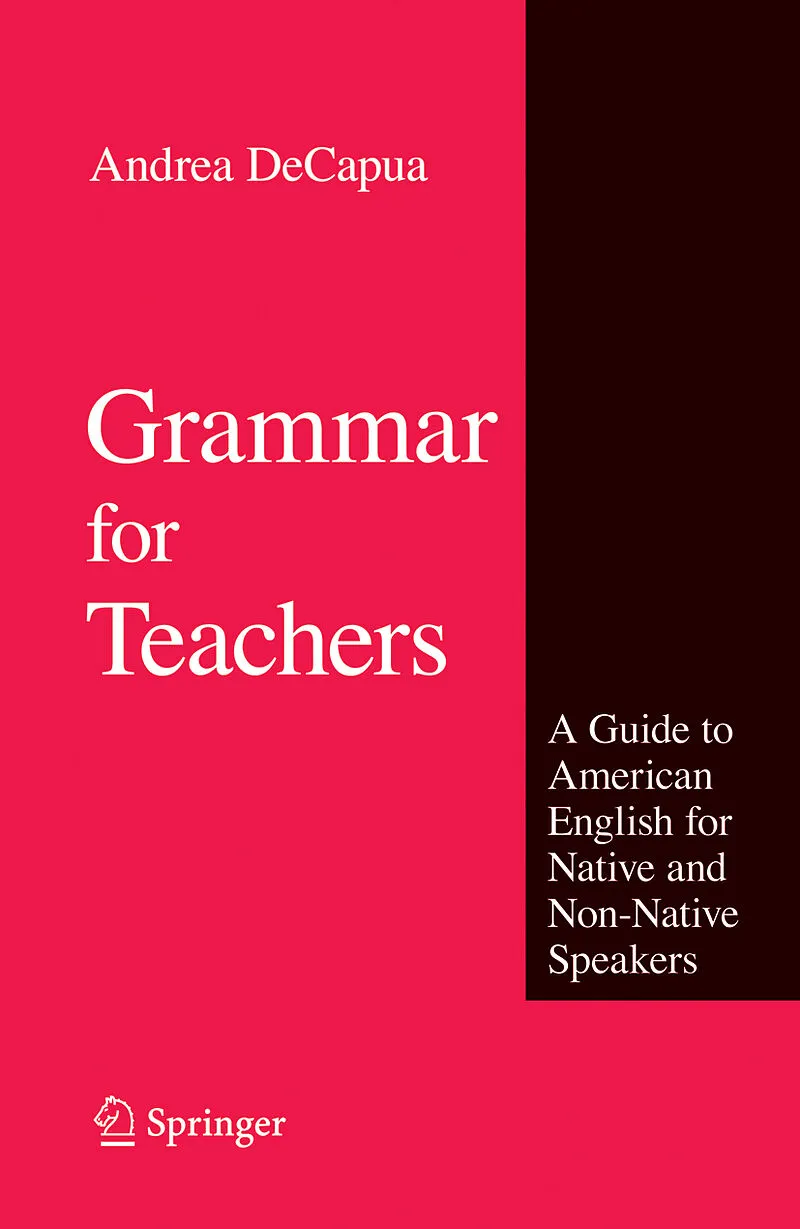
Grammar for Teachers
Beschreibung
The purpose of this book is to encourage readers to develop a solid understanding of the use and function of grammatical structures in American English. Avoiding jargon, the book approaches grammar from a descriptive rather than a prescriptive approach. The pu...Format auswählen
- Kartonierter EinbandCHF 82.40
- Fester EinbandCHF 52.40
- Kartonierter EinbandCHF 122.00
- E-Book (pdf)CHF 118.90
Wird oft zusammen gekauft
Andere Kunden kauften auch
Beschreibung
The purpose of this book is to encourage readers to develop a solid understanding of the use and function of grammatical structures in American English. Avoiding jargon, the book approaches grammar from a descriptive rather than a prescriptive approach.
The purpose of Grammar for Teachers is to encourage readers to develop a solid understanding of the use and function of grammatical structures in American English. The book avoids jargon or excessive use of technical terminology. It approaches grammar from a descriptive rather than a prescriptive approach; however, throughout the book differences between formal and informal language, and spoken and written English are discussed. The text encourages users to tap into their own, often subconscious, knowledge of the grammar of English and to make it a conscious knowledge they can apply to their own varied teaching settings. This book makes the study of grammar interesting and relevant by presenting grammar in context and by using authentic material from a wide variety of sources, including magazines, newspapers, children's books, bestsellers, works of literature, and academic prose.
Presents the main points of grammar in an understandable, relevant, and appealing way Incorporates extensive authentic examples drawn from many different resources Addresses current concerns in pedagogical grammar textbooks by using real-life data and focusing on an understanding of grammar that speakers of other languages need to know when learning English Persuades students of the importance and validity of studying grammar Engages learners to actively think about their own learning and understanding process and challenges them to think creatively about language Emphasizes grammar from both the first and second language perspective Includes supplementary material: sn.pub/extras
Klappentext
The purpose of Grammar for Teachers is to encourage readers to develop a solid understanding of the use and function of grammatical structures in American English. It approaches grammar from a descriptive rather than a prescriptive approach; however, throughout Grammar for Teachers differences between formal and informal language, and spoken and written English are discussed. Grammar for Teachers avoids jargon or excessive use of technical terminology and reviews essential grammar structures clearly and concisely.
The text encourages users to tap into their own, often subconscious, knowledge of the grammar of English and to make it a conscious knowledge they can apply to their own varied teaching settings. Grammar for Teachers emphasizes looking at grammar from the perspective of learners of English, an approach that allows teachers to better appreciate the language difficulties learners of English face in ESL or mainstream classrooms. Discussions of areas of difficulties for learners of English are included throughout the text.
Grammar for Teachers makes the study of grammar interesting and relevant by presenting grammar in context and by using authentic material from a wide variety of sources, including magazines, newspapers, children's books, bestsellers, works of literature, and academic prose.
In each chapter, the numerous Discovery Activities engage users in exploring the different elements of grammar and in considering how these elements work together to form meaningful units. The subsequent discussion of each Discovery Activity allows users to explore specific elements of grammar on their own.
At the end of each chapter, additional Practice Activities ask users to apply the grammar concepts presented in each chapter. Included in the Practice Activities are samples of relevant learner errors and error analysis exercises.
Inhalt
What is Grammar?.- Morphology.- The Noun Phrase.- Adjectives and Adverbs.- to Verbs and Verb Phrases.- Time, Tense, and Aspect of Verbs.- Modal Auxiliary Verbs and Related Structures.- Basic Sentence Patterns and Major Variations.- Compound Sentences and Introduction to Complex Sentences: Adverbial Clauses.- Complex Sentences Continued Relative Clauses.- Complex Sentences Continued: Noun Clauses.- Verbal Constructions.- Erratum.