Beschreibung
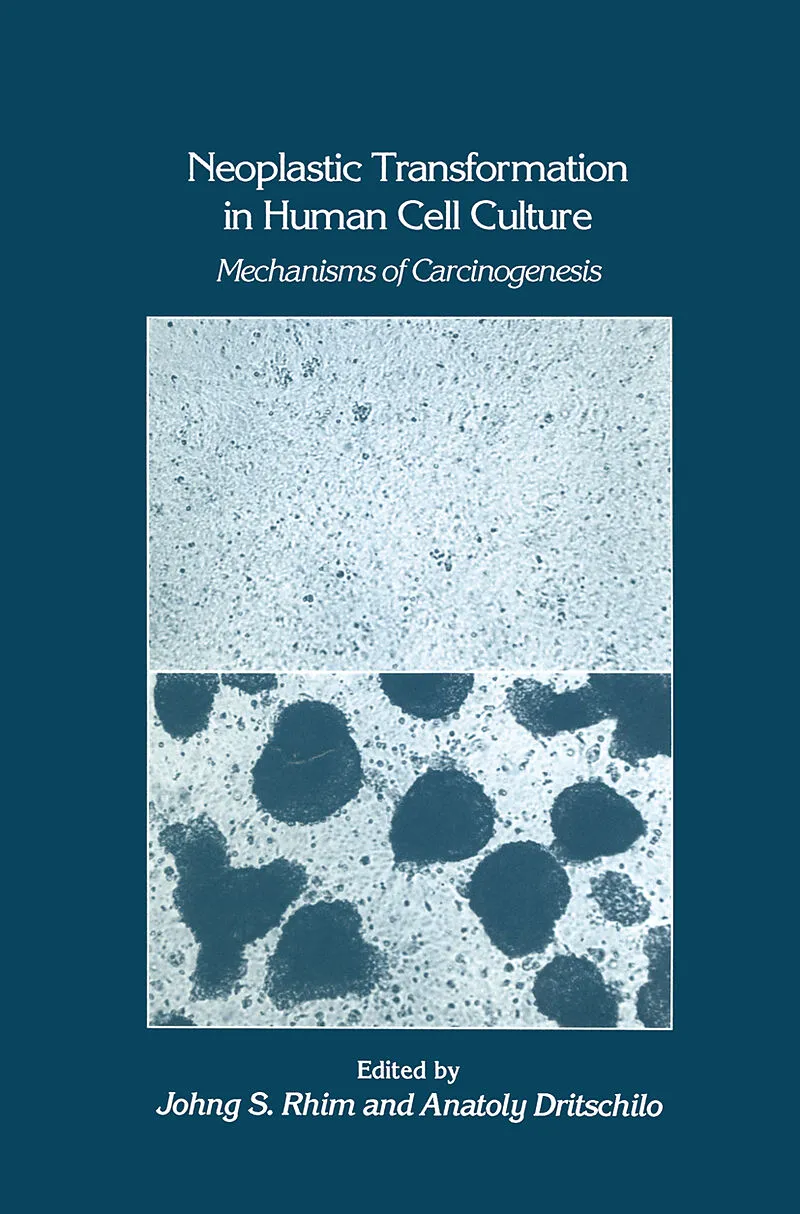
The role of carcinogenic agents in the deveolopment of human cancers is now being defined using a variety of human cells as experi mental model systems. A workshop on "neoplastic transformation in human cell systems in vitro: mechanisms of carcinogenesis" was ...The role of carcinogenic agents in the deveolopment of human cancers is now being defined using a variety of human cells as experi mental model systems. A workshop on "neoplastic transformation in human cell systems in vitro: mechanisms of carcinogenesis" was held at the Georgetown University Medical Center, Washington, DC, on April 25-26, 1991. The aims of the workshop were to present the state-of-the art in the transformation of human cells in culture, as well as to provide insight into the molecular and cellular changes involved in the conver sion of normal cells to a neoplastic state of growth. The following topics were closely related to the theme of the workshops: 1. Derivation of in vitro model systems (epithelial, fibroblastic, and hematopoietic). 2. Factors modulating cellular transformation. 3. Usefulness of defined in vitro model systems for viral, chemical, and radiation carcinogenesis. 4. Multistep nature of human cell carcinogenesis. 5. Role of activated and suppressor oncogenes in neoplastic trans formation. The workshop was organized by J. S. Rhim and A. Dritschilo (cochairmen), G. Jay, J. little, M. McCormick, R Tennant, and R R Weischelbaum. There were 32 speakers, 30 poster presentations, and about 190 participants.
Klappentext
Rhim and Dritschilo's state-of-the-art volume on Neoplastic Transformation in Human Cell Culture highlights the latest findings on the role of carcinogenic agents in the development of human cancers using a variety of human cells as experimental model systems. Chapters cover all the latest results on the transformation of human cells in culture and provide new insight into the molecular and cellular changes that occur during their conversion from normal to neoplastic states. A wealth of topics is presented, including: oncogenes . derivation of epithelial, fibroblastic, and hematopoietic in vitro model systems . viral transformation . factors that trigger or affect cell transformation . in vitro model systems for viral, chemical, and radiation carcinogenesis . the multistep nature of human carcinogenesis . the role of activated and suppressor oncogenes in neoplastic transformation . cell aging . radiation transformation. Unique in both scope and focus-devoted solely to human cell transformation systems- Neoplastic Transformation in Human Cell Culture provides unparalleled, in-depth coverage for cancer researchers, cell and molecular biologists, hematologists, virologists, and workers in related fields. Essential reading for everyone who needs to be kept up-to-date in this fast-paced area!
Zusammenfassung
...should be a part of any departmental library serving virologists, cell biologists, pathologists, and other scientists interested in malignant cell growth.-Quarterly Review of Biology
Inhalt
I. Preneoplastic Events.- Comparison of human versus rodent cell transformation: importance of cell aging.- Deficient DNA repair, an early step in neoplastic transformation of human cells in culture.- Use of immortalized human keratinocytes for the study of squamous differentiation and mutagenesis.- Studies of mutagen-activated genes which confer anchorage-independence: the c-sis gene as a model.- Cytoskeletal changes in human transformed cells: Studies on HOS cells.- Polyamine metabolism in human epidermal keratinocytes transformed with AD12-SV40, HPV16-DNA, and K-ras oncogene.- II. Radiation Transformation and Oncogenes.- Transformation of human diploid fibroblasts by radiation and oncogenes.- Ionizing radiation-mediated protein kinase C activation and gene expression.- Detection of transforming genes from radiation transformed human epidermal keratinocytes by a tumorigenicity assay.- Neoplastic transformation of human epithelial cells by ionizing radiation.- Effects of ionizing radiation on human papillomavirus immortalized human bronchial epithelial cells.- Biochemical purification of a CSF-1 like molecule released during malignant transformation of IL-3 dependent hematopoietic progenitor cell lines cocultivated with gamma irradiated clonal marrow stromal cell lines.- An inherited p53 point mutation in a cancer prone family with Li-Fraumeni syndrome.- p53, a direct target of mutational activation by chemical carcinogens?.- III. Viral Transformation and Oncogenes.- The HIV tat gene induces epidermal hyperplasia in vivo and transforms keratinocytes in vitro.- Immortalization and tumorigenic transformation of normal human cervical epithelial cells transfected with human papillomavirus DNAs.- Using the papillomavirus E6/E7 genes to generate well-differentiated epithelial cell lines.- Tumor progression in breast cancer.- Growth regulation of HPV-positive keratinocytes by TGF-01.- Cell growth transformation by Epstein Barr virus.- Isolation and characterization of a transformation-associated gene from human nasopharyngeal carcinoma cells.- Molecular pathogenesis of lung cancer: Mutations in dominant and recessive oncogenes and the expression of opioid and nicotine receptors in the pathogenesis of lung cancer.- Molecular control of expression of plasticity of tumorigenic/ metastatic phenotypes.- IV. Multistep Models.- Altered regulation of growth and differentiation at different stages of transformation of human skin keratinocytes.- Neoplastic transformation and suppression of transformation of human bronchial epithelial cells in vitro.- An in vitro human mammary epithelial model system for studies of differentiation and carcinogenesis.- Transformation in vitro of human uroepithelial cells.- Multiple steps in the in vitro immortalization and neoplastic conversion of human colonic epithelial cells.- A human renal epithelial multistep model of in vitro carcino-genesis.- Immortalization and oncogene transformation of human esopha-geal epithelial cells.- A nontumorigenic human liver epithelial cell culture model for chemical and biological carcinogenesis investigations.- Establishment and characterization of SV40 T-antigen immortal-ized human liver cells.- Transformation of human tracheal gland epithelial cells in vitro.- Stable expression of SV40 large T-antigen gene in primary human Schwann cells.- Malignant transformation of human fibroblasts in vitro.- Mitogen-independence and autocrine growth factor secretion displayed by human mesothelioma cells and oncogene-transfected mesothelial cells.- Structure and growth regulation in normal, Transformed and malignant human endometrial cell cultures.- Construction of a unidirectional cDNA library from a radio-resistant laryngeal squamous cell carcinoma cell line in an Epstein Barr virus shuttle vector.- Contributors.- Registrants.
Tief- preis