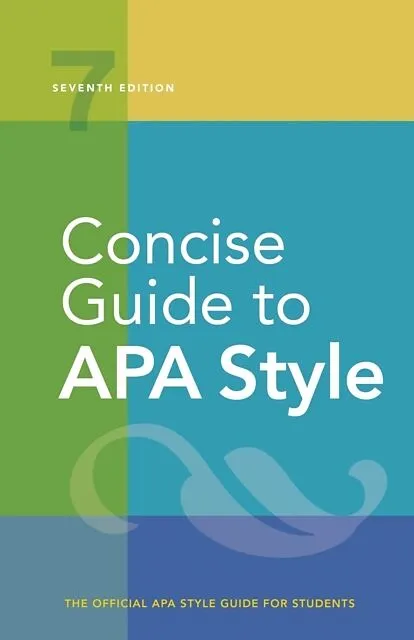
Concise Guide to APA Style
Beschreibung
Informationen zum Autor American Psychological Association Klappentext Designed for undergraduate writers or anyone new to APA Style, this easy-to-use pocket guide is adapted from the seventh edition of the Publication Manual of the American Psychological Asso...Format auswählen
- Kartonierter EinbandCHF 53.20
Wird oft zusammen gekauft
Andere Kunden kauften auch
Beschreibung
Informationen zum Autor American Psychological Association Klappentext Designed for undergraduate writers or anyone new to APA Style, this easy-to-use pocket guide is adapted from the seventh edition of the Publication Manual of the American Psychological Association. Zusammenfassung Designed specifically for undergraduate writing, this easy-to-use pocket guide is adapted from the seventh edition of the Publication Manual of the American Psychological Association. It provides complete guidance on effective, clear, and inclusive scholarly communication and the essentials of formatting papers and course assignments. Inhaltsverzeichnis 1. Student Paper Types, Elements, and FormatGeneral Guidelines for Student Papers 1.1 Application of APA Style to Student Papers 1.2 Student Essays 1.3 Annotated Bibliographies 1.4 Dissertations and Theses 1.5 Student Paper Required ElementsPaper Elements 1.6 Title Page 1.7 Title 1.8 Author Name (Byline) 1.9 Author Affiliation 1.10 Abstract 1.11 Text (Body) 1.12 Reference List 1.13 Footnotes 1.14 AppendicesFormat 1.15 Importance of Format 1.16 Order of Pages 1.17 Page Header 1.18 Font 1.19 Special Characters 1.20 Line Spacing 1.21 Margins 1.22 Paragraph Alignment 1.23 Paragraph Indentation 1.24 Paper LengthOrganization 1.25 Principles of Organization 1.26 Heading Levels 1.27 Section LabelsSample Student Paper 2. Writing Style and GrammarEffective Scholarly Writing 2.1 Continuity and Flow 2.2 Transitions 2.3 Noun Strings 2.4 Conciseness and Clarity 2.5 Wordiness and Redundancy 2.6 Sentence and Paragraph Length 2.7 Tone 2.8 Contractions and Colloquialisms 2.9 Jargon 2.10 Logical Comparisons 2.11 AnthropomorphismGrammar and Usage 2.12 Verb Tense 2.13 Active and Passive Voice 2.14 Mood 2.15 Subject and Verb Agreement 2.16 First- Versus Third-Person Pronouns 2.17 Editorial We 2.18 Singular They 2.19 Pronouns for People and Animals (Who vs. That) 2.20 Pronouns as Subjects and Objects (Who vs. Whom) 2.21 Pronouns in Restrictive and Nonrestrictive Clauses (That vs. Which) 2.22 Subordinate Conjunctions 2.23 Misplaced and Dangling Modifiers 2.24 Parallel ConstructionStrategies to Improve Your Writing 2.25 Reading to Learn Through Example 2.26 Writing From an Outline 2.27 Rereading the Draft 2.28 Seeking Help From Fellow Students 2.29 Working With Writing Centers 2.30 Revising a Paper 3. Bias-Free Language GuidelinesGeneral Guidelines for Reducing Bias 3.1 Describe at the Appropriate Level of Specificity 3.2 Be Sensitive to LabelsReducing Bias by Topic 3.3 Age 3.4 Disability 3.5 Gender 3.6 Participation in Research 3.7 Racial and Ethnic Identity 3.8 Sexual Orientation 3.9 Socioeconomic Status 3.10 Intersectionality 4. Punctuation, Lists, and ItalicsPunctuation 4.1 Spacing After Punctuation Marks 4.2 Period 4.3 Comma 4.4 Semicolon 4.5 Colon 4.6 Dash 4.7 Quotation Marks 4.8 Parentheses 4.9 Square Brackets 4.10 SlashLists 4.11 List Guidelines 4.12 Lettered Lists 4.13 Numbered Lists 4.14 Bulleted ListsItalics 4.15 Use of Italics 4.16 Reverse Italics 5. Spelling, Capitalization, and AbbreviationsSpelling 5.1 Preferred Spelling 5.2 HyphenationCapitalization 5.3 Words Beginning a Sentence 5.4 Proper Nouns and Trade Names 5.5 Job Titles and Positions 5.6 Diseases, Disorders, Therapies, Theories, and Related Terms 5.7 Titles of Works and Headings Within Works 5.8 Titles of Tests and Measures 5.9 Nouns Followed by Numerals or Letters 5.10 Names of Conditions or Groups in an Experiment 5.11 Names of Factors, Variables, and EffectsAbbreviations 5.12 Use of Abbreviations 5.13 Definition of Abbreviations 5.14 Format of Abbreviations 5.15 Unit of Measurement Abbreviations 5.16 Time Abbreviations 5.17 Latin Abbreviations 5.18 Chemical Compound Abbreviations 6. Numbers and StatisticsNumbers 6.1 Numbers Expressed in Numerals 6.2 Numbers Expressed in Words 6.3 Combining Numerals and Words to Express Numbers 6.4 Ordinal Numbers 6.5 Decimal Fractions 6.6 Roman Numerals 6...
Autorentext
American Psychological Association
Klappentext
Designed for undergraduate writers or anyone new to APA Style, this easy-to-use pocket guide is adapted from the seventh edition of the Publication Manual of the American Psychological Association.
Zusammenfassung
High school and undergraduate students, instructors, and writers can master APA Style essentials for scholarly writing with clear guidance on formatting, grammar, and citations. Updated examples and sample pages offer practical insights for crafting effective, bias?free academic assignments.
Inhalt
1. Student Paper Types, Elements, and Format
General Guidelines for Student Papers
1.1 Application of APA Style to Student Papers
1.2 Student Essays
1.3 Annotated Bibliographies
1.4 Dissertations and Theses
1.5 Student Paper Required Elements
Paper Elements
1.6 Title Page
1.7 Title
1.8 Author Name (Byline)
1.9 Author Affiliation
1.10 Abstract
1.11 Text (Body)
1.12 Reference List
1.13 Footnotes
1.14 Appendices
Format
1.15 Importance of Format
1.16 Order of Pages
1.17 Page Header
1.18 Font
1.19 Special Characters
1.20 Line Spacing
1.21 Margins
1.22 Paragraph Alignment
1.23 Paragraph Indentation
1.24 Paper Length
Organization
1.25 Principles of Organization
1.26 Heading Levels
1.27 Section Labels
Sample Student Paper
2. Writing Style and Grammar
Effective Scholarly Writing
2.1 Continuity and Flow
2.2 Transitions
2.3 Noun Strings
2.4 Conciseness and Clarity
2.5 Wordiness and Redundancy
2.6 Sentence and Paragraph Length
2.7 Tone
2.8 Contractions and Colloquialisms
2.9 Jargon
2.10 Logical Comparisons
2.11 Anthropomorphism
Grammar and Usage
2.12 Verb Tense
2.13 Active and Passive Voice
2.14 Mood
2.15 Subject and Verb Agreement
2.16 First- Versus Third-Person Pronouns
2.17 Editorial “We”
2.18 Singular “They”
2.19 Pronouns for People and Animals (“Who” vs. “That”)
2.20 Pronouns as Subjects and Objects (“Who vs. Whom”)
2.21 Pronouns in Restrictive and Nonrestrictive Clauses (“That” vs. “Which”)
2.22 Subordinate Conjunctions
2.23 Misplaced and Dangling Modifiers
2.24 Parallel Construction
Strategies to Improve Your Writing
2.25 Reading to Learn Through Example
2.26 Writing From an Outline
2.27 Rereading the Draft
2.28 Seeking Help From Fellow Students
2.29 Working With Writing Centers
2.30 Revising a Paper
3. Bias-Free Language Guidelines
General Guidelines for Reducing Bias
3.1 Describe at the Appropriate Level of Specificity
3.2 Be Sensitive to Labels
Reducing Bias by Topic
3.3 Age
3.4 Disability
3.5 Gender
3.6 Participation in Research
3.7 Racial and Ethnic Identity
3.8 Sexual Orientation
3.9 Socioeconomic Status
3.10 Intersectionality
4. Punctuation, Lists, and Italics
Punctuation
4.1 Spacing After Punctuation Marks
4.2 Period
4.3 Comma
4.4 Semicolon
4.5 Colon
4.6 Dash
4.7 Quotation Marks
4.8 Parentheses
4.9 Square Brackets
4.10 Slash
Lists
4.11 List Guidelines
4.12 Lettered Lists
4.13 Numbered Lists
4.14 Bulleted Lists
Italics
4.15 Use of Italics
4.16 Reverse Italics
5. Spelling, Capitalization, and Abbreviations
Spelling
5.1 Preferred Spelling
5.2 Hyphenation
Capitalization
5.3 Words Beginning a Sentence
5.4 Proper Nouns and Trade Names
5.5 Job Titles and Positions
5.6 Diseases, Disorders, Therapies, Theories, and Related Terms
5.7 Titles of Works and Headings Within Works
5.8 Titles of Tests and Measures
5.9 Nouns Followed by Numerals or Letters
5.10 Names of Conditions or Groups in an Experiment
5.11 Names of Factors, Variables, and Effects
Abbreviations
5.12 Use of Abbr…