
IHR WARENKORB IST AKTUELL LEER.
Haben Sie noch nichts passendes gefunden? Stöbern Sie durch unser komplettes Sortiment.
Oder melden Sie sich an bzw. registrieren Sie sich.
- Kostenlose Lieferung
- Kauf auf Rechnung
- Ex Libris Tiefpreis
- Filiallieferung und 650+ Abholorte
- Rabatt-Bons als Club-Mitglied
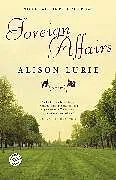
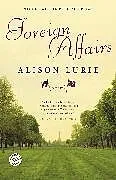
Foreign Affairs
Beschreibung
Informationen zum Autor Alison Lurie is the author of many highly praised novels, including The War Between the Tates, The Truth About Lorin Jones (Prix Femina Etranger), and Foreign Affairs (Pulitzer Prize for fiction). She teaches writing, folklore, and lite...Format auswählen
- Kartonierter EinbandCHF 27.60

Wird oft zusammen gekauft
Andere Kunden kauften auch
Beschreibung
Informationen zum Autor Alison Lurie is the author of many highly praised novels, including The War Between the Tates, The Truth About Lorin Jones (Prix Femina Etranger), and Foreign Affairs (Pulitzer Prize for fiction). She teaches writing, folklore, and literature at Cornell University. Klappentext WINNER OF THE PULITZER PRIZE Virginia Miner, a fifty-something, unmarried tenured professor, is in London to work on her new book about children's folk rhymes. Despite carrying a U.S. passport, Vinnie feels essentially English and rather looks down on her fellow Americans. But in spite of that, she is drawn into a mortifying and oddly satisfying affair with an Oklahoman tourist who dresses more Bronco Billy than Beau Brummel. Also in London is Vinnie's colleague Fred Turner, a handsome, flat broke, newly separated, and thoroughly miserable young man trying to focus on his own research. Instead, he is distracted by a beautiful and unpredictable English actress and the world she belongs to. Both American, both abroad, and both achingly lonely, Vinnie and Fred play out their confused alienation and dizzying romantic liaisons in Alison Lurie's Pulitzer Prize-winning novel. Smartly written, poignant, and witty, Foreign Affairs remains an enduring comic masterpiece. "A splendid comedy, very bright, brilliantly written in a confident and original manner. The best book by one of our finest writers. -Elizabeth Hardwick "There is no American writer I have read with more constant pleasure and sympathy. . . . Foreign Affairs earns the same shelf as Henry James and Edith Wharton. -John Fowles "If you manage to read only a few good novels a year, make this one of them. -USA Today "An ingenious, touching book. -Newsweek "A flawless jewel. -Philadelphia Inquirer1 As I walked by myself And talked to myself, Myself said unto me, Look to thyself, Take care of thyself, For nobody cares for thee. Old Song On a cold blowy February day a woman is boarding the ten a.m. flight to London, followed by an invisible dog. The woman's name is Virginia Miner: she is fifty-four years old, small, plain, and unmarriedthe sort of person that no one ever notices, though she is an Ivy League college professor who has published several books and has a well-established reputation in the expanding field of children's literature. The dog that is trailing Vinnie, visible only to her imagination, is her familiar demon or demon familiar, known to her privately as Fido and representing self-pity. She visualizes him as a medium-sized dirty-white long-haired mutt, mainly Welsh terrier: sometimes trailing her silently, at other times whining and panting and nipping at her heels; when bolder, dashing round in circles trying to trip her up, or at least get her to stoop down so that he may rush at her, knock her to the ground, and cover her with sloppy kisses. Vinnie knows very well that Fido wants to get onto the plane with her, but she hopes to leave him behind, as she has successfully done on other trips abroad. Recent events, however, and the projected length of her stay, make this unlikely. Vinnie is leaving today for six months in England on a foundation grant. There, under her professional name of V. A. Miner, she will continue her study of the folk-rhymes of schoolchildren. She has made this journey a number of times, and through a process of trial and error reduced its expense and discomfort to a minimum. She always chooses a daytime charter flight, preferring those on which no films are shown. If she could afford it, she would pay the regular fare so as to avoid boarding delays (she has already stood in various lines for nearly an hour); but that would be foolishly extravagant. Her grant is small, and she will ...
Autorentext
Alison Lurie is the author of many highly praised novels, including* The War Between the Tates, The Truth About Lorin Jones* (Prix Femina Etranger), and Foreign Affairs (Pulitzer Prize for fiction). She teaches writing, folklore, and literature at Cornell University.
Klappentext
WINNER OF THE PULITZER PRIZE
Virginia Miner, a fifty-something, unmarried tenured professor, is in London to work on her new book about children's folk rhymes. Despite carrying a U.S. passport, Vinnie feels essentially English and rather looks down on her fellow Americans. But in spite of that, she is drawn into a mortifying and oddly satisfying affair with an Oklahoman tourist who dresses more Bronco Billy than Beau Brummel.
Also in London is Vinnie's colleague Fred Turner, a handsome, flat broke, newly separated, and thoroughly miserable young man trying to focus on his own research. Instead, he is distracted by a beautiful and unpredictable English actress and the world she belongs to.
Both American, both abroad, and both achingly lonely, Vinnie and Fred play out their confused alienation and dizzying romantic liaisons in Alison Lurie's Pulitzer Prize-winning novel. Smartly written, poignant, and witty, Foreign Affairs remains an enduring comic masterpiece.
"A splendid comedy, very bright, brilliantly written in a confident and original manner. The best book by one of our finest writers.”
-Elizabeth Hardwick
"There is no American writer I have read with more constant pleasure and sympathy. . . . Foreign Affairs earns the same shelf as Henry James and Edith Wharton.”
-John Fowles
"If you manage to read only a few good novels a year, make this one of them.”
-USA Today
"An ingenious, touching book.”
-Newsweek
"A flawless jewel.”
-Philadelphia Inquirer
Leseprobe
1
As I walked by myself
And talked to myself,
Myself said unto me,
Look to thyself,
Take care of thyself,
For nobody cares for thee.
Old Song
On a cold blowy February day a woman is boarding the ten a.m. flight to London, followed by an invisible dog. The woman’s name is Virginia Miner: she is fifty-four years old, small, plain, and unmarried—the sort of person that no one ever notices, though she is an Ivy League college professor who has published several books and has a well-established reputation in the expanding field of children’s literature.
The dog that is trailing Vinnie, visible only to her imagination, is her familiar demon or demon familiar, known to her privately as Fido and representing self-pity. She visualizes him as a medium-sized dirty-white long-haired mutt, mainly Welsh terrier: sometimes trailing her silently, at other times whining and panting and nipping at her heels; when bolder, dashing round in circles trying to trip her up, or at least get her to stoop down so that he may rush at her, knock her to the ground, and cover her with sloppy kisses. Vinnie knows very well that Fido wants to get onto the plane with her, but she hopes to leave him behind, as she has successfully done on other trips abroad. Recent events, however, and the projected length of her stay, make this unlikely.
Vinnie is leaving today for six months in England on a foundation grant. There, under her professional name of V. A. Miner, she will continue her study of the folk-rhymes of schoolchildren. She has made this journey a number of times, and through a process of trial and error reduced its expense and discomfort to a minimum. She always chooses a daytime charter flight, preferring those on which no films are shown. If she could afford it, she would pay the regular fare so as to avoid boarding delays (she has already stood in various lines for nearly an hour); but that would be foolishly extravagant. Her grant is small, and she will have to watch expenses carefully as it is.
Though patience is held to be a virtue most appropriate to women, especially aging women, Vinnie has always particularly disliked waiting for anything, and never does so if it can be avoided. Now, for instance, she elbows her way deftly pas…