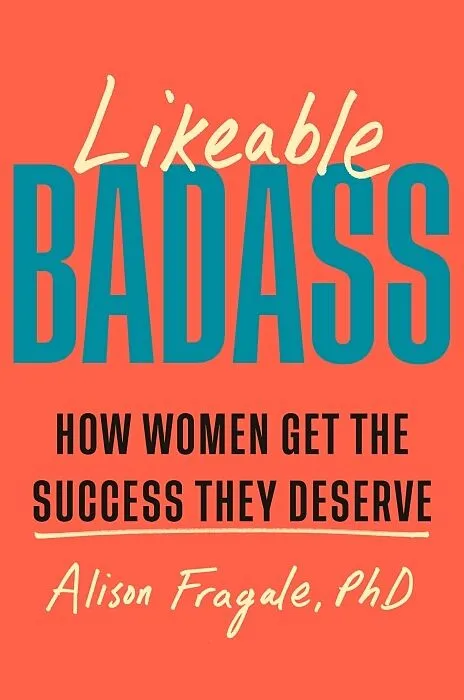
Likeable Badass
Beschreibung
Behavioral scientist Alison Fragale offers powerful new insights and a practical playbook for women to advance in any workplace, full of tips, tricks, and strategies to help secure that elusive corner office. Over decades of research, speaking engagements, and...Format auswählen
- Fester EinbandCHF 31.90
- Kartonierter EinbandCHF 20.30

Wird oft zusammen gekauft
Andere Kunden kauften auch
Beschreibung
Behavioral scientist Alison Fragale offers powerful new insights and a practical playbook for women to advance in any workplace, full of tips, tricks, and strategies to help secure that elusive corner office. Over decades of research, speaking engagements, and mentorship, psychologist and professor Alison Fragale encountered recurring questions from high powered and early career women alike: How do women thread the needle of kindness and competence in the workplace? How can women earn credit for their accomplishments, negotiate better, and navigate complex office politics without losing the goodwill of their peers? Fragale investigated and determined that many women''s workplace issues boil down to the perception of others. No degree, title, or paycheck will raise a woman''s workplace stature unless it also affects how other people respect and regard her. Acknowledging this roadblock, Fragale pulls back the curtain on how we can change how others see us by developing our standing as a "likeable badass." By cultivating perceptions of warmth and assertiveness, women can achieve the kind of reputation that leads to a seat at the table and a fulfilling career path. <Likeable Badass< is equal parts behavioral science and life hacks, weaving together rigorous research with actionable advice and impactful stories from a diverse array of women. This is a warm, heartening book written for women of all stripes, as well as their allies, who want evidence-based, practical strategies for success, served with a side of inspiration and humor.
Autorentext
ALISON FRAGALE is the Mary Farley Ames Lee Distinguished Scholar of Organizational Behavior at the Kenan-Flagler Business School at the University of North Carolina Chapel Hill. Her scholarship has been published in the most prestigious academic journals in her field, and featured in prominent media outlets such as The Wall Street Journal, The Washington Post, Financial Times, Boston Globe, and Inc. A sought-after keynote speaker, she lives in Chicago with her family.
Zusammenfassung
NATIONAL BESTSELLER • Behavioral scientist Alison Fragale offers powerful new insights and a practical playbook for women to advance in any workplace, full of tips, tricks, and strategies to help secure that elusive corner office.
Over decades of research, speaking engagements, and mentorship, psychologist and professor Alison Fragale encountered recurring questions from high powered and early career women alike: How do women thread the needle of kindness and competence in the workplace? How can women earn credit for their accomplishments, negotiate better, and navigate complex office politics without losing the goodwill of their peers?
Fragale investigated and determined that many women's workplace issues boil down to what psychologists call status: the perception of them by others. No amount of power-- no degree, title, or paycheck-- will raise a woman's workplace stature unless it also affects how others see her. Acknowledging this roadblock, Fragale pulls back the curtain on how we can change how others see us by developing our standing as a "likeable badass." By cultivating perceptions of warmth and assertiveness, women can achieve the kind of reputation that leads to a seat at the table and a fulfilling career path.
Likeable Badass is equal parts behavioral science and life hacks, weaving together rigorous research with actionable advice and impactful stories from a diverse array of women. This is a warm, heartening book written for women, their allies, and anyone who struggles to rise, and wants evidence-based, practical strategies for success, served with a side of inspiration and humor.
Leseprobe
Chapter 1
Ladies, We Have a Status Problem
"We want it to be solution-focused.”
Until I heard those six words, I was only half listening. This was pre-Zoom, back when all meetings were in person. I couldn’t multitask by internet shopping, so I was taking a mental inventory of the dinner options in my refrigerator. My business school colleagues were talking with representatives of a national bank about a leadership program for the bank’s up-and-comers. I was one of the faculty scheduled to teach in the program, and my role in this meeting was limited: I introduced myself, cracked a joke to reassure the client that I had the stage presence to handle their hard-charging, type-A, take-no-prisoners audience, nodded as my colleagues spoke, and waited to see if anyone had questions about my session. I’ve taken this type of meeting countless times over the years: Sit, nod, joke, repeat.
Then came the sentence that snapped me back to attention. Solution-focused? It was a line I had never heard cross a client’s lips. In most ways, this leadership program was the same as many others that had come before it. But in one very important way, it was a first—this leadership program was solely for women. Until that point in my career, I would occasionally work with a corporate audience that was 50 percent women, but just as often I was the only woman in the room. Rare was the client that had enough women to fill a room and was invested enough in their development to create a program just for them.
“Solution” struck me because it implied that these women had a problem. I was equally struck that I immediately understood what they meant. They didn’t want me to gather these top-performing women so they could complain about how difficult it was working in the “old boys’ club” of financial services. Rather, they wanted me to offer specific, practical advice about “succeeding while female.” Still, their tone was defeatist, as if they were asking for solutions they didn’t think existed. Surely, women’s problems were so numerous, so enduring, and so rooted in systemic bias, they seemed to be saying, there was little I could do to solve them in three hours. Despite investing significant time and money developing this program, I got the sense they didn’t think it could deliver results.
At this point, I spoke up. Yes, women play an unfair game, I said, and they probably always will. But that doesn’t mean they can’t win. They can, and I was just the person to show them how.
It’s Time to Change the Game
I love nothing more than translating the science of my field—organizational psychology—into actionable advice that helps people, especially women, live and work better. Although it feels like women face a million sources of disadvantage relative to men, they face only two: a lack of power and a lack of status. These are big challenges, no doubt. But, having studied power and status for over twenty years, I assure you that women can triumph in the face of these problems—if we focus on the right one. Spoiler alert: It’s not the one you think it is.
Your power is your control over resources—like money, authority, and a seat at the table where decisions are made. Despite decades of attention to closing the gaps, women continue to lag men on all these dimensions. I could cite depressing power statistics for days, but here are a few of my favorites:
At the current rate of progress, the global gender pay gap will persist for 169 more years, even though women in many countries are more educated than their male peers and are consistently rated as equal or better leaders.
When transgender people transition from male to female, their pay drops about one-third. In contrast, those who transition from female to male continue to earn as much or more after transition as they did before.
Women are significantly less likely than men to be promoted from entry-lev…