Haben Sie noch nichts passendes gefunden? Stöbern Sie durch unser komplettes Sortiment.
Oder melden Sie sich an bzw. registrieren Sie sich.


Beschreibung
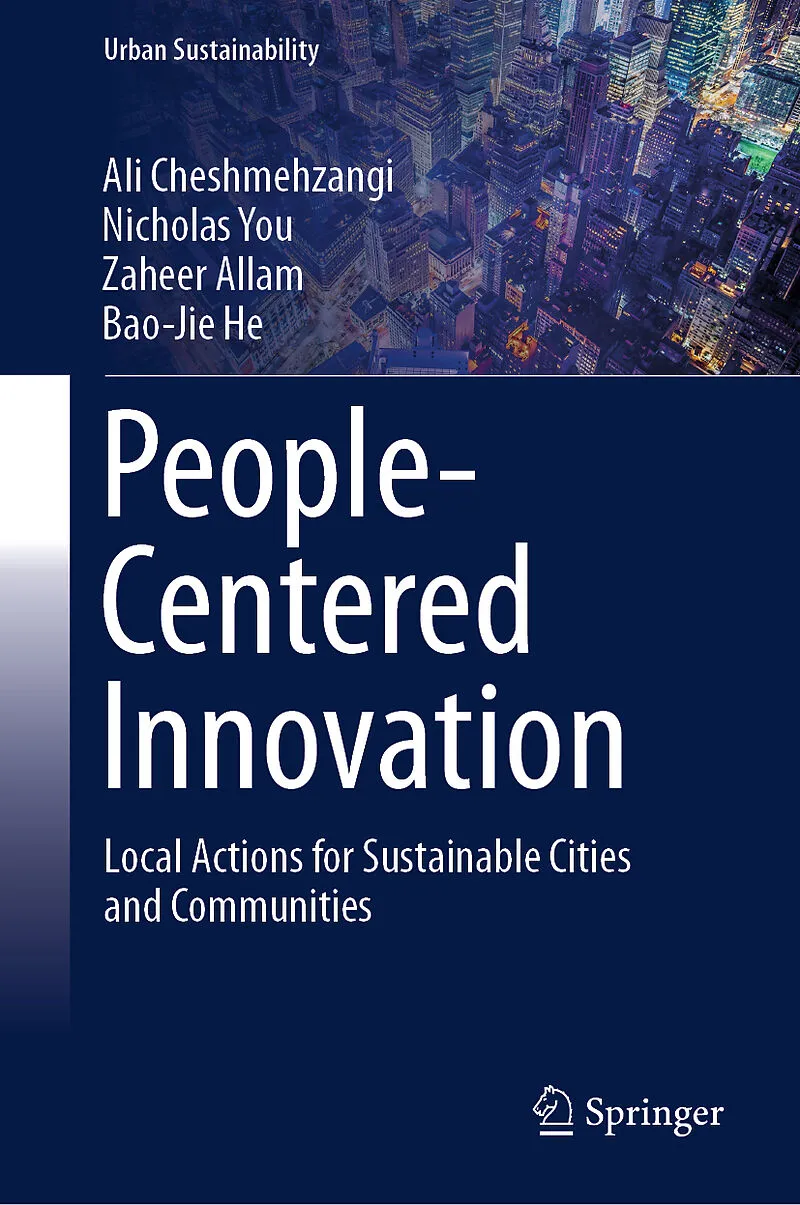
As a follow-up to the book titled Harnessing Urban Innovation to Unlock the Sustainable Development Goals , this collection examines transformative urban solutions through 15 internationally recognized case studies submitted to the 6th Guangzhou International...As a follow-up to the book titled Harnessing Urban Innovation to Unlock the Sustainable Development Goals , this collection examines transformative urban solutions through 15 internationally recognized case studies submitted to the 6th Guangzhou International Award for Urban Innovation in 2023. It provides valuable insights into the driving forces behind sustainable urban development, aligning closely with the United Nations' Sustainable Development Goals (SDGs).
The main focus of the book is on people-centered approaches to urban innovation, demonstrating how grassroots initiatives can tackle complex urban challenges and contribute to global sustainability targets. Each case study presents innovative strategies implemented by communities worldwide, showcasing how local actions can greatly impact sustainability and resilience. The varied examples highlight a spectrum of urban issues, including affordable housing, sustainable transportation, climate adaptation, and social inclusion, reflecting the diverse nature of urban innovation.
Key Features and Benefits:
Includes varied global case studies illustrating different approaches to Urban Innovation Central emphasis on People-Centered Approaches to urban innovation Highlights the critical role of local efforts in achieving the broader SDG agenda
Autorentext
Prof. Ali Cheshmehzangi is Professor and Head of the School of Architecture, Design, and Planning (ADP) at the University of Queensland. He has been the world’s top 2% field leader since 2021, recognized by Stanford University. He is among the top 20 global scholars in the urban sustainability research area. Ali is internationally known for his scholarly contribution and extended work on climate resilience and sustainable urbanism research, mainly as editor-in-chief of Springer’s "Urban Sustainability" book series. Ali has collaborated and worked with major international and national organizations and leading industry partners such as the Asian Development Bank (ADB), the UN-Habitat, ICLEI, Arup, Siemens, Regional Planning Association (in New York), London Development Agency, Catapult UK, The Guangzhou Award for Urban Innovation, China’s National Development and Reform Commission (NDRC), China Academy of Building Research (CABR), Building Research Establishment (BRE), etc. To date, Ali has published over 500 journal papers, articles, conference papers, book chapters, and reports. He also has 43 other academic books, mainly focused on sustainable urban development, urbanism, and sustainability transitions. Some of his books have received national, provincial, and municipal awards. He has received international awards and recognition for his urban resilience and sustainability research and the 2018 vice-chancellor’s award for his impactful contribution to higher education. He is the author of the newly-developed concept of "Advanced City". Dr. Tong Zou is a PostDoc research associate at the School of Ecology, Environment and Resources at Guangdong University of Technology, China. She has recently completed her PhD studies. For more than a year, she was a visiting PhD scholar at the University of Bologna Alma Mater Studiorum, Italy. She also holds a B.Sc. with Honors in Integrated Science, a minor in Statistics, and a minor in Technology, Society, and Environmental Studies from Carleton University, Canada. In response to the global water crisis, she developed a model prototype of the proposed integrated radiative air well by applying the bio-mimicry features of the Namibian beetle (Stenocara gracilipes) for her Honors thesis. Tong graduated from the University of New South Wales (UNSW) with an M.Sc. in Environmental Management. During her postgraduate studies, she worked on the project "Urban Metabolism and Urban Metabolism-Urban Sustainability-Smart Cities Nexus". During her gap year, Tong Zou worked as a research intern at the Centre of Air Pollution Energy and Health Research (CAR), Australia; a project assistant at the International Cooperation Centre of Ecology and Environment of Sichuan Province, China; and an ecology and environment technological assistant at the Sichuan Investment Evaluation and Performance Appraisal Centre of Ecology and Environment, China. Currently, Tong is working on a research project, "A framework for enhancing urban food system sustainability in smart, resilient cities in China".
Klappentext
As a follow-up to the book titled "Harnessing Urban Innovation to Unlock the Sustainable Development Goals", this collection examines transformative urban solutions through 15 internationally recognized case studies submitted to the 6th Guangzhou International Award for Urban Innovation in 2023. It provides valuable insights into the driving forces behind sustainable urban development, aligning closely with the United Nations' Sustainable Development Goals (SDGs). The main focus of the book is on people-centered approaches to urban innovation, demonstrating how grassroots initiatives can tackle complex urban challenges and contribute to global sustainability targets. Each case study presents innovative strategies implemented by communities worldwide, showcasing how local actions can greatly impact sustainability and resilience. The varied examples highlight a spectrum of urban issues, including affordable housing, sustainable transportation, climate adaptation, and social inclusion, reflecting the diverse nature of urban innovation. Key Features and Benefits: Varied Global Case Studies: The book includes fifteen case studies from different regions, each presenting unique solutions to urban challenges. These examples illustrate how various cultures and contexts address common problems, providing a rich array of ideas and practices. This makes it an essential resource for urban planners, policymakers, and community leaders seeking inspiration and guidance. Emphasis on People-Centered Approaches: The book emphasizes the importance of people-centered innovation, which prioritizes community involvement and local knowledge. By focusing on how local populations engage with and drive urban initiatives, the book highlights the significance of inclusivity and participatory processes in achieving sustainable outcomes. Alignment with the SDGs: Each case study is connected to specific Sustainable Development Goals, demonstrating how local actions contribute to global sustainability objectives. The book illustrates how grassroots initiatives address key areas such as poverty reduction, climate action, and sustainable cities and communities, highlighting the critical role of local efforts in achieving the broader SDG agenda.
Inhalt
People-Centered Approach, Urban Innovation, a…