
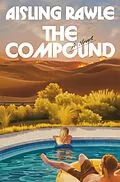
The Compound: A GMA Book Club Pick
Beschreibung
Lily--a bored, beautiful twenty-something--wakes up on a remote desert compound, alongside nineteen other contestants competing on a massively popular reality show. To win, she must outlast her housemates to stay in the Compound the longest, while competing in...Format auswählen
- Kartonierter EinbandCHF 20.30

Wird oft zusammen gekauft
Andere Kunden kauften auch
Beschreibung
Lily--a bored, beautiful twenty-something--wakes up on a remote desert compound, alongside nineteen other contestants competing on a massively popular reality show. To win, she must outlast her housemates to stay in the Compound the longest, while competing in challenges for luxury rewards like champagne and lipstick, plus communal necessities to outfit their new home, like food, appliances, and a front door.; Cameras are catching all her angles, good and bad, but Lily has no desire to leave: why would she, when the world outside is falling apart? As the competition intensifies, intimacy between the players deepens, and it becomes increasingly difficult to distinguish between desire and desperation. When the unseen producers raise the stakes, forcing contestants into upsetting, even dangerous situations, the line between playing the game and surviving it begins to blur. If Lily makes it to the end, she’ll receive prizes beyond her wildest dreams--but what will she have to do to win? Addictive and prescient, <The Compound< is an explosive debut from a major new voice in fiction and will linger in your mind long after the game ends.
Autorentext
Aisling Rawle
Klappentext
GOOD MORNING AMERICA BOOK CLUB PICK
Nothing to lose. Everything to gain. Winner takes all.
“Every bit as addictive as your favorite guilty pleasure binge-watch, but with all the substance of a literary classic.”—Oprah Daily
“It’s fun to watch hot people do psychotic things in this novel. . . . Smart and provocative [and] so damn addictive.”—The New York Times Book Review
A BEST BOOK OF THE YEAR: NPR, THE NEW YORKER, GOOD HOUSEKEEPING, OPRAH DAILY, THE GLOBE AND MAIL, CHICAGO PUBLIC LIBRARY
Lily—a bored, beautiful twenty-something—wakes up on a remote desert compound, alongside nineteen other contestants competing on a massively popular reality show. To win, she must outlast her housemates to stay in the Compound the longest, while competing in challenges for luxury rewards like champagne and lipstick, plus communal necessities to outfit their new home, like food, appliances, and a front door.
Cameras are catching all her angles, good and bad, but Lily has no desire to leave: why would she, when the world outside is falling apart? As the competition intensifies, intimacy between the players deepens, and it becomes increasingly difficult to distinguish between desire and desperation. When the unseen producers raise the stakes, forcing contestants into upsetting, even dangerous situations, the line between playing the game and surviving it begins to blur. If Lily makes it to the end, she’ll receive prizes beyond her wildest dreams—but what will she have to do to win?
Addictive and prescient, The Compound is an explosive debut from a major new voice in fiction and will linger in your mind long after the game ends.
Leseprobe
One
I woke up first. There was no particular significance to it, only that I have always slept poorly and generally wake early in the morning. I had no way to tell the time, but I thought that I had slept a while: my limbs were heavy and stiff from a long, motionless sleep. The room was dark and windowless, with only a small skylight directly above my bed, though it didn’t smell of sleep, or musk: it smelled fresh and airy, as if it had recently been cleaned. I thought I could detect the slightest trace of air freshener, citrus-scented, or maybe pine. There were ten beds, though only one aside from my own was occupied. The girl in the bed across from me was slowly emerging from sleep. She sat up and looked at me. She was beautiful, but that was to be expected.
“Hello,” I said after a few seconds. “I’m Lily.”
“I’m Jacintha,” she said. “Nice to meet you.”
I put my feet on the floor, feeling newly born. I stretched, arms high above my head, and heard my joints pop. There was air conditioning whirring, but I could feel the heat that lurked behind it, thick and cloying. When I looked over, Jacintha was standing. She was wearing underwear and a tank top. Looking down, I saw that I was wearing something similar.
It might have been awkward, but she smiled at me. “Will we find the others?”
We made our way through the house, exploring as we went. The house was at once familiar and entirely new to me. On either side of the bedroom were the dressing rooms: the boys’ to the left, ours to the right. The boys’ room held no interest for us, and we went directly to our own. It was enormous, much bigger than the bedroom. It was where we could keep all of our things, once we had them. The room was mostly composed of storage space: built-in wardrobes, chests of drawers, cupboards, and some glittery boxes, similar to one I had used to store my dress-up costumes as a young girl. Running through the center of the room was a gray laminate-covered table, with a bench on each side. Along the table were lighted mirrors and the little screens. I touched one, but the screen remained black.
While the bedroom had been clean, the dressing room was distinctly untidy: there were clothes strewn across the floor, and makeup stains along the table, with the lingering scent of feminine products still hanging in the air. Jacintha and I looked through the drawers and storage spaces and found mostly clothes, the majority of them cheap and worn: swimsuits that had been stretched to the point of translucency, stained dresses, and tired-looking T-shirts. There were a couple of nice pieces, possibly designer—a few dresses, a skirt, and a jacket. They were stiff and creaseless, and I thought that they likely had never been worn.
Down the hallway was the bathroom, tiled and pristine. There were two toilets, a urinal running along the length of the wall, a shower, and a bath, large and inviting, shaped like an oversized canoe. There was a sleek gold bar on which towels hung, matching gold knobs on the cabinet doors, and a similar gold bar over the mirror by the sink. The taps were a fine brass color, with an impressive number of soaps lined along a shelf, and an artfully arranged stack of toilet paper. On the wall beside the bath was a painting, large and abstract. It was the only piece of art I had ever seen in the house. I knew that the place had changed drastically over the years, but the same piece of art stayed, unmoved. The bedroom and dressing rooms had been nice enough, but they were designed for practicality. The bathroom was pure luxury: perfect, except that it had no door.
Jacintha and I went downstairs. There were a number of empty rooms, perhaps four or five. There were some empty boxes left in them, and I thought that the rooms must have been used for storage. There were two more bathrooms, and though they were nice enough, they were clearly the lesser bathrooms.
We came to the living room and paused uneasily in the doorway. While the dressing room had been messy, this room had been trashed. There was no sofa, but there were folding chairs that lay in one corner. There was a mirror on the ground, shards of which reflected the mess around it: a dented wall, a legless coffee table, a shattered vase. Nearly everything in the room had been broken or destroyed, except for the big screen, which hung on the wall, untouched. Like the little screens, the big screen was blank. Neither Jacintha nor myself commented on the mess, but we stayed standing in the doorway for a minute or so, waiting to see if the big screen would turn on.
Then there was the kitchen, large and mercifully well stocked. There were granite countertops with the usual appliances, and a small island with three barstools. The kitchen had an industrial feel to it, designed to accommodate several people cooking at th…