Beschreibung
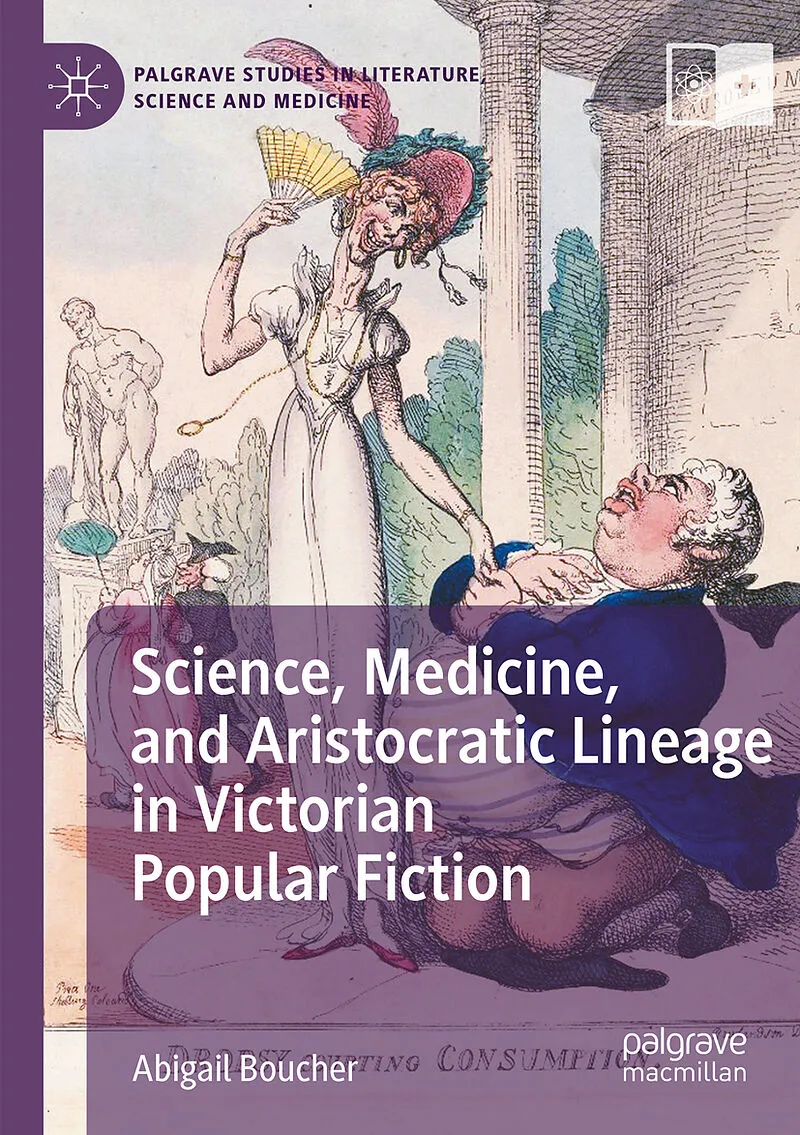
Science, Medicine, and Aristocratic Lineage in Victorian Popular Fiction explores the dialogue between popular literature and medical and scientific discourse in terms of how they represent the highly visible an pathologized British aristocratic body. This boo...Science, Medicine, and Aristocratic Lineage in Victorian Popular Fiction explores the dialogue between popular literature and medical and scientific discourse in terms of how they represent the highly visible an pathologized British aristocratic body. This books explores and complicates the two major portrayals of aristocrats in nineteenth-century literature: that of the medicalised, frail, debauched, and diseased aristocrat, and that of the heroic, active, beautiful 'noble', both of which are frequent and resonant in popular fiction of the long nineteenth century. Abigail Boucher argues that the concept of class in the long nineteenth century implicitly includes notions of blood, lineage, and bodily 'correctness', and that 'class' was therefore frequently portrayed as an empirical, scientific, and medical certainty. Due to their elevated and highly visual social positions, both historical and fictional aristocrats were frequently pathologized in the public mind and watchedfor signs of physical excellence or deviance. Using popular fiction, Boucher establishes patterns across decades, genres, and demographics and considers how these patterns react to, normalise, or feed into the advent of new scientific and medical understandings.
Develops the field of class studies in literature Considers rise of mass media, celebrity culture, shifting socio-economic, political identifies during long 19th century Draws from a range of popular genres including Gothic fiction
Autorentext
Abigail Boucher is a senior lecturer in English literature at Aston University, UK. She is a scholar of genre fiction, literature of the long nineteenth century, and medicine and science in literature. She is also the Director for Aston University’s Research Centre for the Humanities. Tim Grant is a professor of forensic linguistics at Aston University, UK. He is one of the world’s most experienced forensic linguistic practitioners with a particular interest in forensic authorship analysis, focusing on short form messages. Daniel Jenkin-Smith is a lecturer at the University of Wales Trinity Saint David, UK, and a postdoctoral researcher at Aston University, UK. He has specialisms in British and French literature of the long nineteenth century and the history of labour and office work. Emily Powell is the Head of the Centre for International English at the University of South Wales, UK. Her research sits at the intersection between criminology and linguistics and applies corpus linguistics to forensic texts.
Klappentext
Science, Medicine, and Aristocratic Lineage in Victorian Popular Fiction explores the dialogue between popular literature and medical and scientific discourse in terms of how they represent the highly visible an pathologized British aristocratic body. This books explores and complicates the two major portrayals of aristocrats in nineteenth-century literature: that of the medicalised, frail, debauched, and diseased aristocrat, and that of the heroic, active, beautiful 'noble', both of which are frequent and resonant in popular fiction of the long nineteenth century. Abigail Boucher argues that the concept of class in the long nineteenth century implicitly includes notions of blood, lineage, and bodily 'correctness', and that 'class' was therefore frequently portrayed as an empirical, scientific, and medical certainty. Due to their elevated and highly visual social positions, both historical and fictional aristocrats were frequently pathologized in the public mind and watchedfor signs of physical excellence or deviance. Using popular fiction, Boucher establishes patterns across decades, genres, and demographics and considers how these patterns react to, normalise, or feed into the advent of new scientific and medical understandings.
Inhalt
Introduction.- Chapter 1: Fashionable Diseases: Consumerism, Class, and Health in the Silver Fork Novels.- Chapter 2: Unblessed by Offspring: Fertility and the Aristocratic Male in Reynolds's The Mysteries of the Court of London.- Chapter 3: Aristocratic Inbreeding: Exogamy and Endogamy in Sensation Fiction.- Chapter 4: Aristocratic Origins, Heredity, and Evolution in the Fin de Siècle Medieval Revival.- Conclusion.