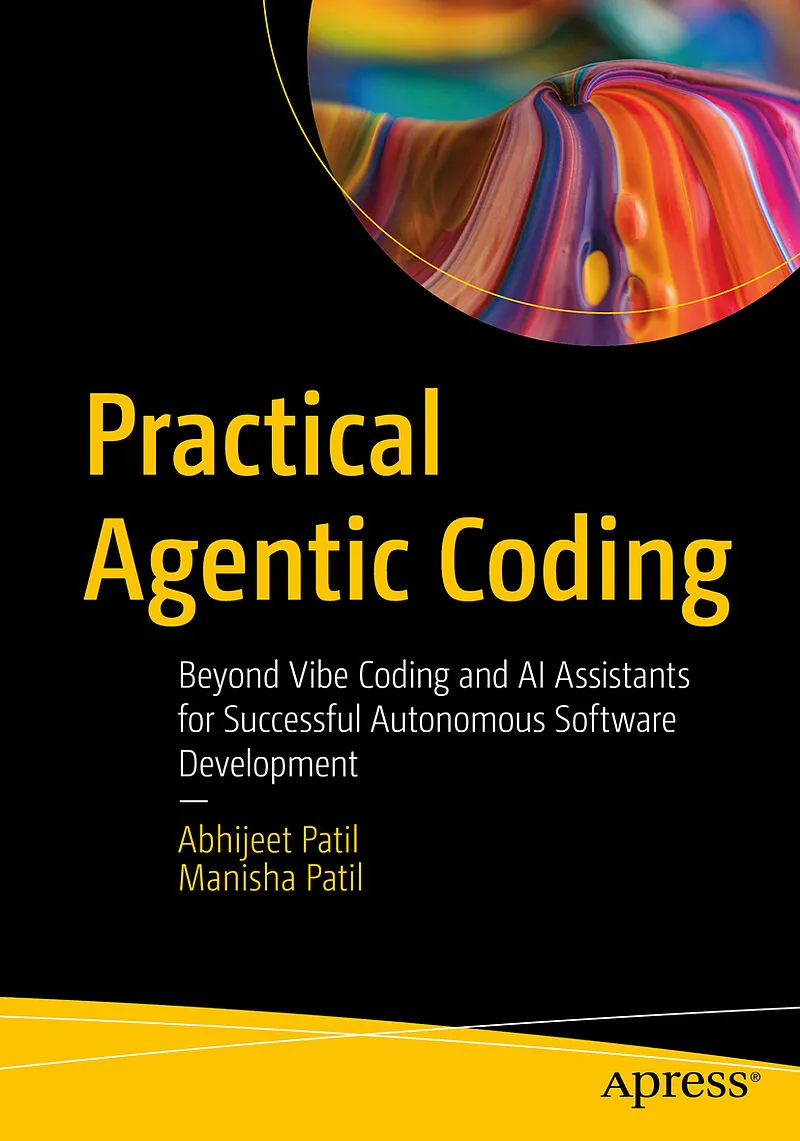
Practical Agentic Coding
Beschreibung
Software development teams worldwide are struggling with a paradox: AI tools promise increased productivity, but many implementations result in technical debt, security vulnerabilities, and workflow disruptions. The problem isn't AI capability, but the lack o...Format auswählen
- Kartonierter EinbandCHF 60.80

Wird oft zusammen gekauft
Andere Kunden kauften auch
Beschreibung
Software development teams worldwide are struggling with a paradox: AI tools promise increased productivity, but many implementations result in technical debt, security vulnerabilities, and workflow disruptions. The problem isn't AI capability, but the lack of proper orchestration and governance. Practical Agentic Coding solves this challenge by introducing a strategic, structured approach to autonomous AI development.
This book teaches leaders and experienced developers on how to transition from using AI as a passive assistant to leading agents as autonomous team members. You will journey through a complete evolution: from setting a foundational industry vision and evaluating the market value of tools like Amazon Kiro, Google Antigravity, and Claude Code, to architecting intelligent workflows where AI agents handle complex tasks while humans provide strategic direction.
By combining the best architectural practices with hands-on tutorials, security frameworks, and real-world case studies, this practical guide enables teams to harness AI's transformative power without compromising quality or control. The result: development teams that operate at unprecedented speed and scale while maintaining the craftsmanship that defines exceptional software.
You Will Learn To:
Understand the core principles of Agentic Coding and how to use AI Agents not just as tools but valuable team members
Design workflows where AI agents can handle tasks like coding, testing, documentation, and more with human oversight.
Evaluate the unique value propositions of leading tools like Kiro, Antigravity, Cursor, GitHub Copilot, and Claude Code
Implement guardrails, audit trails, and governance practices to ensure safe and reliable agent behavior.
Learn how to balance autonomy and control within integrated human/AI teams.
Recognize and prevent common pitfalls like bad code generation, security issues, and broken workflows caused by poorly managed agents.
This Book is for:Developers and Engineers looking to gain the skills required to transition from writing code to orchestrating high-performance agentic teams.
Tech Leaders who want to gain a strategic insight to evaluate the market, manage AI-driven risk, and design an autonomous delivery organization.
Understand the core principles of agentic coding and how to use AI agents not as tools but as team members Design workflows where AI agents can handle tasks like coding, testing, docs with human oversight Prevent common pitfalls caused by poorly managed agents e.g. bad code generation, security issues and broken workflows
Autorentext
Abhijeet Ganpatrao Patil is a Senior Technology Leader, IT Architect, and Software Engineer with over two decades of experience driving digital innovation on a global scale. In his previous role as an Executive Architect and Hybrid Cloud Leader at IBM, he served as a principal advisor to IT leaders and global enterprise customers, orchestrating multi-year IT transformations and complex cloud adoption programs. Currently a Senior Solutions Architect at AWS based in Raleigh, NC, Abhijeet leverages his background as a software engineer and his Executive MBA in Cybersecurity to help customers navigate their Cloud and AI journeys. He is a core member of the AI and Machine Learning Technical Field Community at AWS and an active contributor to AWS Labs’ open source agentic coding frameworks.
Manisha Patil is an MBA graduate specializing in Cloud Management and Data Analytics with a Bachelor's in Instrumentation and Controls Engineering. Specializing in the integration of cloud and AI tooling from providers such as GitHub and OpenAI, she focuses on building intelligent, scalable applications that prioritize human-centered design. With experience in Industrial Automation and an MBA in Cloud Management, Manisha brings a unique blend of technical precision and strategic insight to the development of agentic workflows, ensuring that AI-driven systems enhance rather than replace human craftsmanship.
Inhalt
Part I: Foundations of Agentic Coding .-Chapter 1: What is Agentic Coding? The Evolution Beyond AI Assistants.-Chapter 2: Key Concepts: Agent Memory, Rules, and Governance Frameworks.-Chapter 3: The Human + AI Developer Model: Orchestration Principles.-Chapter 4: Recent Advances in AI and Autonomous Agents.- Part II: Agentic Coding Tools and Platforms .- Chapter 5: The Architecture of Intent: Mastering Amazon.-Chapter 6: Intent-First Development: Mastering Google Antigravity and Gemini CLI.-Chapter 7: The Composer Workflow: Mastering GitHub Copilot (Agent Mode) and Cursor.- Chapter 8: Constitutional Coding: Mastering Claude Code.- Part III: Architecting Agentic Development Workflows .-Chapter 9: Building Agent Memory and Context Models.-Chapter 10: Orchestrating Multiple AI Agents: Team Coordination.-Chapter 11: Integrating Agentic Coding with DevOps and Cloud Infrastructure.-Chapter 12: Security, Privacy, and Ethical Considerations in AI Development.- Part IV: Real-World Implementation and Future Directions .-Chapter 13: Case Studies: Successful Agentic Coding Transformations.-Chapter 14: Migration Strategies: From Traditional to Agentic Development.-Chapter 15: Measuring Success: KPIs and ROI for AI-Augmented Teams.-Chapter 16: The Road Ahead: Preparing for the Next Wave of AI Development.