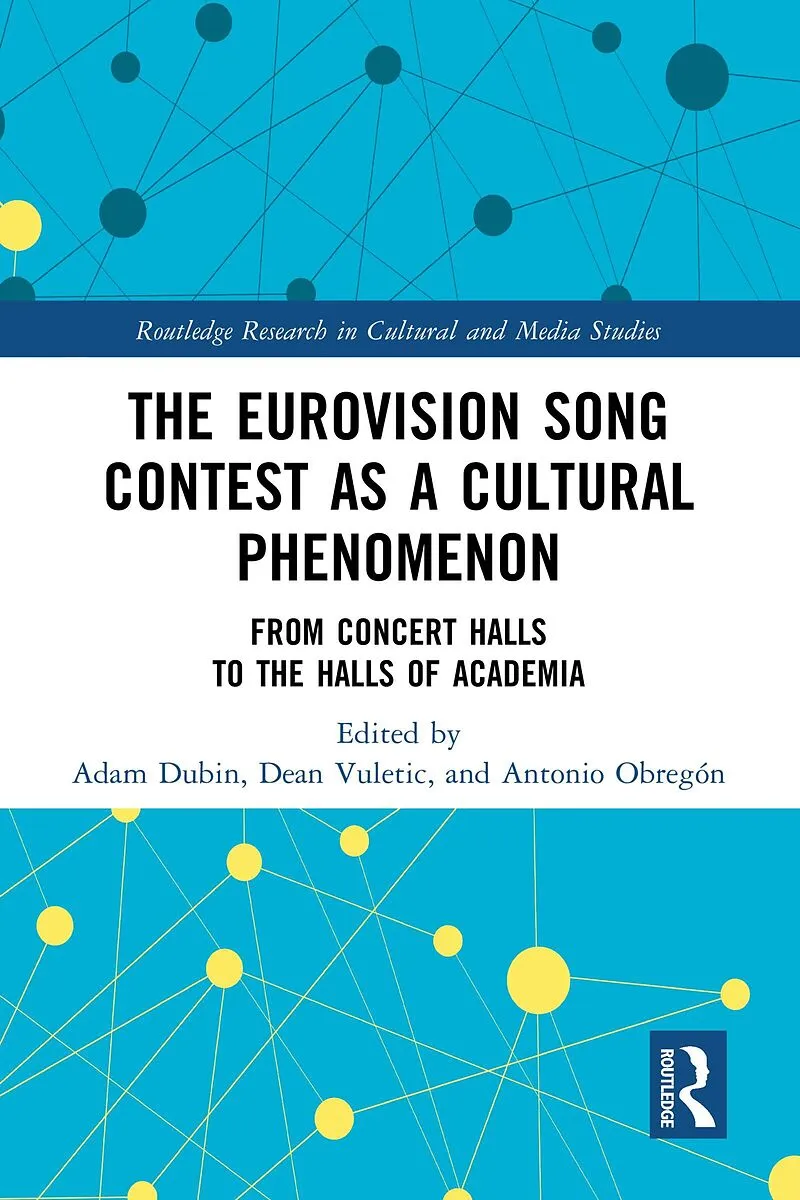
The Eurovision Song Contest as a Cultural Phenomenon
Beschreibung
Drawing from the wealth of academic literature about the Eurovision Song Contest (ESC) written over the last two decades, this book consolidates and recognizes the ESC's relevance in academia by analysing its contribution to different fields of study. The boo...Format auswählen
- E-Book (epub)CHF 50.90
- E-Book (pdf)CHF 50.90

Wird oft zusammen gekauft
Andere Kunden kauften auch
Beschreibung
Drawing from the wealth of academic literature about the Eurovision Song Contest (ESC) written over the last two decades, this book consolidates and recognizes the ESC's relevance in academia by analysing its contribution to different fields of study.
The book brings together leading ESC scholars from across disciplines and from across the globe to reflect on the intersection between their academic fields of study and the ESC by answering the question: what has the ESC contributed to academia? The book also draws from fields rarely associated with the ESC, such as Law, Business and Research Methodologies, to demonstrate the contest's broad utility in research, pedagogy and in practice.
Given its interdisciplinary approach, this volume will be of interest to scholars and students working in cultural, media, and music studies, as well as those interested in the intersections between these areas and politics, law, education, pedagogy, and history.
Autorentext
Adam Dubin is a human rights scholar and Assistant Professor of Law at Universidad Pontificia Comillas in Madrid, Spain, as well as an Adjunct Professor of Politics at New York University, USA. He is also a Senior Research Associate at the University of Johannesburg and a Visiting Professor at Southwest University of Politics and Law in China. His research focuses on human rights in Sub Saharan Africa, as well as on the intersection between human rights and pop culture.
Dean Vuletic is a Historian of Contemporary Europe based in the Research Center on the History of Transformations at the University of Vienna, Austria, and the leading academic scholar on Eurovision. He is the author of Postwar Europe and the Eurovision Song Contest (2018).
Antonio Obregón was formerly the Vice Rector of Academic Affairs and Dean of the Faculty of Law at Universidad Pontificia Comillas. He is a Full Professor of Criminal Law and International Relations. Antonio holds an undergraduate degree in Law and Business Administration and a PhD in Criminal Law. He designed and taught the first seminar in a Spanish university on Eurovision and is a frequent commentator on news and other programs about the ESC.
Klappentext
Drawing from the wealth of academic literature about Eurovision written over the last two decades, this book consolidates and recognizes Eurovision's relevance in academia by analysing its contribution to different fields of study.
The book brings together leading Eurovision scholars from across disciplines and from across the globe to reflect on the intersection between their academic fields of study and the Eurovision Song Contest by answering the question: What has Eurovision contributed to academia? The book also draws from fields rarely associated with Eurovision, such as Law, Business and Research Methodologies, to demonstrate the song contest's broad utility in research, pedagogy and in practice.
Given its interdisciplinary approach, this volume will be of interest to scholars and students working in cultural, media, and communication studies, as well as those interested in the intersections of culture, media, nationalism, education, pedagogy, and history.
Inhalt
Part I
From Lugano to the Classroom: The ESC and Academia
The Grand Tour: The Origins of the ESC as a Cultural Phenomenon
Dean VuleticThe Eurovision Song Contest: An Academic Phenomenon
Antonio ObregónA Human Rights-Based Analysis of the Eurovision Song Contest and the European Broadcasting Union
Adam Dubin
Part II
From Past to Present: History, Politics and Society
The Mythology of Song Contests
Ivan RaykoffTeaching European History and Memory through Eurovision During the Covid-19 Pandemic
Alison Lewis and John HajekA March for Power: The Variety of Political Programs on the Eurovision Stage
Gad Yair and Chen OzeriThe Molitva Factor: Eurovision and 'Performing' National Identity in World Politics
Catherine BakerA Critical Pedagogical Eurovision Euphoria: The Potential of the Eurovision Song Contest to Promote Values Propagated by the European Union within Formal Learning Contexts
George CremonaSharing Values in the Eurovision Song Contest and OTI Festival: The Moral Fourth Person in the Lyrics of the Winning Songs
Ariel JamesEurovision in the Boardroom: What Does Voting Order Tell Us About Decision Making?
Jose Luis Arroyo-Barrigüete, Lourdes Fernández, Antonio Obregón
Part III
From Stage to Screen: Film, Media, and Music
High, Low, and Participatory: The Eurovision Song Contest and Cultural Studies
Jessica CarnielQueer Camp Against Franco: Iván Zulueta's Eurovision Song Contest Parody Un Dos Tres
Robert TobinThe Eurovision Song Contest and European Television History: Continuity, Adaptation, Experimentation
Mari PajalaFrom Trouble to Bubble? The Ambiguous Relationship between Professional Journalists and Fan Media in the Eurovision Song Contest
Irving WoltherDomesticity, Mass Media, and Moving-Image Aesthetics: The Visual Identity of the Eurovision Song Contest as a Hospitable Platform
José Luis PaneaArmchair Researchers: Modes of Ethnographic Research for Understanding and Experiencing Eurovision
Chris Hay and Jessica CarnielBetween Concepts and Behaviors: The Eurovision Song Contest and Ethnomusicology
Sofia Vieira Lopes and João Soeiro de Carvalho