Structural Adhesives
Beschreibung
Adhesives in general and structural adhesives in particular are the subjects of much academic interest as well as commercial importance. Structural bonding, as a method of joining, offers a number of advantages over mechanical fastening. However, in order to ...Format auswählen
- E-Book (pdf)CHF 118.90
- Kartonierter EinbandCHF 144.00
Wird oft zusammen gekauft
Andere Kunden kauften auch
Beschreibung
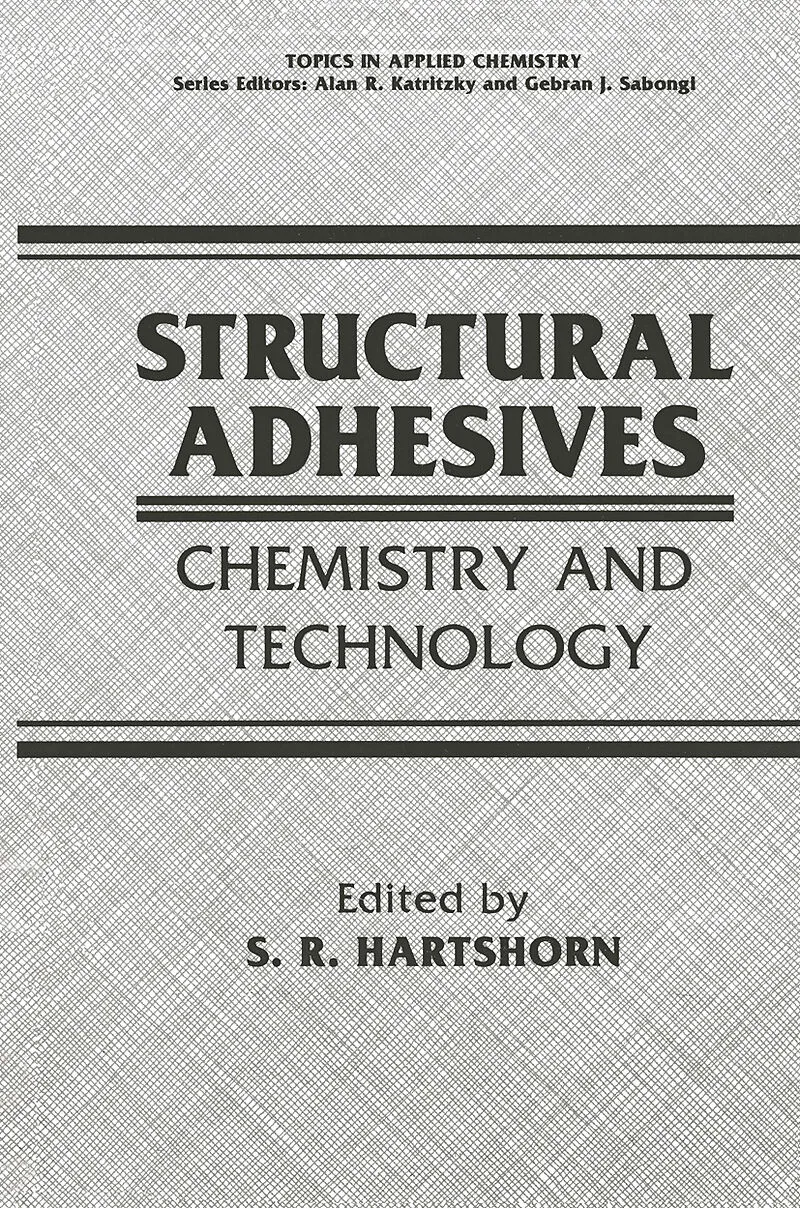
Adhesives in general and structural adhesives in particular are the subjects of much academic interest as well as commercial importance. Structural bonding, as a method of joining, offers a number of advantages over mechanical fastening. However, in order to achieve satisfactory results, the proper adhesive must be selected and the appropriate bonding procedures followed. The purpose of Structural Adhesives: Chemistry and Technology is to review the major classes of structural adhesives and the principles of adhesion and bonding as these relate to structural joints. Each chapter provides an overview of the topic under discussion with a list of references to the relevant literature. In addition to describing the chemistry involved, other aspects of structural adhesive technology are covered, such as formula tion, testing, and end uses. Some structural adhesives, especially epoxies and phenolics, have a long history of successful use and are now widely employed. Others, such as the structural acrylics and cyanoacrylates, are beginning to gain industrial acceptance. Urethanes and anaerobics have limited but important uses, while high-temperature adhesives are still largely in the research and development stage.
Inhalt
I. Definitions.- A. Structural Adhesives.- B. Classification.- C. Organization of Book.- D. Units and Conversion Factors.- II. Background.- A. Structural Bonding.- 1. Joining Methods.- 2. Advantages of Structural Adhesives.- 3. Limitations of Structural Adhesives.- B. Principles of Structural Bonding.- 1. Surface and Interfacial Phenomena.- 2. Phase Change.- 3. Bond Failure.- C. Design of Adhesive Joints.- D. Testing.- E. Adhesive Selection.- III. Markets for Structural Adhesives.- A. Adhesive Markets.- B. Markets for Structural Adhesives.- 1. Transportation.- 2. Construction.- 3. Other Rigid Bonding.- 4. Consumer Products.- IV. Applications.- References.- 1. Fundamentals of Structural Adhesive Bonding.- I. Introduction.- II. Physical Properties of Polymers and Adhesives.- A. Stress-Strain Properties.- B. Dynamic Mechanical Properties.- III. Surface Energy and Aspects of Cohesion.- A. Thermodynamics.- B. Cohesive Strength.- C. Fracture Mechanics for Linear Elastic Solids.- IV. Theories of Adhesion.- A. Introduction.- B. Wettability/ Adsorption Theory.- C. Contact Angles and Wettability.- D. Components of Surface and Interfacial Tension.- E. van der Waals Forces.- F. Kinetics of Wetting.- G. Mechanical Interlocking.- H. Chemical Bonding at Interfaces.- I. Acid-Base Interactions.- J. The Diffusion Theory of Adhesion.- V. Criteria for Optimum Bond Strength.- References.- 2. Phenolic Resins.- I. Introduction.- II. Mechanism of Phenol-Formaldehyde Reactions.- A. Reactions under Strongly Acidic Conditions (pH 1-4).- B. Reactions under Weakly Acidic Conditions (pH 4-7).- 1. High ortho-ortho Novolacs.- 2. Superacidity.- 3. High ortho-ortho Resoles.- 4. Dibenzylic Ether Linkages.- 5. Cyclic Polynuclear Species.- C. Reactions under Basic Conditions (pH 7-11).- 1. Resoles.- 2. Self-condensation.- D. Resorcinol and m-Aminophenol Modified Phenolic Resins.- E. Modified Phenolic Resins.- 1. Etherified Resoles.- 2. Modification at the Phenolic Hydroxyl.- III. Curing Reactions.- A. Curing of Resoles.- B. Curing of Novolacs.- C. Thermal Degradation.- IV. Structural Phenolic Adhesives.- A. Introduction.- B. Phenolic Resins for Wood Bonding.- 1. Phenolic Resins.- 2. Resorcinol Modified Novolacs.- 3. m-Aminophenol Modified Novolacs.- C. Polymer Blends for Metal Bonding.- 1. Phenolic-Epoxy Blends.- 2. Phenolic-Polyvinyl Blends.- 3. Phenolic-Nitrile Blends.- 4. Polyamide Phenolics.- 5. Nylon Phenolics.- 6. Acrylic Phenolics.- 7. Neoprene Phenolics.- 8. Urethane Phenolics.- D. Cure Conditions and Properties.- E. Commercially Available Materials.- References.- 3. Epoxy Structural Adhesives.- I. Introduction.- II. Compounding Epoxy Structural Adhesives.- A. Overview of Adhesives and Epoxy Raw Materials.- B. Two-Part Room Temperature Curing Epoxy Adhesives.- 1. Nitrogen-containing Curatives.- 2. Sulfur-containing Curatives.- 3. Carboxyl-containing Curatives.- 4. Lewis Acid Catalysts.- 5. Encapsulation.- C. One-Part Heat Curing Paste Adhesives.- 1. Catalysts.- 2. Toughening Agents.- 3. Fillers, Filler Treatments, and Surfactants.- 4. Thixotropic Additives.- 5. Adhesion Promoters.- D. Epoxy Film Adhesives.- III. Recent Developments in Epoxy Structural Adhesives.- A. Epoxy Resins.- B. Room Temperature Amine Curing Agents.- C. Room Temperature Sulfur Curing Agents.- D. Room Temperature Acid Catalysts.- E. Heat Cure Amine Curatives and Catalysts.- 1. Primary Amine Curatives.- 2. Secondary Amine Curatives.- 3. Tertiary Amine Catalysts.- 4. Dicyandiamide and Derivatives.- 5. Imidazole Derivatives.- F. Heat Cure Carboxylic Acid Curatives.- G. Heat Cure Anhydride Curatives.- H. Heat Cure Cationic Catalysts.- I. Flexibilizing and Toughening Agents.- 1. Flexibilizing Agents.- 2. Toughening Agents.- J. Fillers.- 1. Reinforcing Fillers.- 2. Glass Fillers.- 3. Corrosion-inhibiting Fillers.- 4. Adhesion-promoting Fillers.- 5. Cure-promoting Fillers.- 6. Electrical Conductivity-promoting Fillers.- 7. Silica Fillers.- 8. Flow Control Fillers.- K. Additives.- 1. Adhesion Promoters.- 2. Adhesive-strengthening Additives.- 3. Heat and/ or Moisture Resistance Additives.- 4. Film-forming Additives.- 5. Dispersing Additives.- References.- 4. Polyurethane Structural Adhesives.- I. Introduction.- II. Polyurethane Chemistry.- III. Structure-Property Relationships in Polyurethanes.- A. General Concepts.- B. Effect of Soft Segment.- C. Effect of Hard Segment.- D. Chemical Crosslinking.- E. Stability of Polyurethanes.- 1. Thermal Stability.- 2. Oxidative Stability.- 3. Solvolytic Stability.- 4. Stabilization.- IV. Polyurethane Structural Adhesive Applications.- A. Introduction.- B. Two-Part Adhesives.- C. One-Part Adhesives.- 1. Moisture Cure.- 2. Heat Cure.- D. Comparison of One-Part and Two-Part Systems.- E. Plastic and Metal Bonding.- 1. Trends.- 2. Substrate Preparation.- 3. Bond Testing.- F. Wood Bonding.- References.- 5. Anaerobic and Structural Acrylic Adhesives.- I. Introduction.- II. Anaerobic Adhesives.- A. Background.- B. Formulation Components.- 1. Monomers.- 2. Initiators.- 3. Accelerators.- 4. Stabilizers/ Inhibitors.- 5. Modifiers.- C. Chemistry of Anaerobic Adhesives.- D. End Use Applications.- E. Anaerobic Products and Performance.- III. Structural Acrylic Adhesives.- A. Background.- B. Formulation Components.- 1. Monomers.- 2. Catalyst Systems.- 3. Tougheners.- C. Chemistry.- D. Applications.- E. Commercial Product Performance.- References.- 6. Cyanoacrylate Adhesives.- I. Introduction.- II. Cyanoacrylate Chemistry.- A. General Description.- B. Monomer Synthesis.- 1. Alkyl Cyanoacrylates.- 2. Biscyanoacrylates.- 3. 2-Substituted-l-Cyanoacrylates.- C. Properties of Cyanoacrylate Monomers.- D. Polymerization of Cyanoacrylate Monomers.- 1. Introduction.- 2. Initiation.- 3. Propagation.- 4. Chain Transfer and Termination.- 5. Bulk Polymerization.- E. Polymerization Modifiers.- 1. Initiators.- 2. Accelerators.- 3. Inhibitors.- F. Properties of Polycyanoacrylates.- III. Cyanoacrylate Adhesive Properties.- A. Bond Strength.- 1. Introduction.- 2. Bond Strength Modifiers.- B. Durability.- 1. Introduction.- 2. Heat Durability.- 3. Heat Resistance Promoters.- 4. Moisture Durability.- C. Other Adhesive Properties and Modifiers.- 1. Viscosity.- 2. Colorants and Dyes.- 3. Miscellaneous Properties and Modifiers.- IV. Cyanoacrylate Application and Uses.- A. Bondable Substrates.- B. Surface Preparation.- 1. Metals.- 2. Polymers.- 3. Glass and Ceramics.- 4. Wood.- C. Toxicology and Safety.- 1. Handling Precautions.- 2. Toxicology.- D. Containers and Storage.- E. Application Methods and Equipment.- 1. Adhesive Application.- 2. Application Equipment.- F. Typical Industrial Applications.- V. Summary.- A. Advantages of Cyanoacrylate Adhesives.- B. Disadvantages of Cyanoacrylate Ad…


