Beschreibung
"A timely collection on screen adaptation that manages to be both wide-ranging in scope but sharply focused on current debates within one of the enduring modes of Irish cinematic production. It offers fresh perspectives on a new generation of film and filmmak..."A timely collection on screen adaptation that manages to be both wide-ranging in scope but sharply focused on current debates within one of the enduring modes of Irish cinematic production. It offers fresh perspectives on a new generation of film and filmmakers."
-Lance Pettitt, Birkbeck, University of London, UK
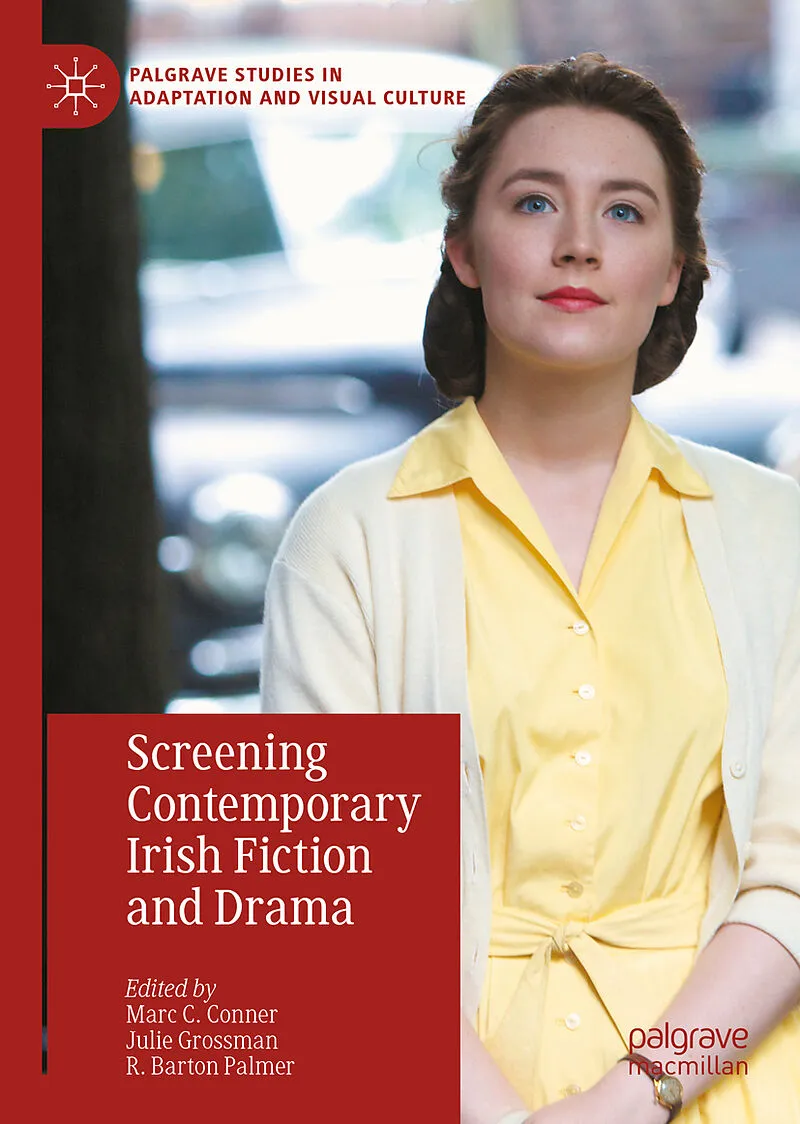
In this book, each chapter explores significant Irish texts in their literary, cultural, and historical contexts. With an introduction that establishes the multiple critical contexts for Irish cinema, literature, and their adaptive textual worlds, the volume addresses some of the most popular and important late 20th-Century and 21st Century works that have had an impact on the Irish and global cinema and literary landscape. A remarkable series of acclaimed and profitable domestic productions during the past three decades has accompanied, while chronicling, Ireland's struggle with self-identity, national consciousness, and cultural expression, such that the story of contemporary Irish cinema is in many ways the story of the young nation's growth pains and travails. Whereas Irish literature had long stood as the nation's foremost artistic achievement, it is not too much to say that film now rivals literature as Ireland's key form of cultural expression. The proliferation of successful screen versionings of Irish fiction and drama shows how intimately the contemporary Irish cinema is tied to the project of both understanding and complicating (even denying) a national identity that has undergone radical change during the past three decades. This present volume is the first to present a collective accounting of that productive synergy, which has seen so much of contemporary Irish literature transferred to the screen.
Marc C. Conner is the President of Skidmore College in Saratoga Springs, New York, USA, where he is also professor of English.
Julie Grossman is Professor of English and Communication and Film Studies at Le Moyne College, USA.
R. Barton Palmer is the Calhoun Lemon Professor of Literature emeritus at Clemson University, USA, where he taught from 1995-2019.
Autorentext
Marc Conner is the President of Skidmore College in Saratoga Springs, New York, USA, where he is also professor of English. His books include Screening Modern Irish Fiction and Drama (2016) and The Selected Letters of Ralph Ellison (2019). He has produced three lecture series with the Great Courses program: How to Read and Understand Shakespeare (2012), The Irish Identity: Independence, History, and Literature (2016), and Touring Ireland and Northern Ireland (2020).
Julie Grossman is Professor of English and Communication and Film Studies at Le Moyne College, USA. She is author of Rethinking the Femme Fatale in Film Noir: Ready for Her Close-Up (2009), Literature, Film, and Their Hideous Progeny: Adaptation and ElasTEXTity (2015), and The Femme Fatale (2020). She is co-chair (with Kamilla Elliott) of the Association of Adaptation Studies and founding co-editor (with R. Barton Palmer) of the book series Adaptation and Visual Culture.
R. Barton Palmer is the Calhoun Lemon Professor of Literature emeritus at Clemson University, USA, where he taught from 1995-2019 after a previous stint as Professor of English and Communication at Georgia State University, USA, where he helped establish the film program. At Clemson, Palmer was the founding director of the World Cinema program. Palmer has published widely in both literary and film studies, with a special interest in both film noir and American film history.
Klappentext
In this book, each chapter explores significant Irish texts in their literary, cultural, and historical contexts. With an introduction that establishes the multiple critical contexts for Irish cinema, literature, and their adaptive textual worlds, the volume addresses some of the most popular and important late 20th-Century and 21st Century works that have had an impact on the Irish and global cinema and literary landscape. Ireland's emergence, starting in the 1990s, as a model EU economy (for better and for worse) has been matched by the emergence of a film culture that reflects the European rather than the Hollywood model, with a productive interdependence of the private and public sectors at its base. A remarkable series of acclaimed and profitable domestic productions during the past three decades has accompanied, while chronicling, Ireland's struggle with self-identity, national consciousness, and cultural expression, such that the story of contemporary Irish cinema is in many ways the story of the young nation's growth pains and travails. Whereas Irish literature had long stood as the nation's foremost artistic achievement, it is not too much to say that film now rivals literature as Ireland's key form of cultural expression. The proliferation of successful screen versionings of Irish fiction and drama shows how intimately the contemporary Irish cinema is tied to the project of both understanding and complicating (even denying) a national identity that has undergone radical change during the past three decades. This present volume is the first to present a collective accounting of that productive synergy, which has seen so much of contemporary Irish literature transferred to the screen.
Inhalt
Chapter 1.- Filming Global Ireland: Roddy Doyle's "The Commitments"
Chapter 2.- The Riddle of the Models of John Carney's Sing Street (2016)
Chapter 3.- The Women Incarnate of Words Upon the Window Pane
Chapter 4.- Mouth Not Eye: On Jordan's Adaptation of Beckett's Not I
Chapter 5.- "The Joyce of Filum: Cinematic Accounts of Ulysses."
Chapter 6.- "One Beetle Recognizes Another": translation, transformation, transgression in Cartoon Saloon's film The Secret of Kells."
Chapter 7.- Bad Da's: Rewriting fatherhood in Breakfast on Pluto
Chapter 8.- What Richard Did: Sort of Adapting Irish History
Chapter 9.- Plagues of Silence: Adaptation and Agency in Colm Tóibín's and John Crowley's Brooklyns
Chapter 10.- The Program, Seven Deadly Sins, and Stephen Frears
Chapter 11.- An Un-retrieval Sacrificial/Penitent Sensibility in the Diasporic Films of John Michael and Martin McDonagh
Chapter 12.- "How should we remember what happened?": Cultural Representations of Institutional Abuse in Jim Sheridan's The Secret Scripture