Beschreibung
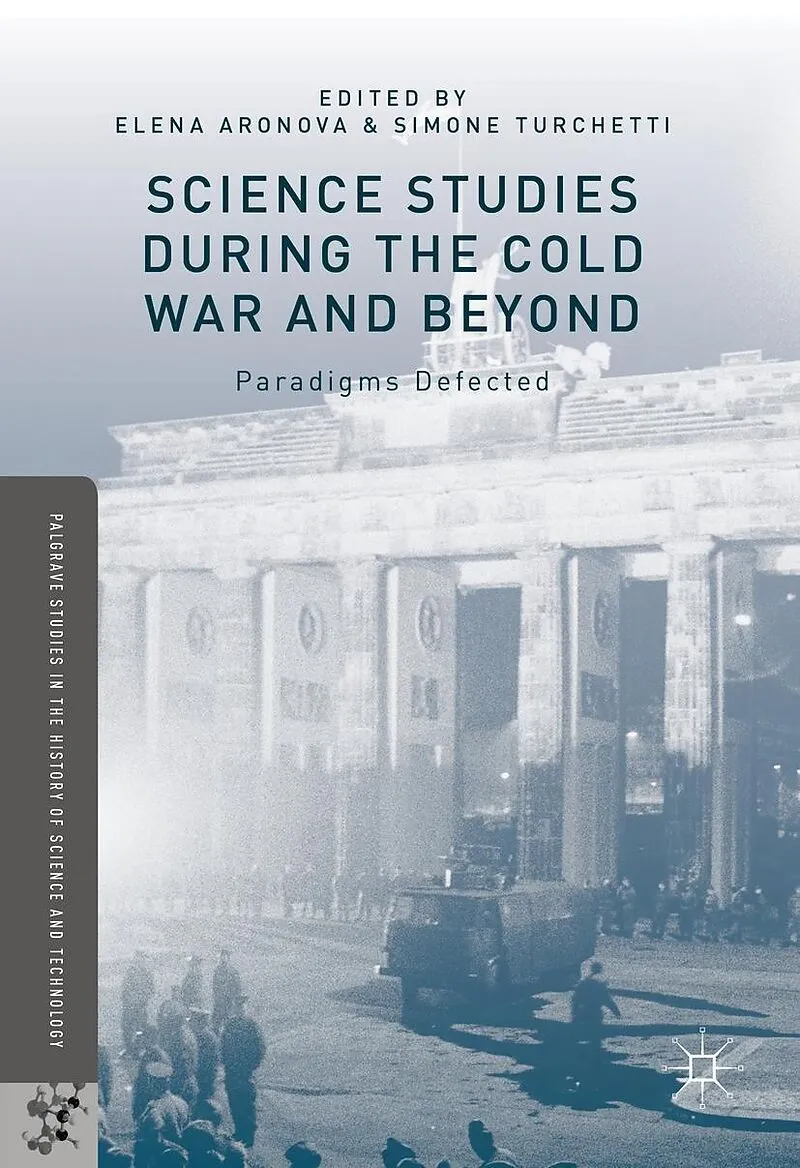
This book examines the ways in which studies of science intertwined with Cold War politics, in both familiar and less familiar "battlefields" of the Cold War. Taken together, the essays highlight two primary roles for science studies as a new field of experti...This book examines the ways in which studies of science intertwined with Cold War politics, in both familiar and less familiar "battlefields" of the Cold War. Taken together, the essays highlight two primary roles for science studies as a new field of expertise institutionalized during the Cold War in different political regimes. Firstly, science studies played a political role in cultural Cold War in sustaining as well as destabilizing political ideologies in different political and national contexts. Secondly, it was an instrument of science policies in the early Cold War: the studies of science were promoted as the underpinning for the national policies framed with regard to both global geopolitics and local national priorities. As this book demonstrates, however, the wider we cast our net, extending our histories beyond the more researched developments in the Anglophone West, the more complex and ambivalent both the "science studies" and "the Cold War" become outside these more familiar spaces. The national stories collected in this book may appear incommensurable with what we know as science studies today, but these stories present a vantage point from which to pluralize some of the visions that were constitutive to the construction of "Cold War" as a juxtaposition of the liberal democracies in the "West" and the communist "East."
Autorentext
Elena Aronova is an Assistant Professor at the History Department of the University of California at Santa Barbara, USA. She is completing her book, which examines the ways in which ideas about science have become a sphere of Cold War competition, on both sides of the iron curtain. Her current project, Doing Things with Data, examines the politics of environmental data collection, archiving, and exchange during the Cold War.
Simone Turchetti ***is Lecturer at the Centre for the History of Science, Technology and Medicine at the University of Manchester, UK. His research focuses on the interplay between scientists, intelligence officers and diplomats during the Cold War period. He is the author of The Pontecorvo Affair: A Cold War Defection and Nuclear Physics (2012), and more recently he has co-edited The Surveillance Imperative. Geosciences during the Cold War and Beyond.*
Zusammenfassung
In the past two decades, scholars in the cross-disciplinary field known as 'science studies,' or STS (Science and Technology Studies), have illuminated the ways in which the social, political, and conceptual developments of science and technology in the 20th century were shaped by the symbiotic relationships of science with the state and politics, demonstrating that political ambitions and intellectual/scientific production are inseparable. But this kind of analysis has hardly ever led to the self-reflexive effort to understand science studies as it was informed and shaped by political tensions. As a professional community, science studies scholars themselves are, of course, no exception to dynamics of interaction between experts, politicians and the state. However, so far few existing accounts have examined the social, political, and intellectual developments that laid its foundation. This volume seeks to add historical depth to the existing historiographic reflections on the post-WWII developments in history, philosophy and sociology of science, reconsidering conceptual and political origins of science studies as an academic discipline. In particular, it illuminates the ways in which the confrontation between superpowers informed significant transitions in this field in different national contexts. Since the Cold War defined a bipolar regime founded on opposing ideologies, it created the circumstances for designing different, alternative and at times conflicting interpretations of what science was or should be.
Inhalt
.Section one. Science Studies in the West.-.Chapter 1. George Reisch, Telegrams and Paradigms: On Cold-War Geopolitics and The Structure of Scientific Revolutions.-.**Chapter 2. Ian James Kidd, What's So Great about Science? Feyerabend on Science, Ideology, and the Cold War.-Chapter 3. Simone Turchetti, Looking for the Bad Teachers. Radicalism and the history of science in Western countries.-.Chapter 4. Hans-Joachim Dahms, Kuhn's Structure: An Exemplary Document of the Cold War Era?.-. Section two.Studies of Science Behind the 'Curtain'.-.**Chapter 5. Gabor Pallo, Blind Isolation: History of Science behind the Iron Curtain.-.**Chapter 6. Micha Kokowski, The Science of Science (naukoznawstwo) in Poland. Defending and removing the past in the Cold War.-.Chapter 7. Vítzslav Sommer, Scientists of the World, Unite! Radovan Richta's Theory of Scientific and Technological Revolution.-. Section three.National Agendas of the Studies of Science Beyond the 'Two Blocs'.-.**Chapter 8. Aant Elzinga, Cold War and Academic Boundaries: Imprints on the origins and early development of science studies in Sweden.-.**Chapter 9. Federico Vasen, What Does a National Science Mean? Science policy, politics and philosophy in Latin America.-.Chapter 10.* Lu Gao, From Natural Dialectics to STS: The Historical Evolution of Science Studies in China.*