Beschreibung
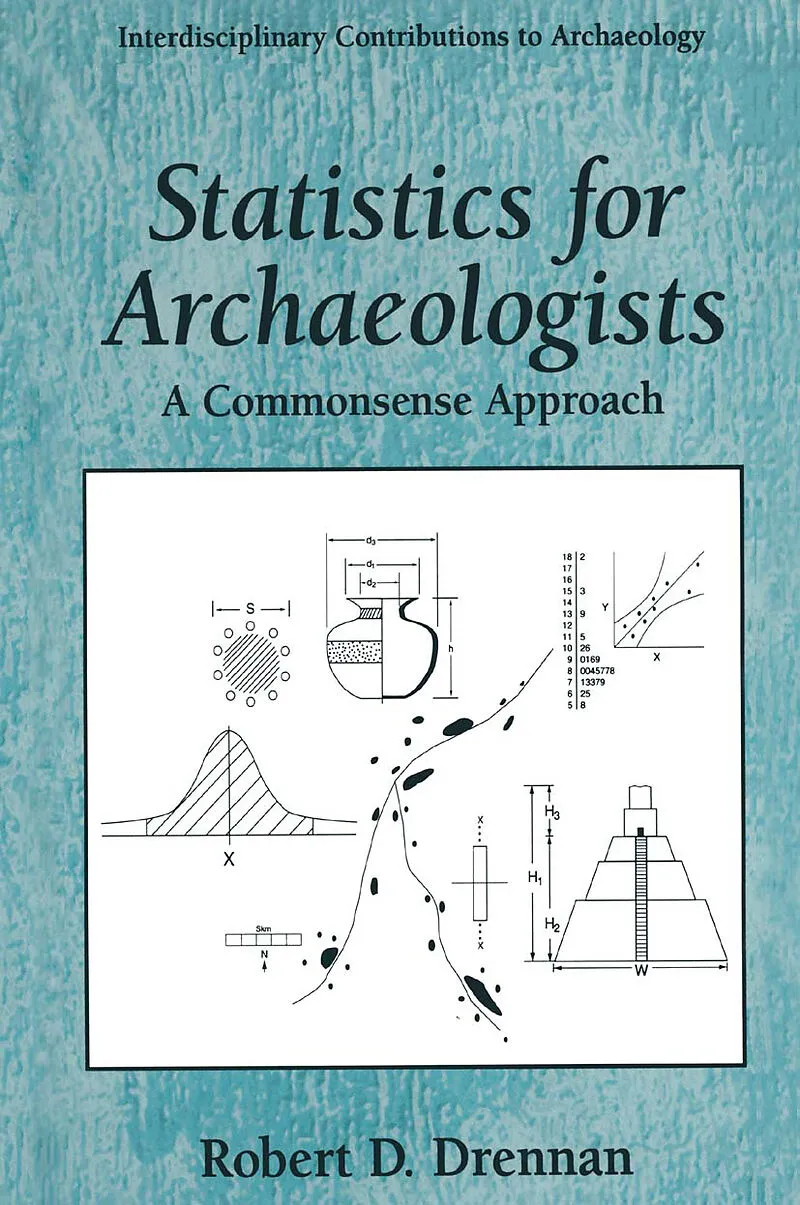
In the decade since its publication, the first edition of Statistics for Archaeologists has become a staple in the classroom. Taking a jargon-free approach, this teaching tool introduces the basic principles of statistics to archaeologists. The author covers ...In the decade since its publication, the first edition of Statistics for Archaeologists has become a staple in the classroom. Taking a jargon-free approach, this teaching tool introduces the basic principles of statistics to archaeologists. The author covers the necessary techniques for analyzing data collected in the field and laboratory as well as for evaluating the significance of the relationships between variables. In addition, chapters discuss the special concerns of working with samples. This well-illustrated guide features several practice problems making it an ideal text for students in archaeology and anthropology.
Using feedback from students and teachers who have been using the first edition, as well as another ten years of personal experience with the text, the author has provided an updated and revised second edition with a number of important changes. New topics covered include: -Proportions and Densities -Error Ranges for Medians -Resampling Approaches -Residuals from Regression -Point Sampling -Multivariate Analysis -Similarity Measures -Multidimensional Scaling -Principal Components Analysis -Cluster Analysis
Those already familiar with the clear and useful format of Statistics for Archaeologists will find this new edition a welcome update, and the new sections will make this seminal textbook an indispensible resource for a whole new group of students, professors, and practitioners.
Praise for the first edition:
"Robert Drennan has done the field a great service." Larry R. Kimball, American Antiquity, Vol 62 (1997).
"There is a great deal to recommend this book.... It is written in an engaging style...and it is consistently focused on the practical problems of archaeological analysis." Robert E. Dewar, SAS Bulletin, July 1997.
"...this book is highly recommended." Gary Lock, AmericanJournal of Archaeology, Vol 101 (1997).
"I will use this book when I teach statistics in the future, and I will gladly recommend it to others." Randall McGuire, Historical Archaeology, Vol 32 (1998).
"an excellent introductory textbook ...introducing complex ideas on statistics to students in a practical, non-threatening way.... [It] will help us to train our students to be better consumers of the statistical analyses they must deal with throughout their careers." Mark Aldendorfer, Journal of Field Archaeology, Vol 25 (1998).
Klappentext
This book is intended as an introduction to basic statistical principles and techniques for the archaeologist. It grows primarily from my experience in teaching courses in quantitative analysis for undergraduate and graduate stu dents in archaeology over a number of years. The book is set specifically in the context of archaeology, not because the issues dealt with are uniquely archaeological in nature, but because many people find it much easier to understand quantitative analysis in a familiar context-one in which they can readily understand the nature of the data and the utility of the tech niques. The principles and techniques, however, are all of much broader applicability. Physical anthropologists, cultural anthropologists, sociologists, psychologists, political scientists, and speCialists in other fields make use of these same principles and techniques. The particular mix of topics, the rela tive emphasis given them, and the exact approach taken here, however, do reflect my own view of what is most useful in the analysis of specifically archaeological data. It is impossible to fail to notice that many aspects of archaeological information are numerical and that archaeological analysis has an unavoid ably quantitative component. Standard statistical approaches are commonly applied in straightforward as well as unusual and ingenious ways to archae ological problems, and new approaches have been invented to cope with the speCial qUirks of archaeological analysis. The literature on quantitative analy sis in archaeology has grown to prodigious size in the past 25 or 30 years.
Inhalt
Numerical Exploration: 1. Batches of Numbers (Stemandleaf Plots, Histograms). 2. The Level, or Center, of a Batch (Mean and Median). 3. The Spread or Dispersion of a Batch (Range, Midspread, and Standard Deviation). 4. Comparing Batches (The BoxandDot Plot). 5. The Shape or Distribution of a Batch (Symmetry and Transformations). 6. Categories (Column and Row Proportions) Random Sampling: 7. Samples and Populations (Randomness and Sampling Bias). 8. Different Samples from the Same Population (Variation, the `Special Batch', and Standard Error). 9. Confidence and Population Means (Precision and Error Ranges, Student's t, Determining How Large of a Sample Is Needed). 10. Categories and Population Proportions (Percentages Instead of Means) Relationships between Two Variables: 11. Comparing Two Sample Means (The t Test, Results and Interpretations). 12. Comparing Means of More than Two Samples (Relating a Categorical Variable to a Measurement Variable, Analysis of Variance). 13. Comparing Proportions of Different Samples (Relating a Categorical Variable to Another Categorical Variable, Chisquare). 14. Relating a Measurement Variable to Another Measurement Variable. 15. Relating Ranks. 16. Sampling a Population with Subgroups. 17. Sampling a Site or Region with Spatial Units. 18. Sampling without Finding Anything. 19. Sampling and Reality Suggested Reading. Index.