Beschreibung
"With admirable global range, this refreshingly insightful volume explores the importance of international protests against the Vietnam War for the radicalising of national politics. By emphasizing the transnational circulation of ideas and people so vital to..."With admirable global range, this refreshingly insightful volume explores the importance of international protests against the Vietnam War for the radicalising of national politics. By emphasizing the transnational circulation of ideas and people so vital to that history, it challenges older notions of centre and periphery, while decentring the United States from the story."--Geoff Eley, University of Michigan, USA.
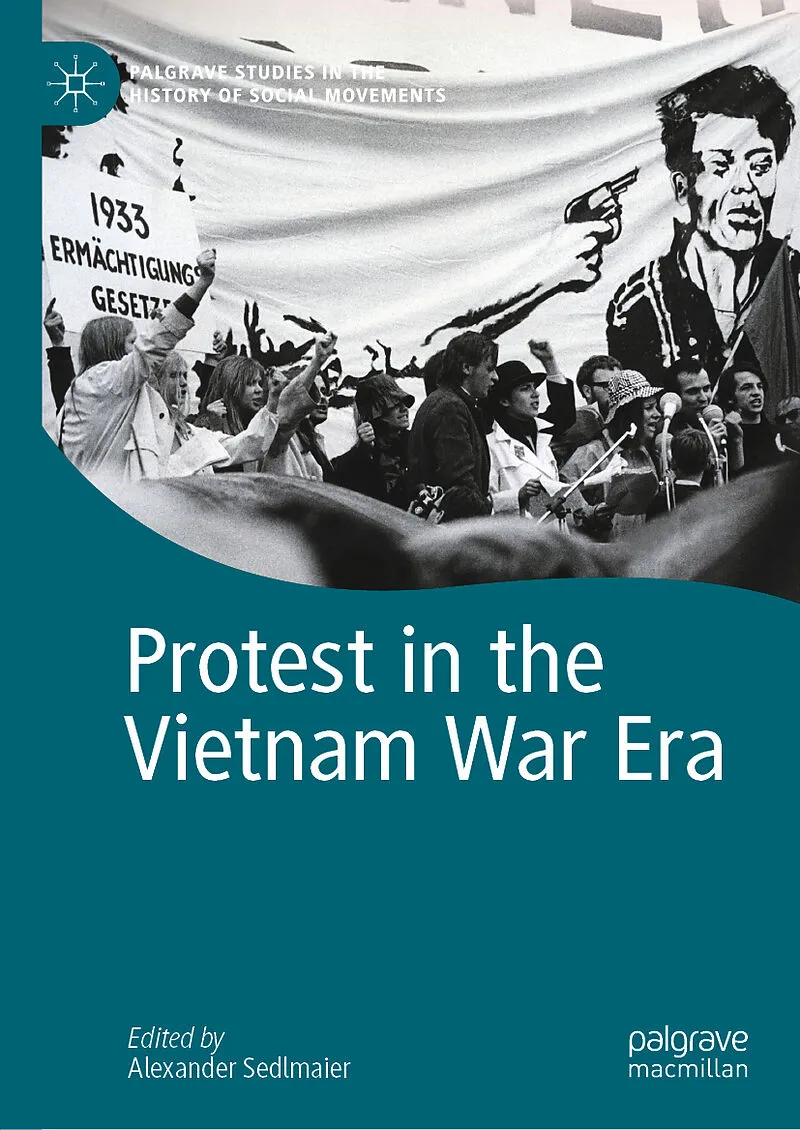
This book assesses the global emergence and transformation of protest movements during the Vietnam War era. It explores the relationship between activism explicitly focused on the war and other emancipatory and revolutionary struggles, moving beyond existing scholarship to examine the myriad interlinked protest issues and mobilisations around the globe during the Second Indochina War. Bringing together scholars working from a range of geographical, historiographical, and methodological perspectives, the volume offers a new framework for understanding the history of Vietnam War protest. A central inspiration is to shift our focus away from established perspectives that are thoroughly focused on the role of the United States with only peripheral attention paid to other parts of the world. The chapters are organised around the confluence of movements from the three geopolitical regions of the world: the core capitalist countries of the so-called first world, the socialist bloc, and the Global South, chiefly during the 1960s and early 1970s, but harking back to antecedents where appropriate. The opening section of the book lays the groundwork by focusing on international organisations that explicitly sought to bridge and unite solidarity and protest around the world. In a world of persistent military conflict, this book provides timely contributions to the larger questions of what war does to protest movements and what protest movements do to war.
Alexander Sedlmaier is Reader in Modern History at Bangor University, Wales,UK, and International Fellow at the Institute for Social Movements at Ruhr-University Bochum, Germany. He works on contemporary German, European, and North American history and is author of Consumption and Violence: Radical Protest in Cold-War West Germany (2014).
Autorentext
Alexander Sedlmaier is Reader in Modern History at Bangor University, UK, and Marie Skodowska-Curie Individual Fellow at the Institute for Social Movements at the Ruhr-University Bochum, Germany. He works on contemporary German, European and North American history and is author of Consumption and Violence: Radical Protest in Cold-War West Germany (2014).
Zusammenfassung
This book assesses the emergence and transformation of global protest movements during the Vietnam War era. It explores the relationship between protest focused on the war and other emancipatory and revolutionary struggles, moving beyond existing scholarship to examine the myriad interlinked protest issues and mobilisations around the globe during the Indochina Wars. Bringing together scholars working from a range of geographical, historiographical and methodological perspectives, the volume offers a new framework for understanding the history of wartime protest. The chapters are organised around the social movements from the three main geopolitical regions of the world during the 1960s and early 1970s: the core capitalist countries of the so-called first world, the socialist bloc and the Global South. The final section of the book then focuses on international organisations that explicitly sought to bridge and unite solidarity and protest around the world. In an era of persistent military conflict, the book provides timely contributions to the question of what war does to protest movements and what protest movements do to war.
Inhalt
Alexander Sedlmaier
Part A) Bridging the Worlds: International Organisations
2 To go further than words alone: The World Peace Council and the Global Orchestration of Vietnam War Campaigns During the 1960s
Kim Christiaens
3 The Vietnam Activities of the Women's International Democratic Federation (WIDF)
Francisca de Haan
Part B) State Socialism: Second-World solidarity, Propaganda, and Humanitarianism from Above and from Below
4 The Soviet Public and the Vietnam War: Political Mobilization, Public Organizations, and Activism, 19651973
Julie Hessler
5 Between Anti-Imperialism and Anti-Communism: Poland and International Solidarity with Vietnam
Idesbald Goddeeris
6 The Engineering of Political Equidistance and Its Consequences: The Vietnam War and Popular Protest in Yugoslavia
Sabine Rutar & Radina Vueti
Part C) The Capitalist Core: First World Activists Reach Out to Emancipatory and Revolutionary Movements Across the Globe
7 Vietnam War Protest and Solidarity in West Germany
Freia Anders & Alexander Sedlmaier
8 France's Two Vietnams: Intellectual Protest Politics in Perspective
Silja Behre
9 The Japanese New Left, the Vietnam War, and Anti-Imperial Protest Alex Finn Macartney
Part D) The Global South: Emancipation, anti-colonialism, Third Worldism
10 The Vietnam War, Maoism, and the Cultural Revolution: Propaganda and Mobilization in the People's Republic of China
Kazushi Minami
11 The Vietnam War, Protest, and Democratization in South Korea
Tae Yang Kwak
12 The Vietnam War in Africa
Dan Hodgkinson & Luke Melchiorre
13 Revolutionary Soulmates? Cuba's Slow Discovery of Vietnam Antoni Kapcia 14 Singing in Solidarity: The Latin American Protest-Song Movement and the Vietnam War Matías Hermosilla