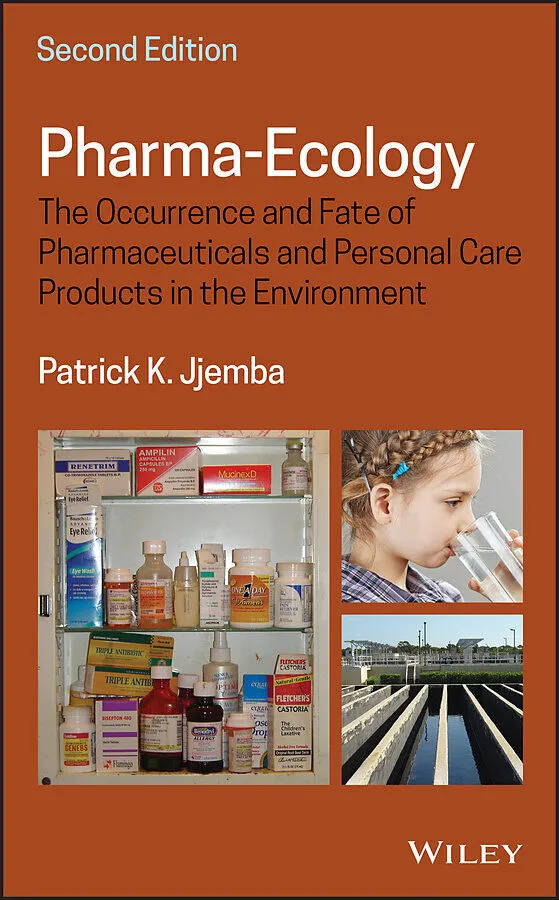
Pharma-Ecology
Beschreibung
The revised edition of the guide to environmental impact of pharmaceuticals and personal care products The revised and updated second edition of Pharma-Ecology joins the health and environmental sciences professions' concern over the occurrence and fate of ph...Format auswählen
- E-Book (pdf)CHF 155.00

Wird oft zusammen gekauft
Andere Kunden kauften auch
Beschreibung
The revised edition of the guide to environmental impact of pharmaceuticals and personal care products The revised and updated second edition of Pharma-Ecology joins the health and environmental sciences professions' concern over the occurrence and fate of pharmaceutical and personal care products (PPCPs) in the environment and explores how to best minimize their impact. The text highlights the biological effects of various classes of pharmaceutical compounds under clinical settings, their modes of action, and approximate quantities consumed. The second edition contains the most recent knowledge about the ecological impact of PPCPs as more sensitive detection techniques have become available, since the book was first published. The second edition offers the most up-to-date information on pharma ecology and bridges the gap between medicine, public health, and environmental science. This new edition contains helpful learning objectives for each chapter, as well as a brief section at the end of each chapter that presents a set of open ended questions. This vital resource: Explores the biological effects of pharmaceutical compounds under clinical settings, their modes of action, approximate quantities consumed Provides researchers and scientists with critical background data on the environmental impacts of PPCPs Contains the most current information on PPCPs' ecological impacts, based on new detection techniques Bridges the gap between medicine, public health, and environmental science Written for ecologists, engineers, microbiologists, pharmacists, toxicologists, chemists, physicians, and veterinarians involved in pollution and environmental analysis, the second edition of Pharma-Ecology contains the most current information available on the environmental impact of pharmaceuticals and personal care products.
Autorentext
Patrick K. Jjemba, PhD, MBA, is the Director of Operations at DE&P Technical Services, an environmental consultancy company engaged in water and wastewater treatment, quality control, operations, and process improvement.
Klappentext
The Revised Edition of the Guide to Environmental Impact of Pharmaceuticals and Personal Care Products The revised and updated second edition of Pharma-Ecology joins the health and environmental sciences professions' concern over the occurrence and fate of pharmaceutical and personal care products (PPCPs) in the environment and explores how to best minimize their impact. The text highlights the biological effects of various classes of pharmaceutical compounds under clinical settings, their modes of action, and approximate quantities consumed. The second edition contains the most recent knowledge about the ecological impact of PPCPs as more sensitive detection techniques have become available, since the book was first published. The second edition offers the most up-to-date information on pharma ecology and bridges the gap between medicine, public health, and environmental science. This new edition contains helpful learning objectives for each chapter, as well as a brief section at the end of each chapter that presents a set of open ended questions. This vital resource:
- Explores the biological effects of pharmaceutical compounds under clinical settings, their modes of action, approximate quantities consumed
- Provides researchers and scientists with critical background data on the environmental impacts of PPCPs
- Contains the most current information on PPCPs' ecological impacts, based on new detection techniques
Bridges the gap between medicine, public health, and environmental science Written for ecologists, engineers, microbiologists, pharmacists, toxicologists, chemists, physicians, and veterinarians involved in pollution and environmental analysis, the second edition of Pharma-Ecology contains the most current information available on the environmental impact of pharmaceuticals and personal care products.
Inhalt
Preface ix1 Usage of Pharmaceutical and Personal Care Products 1
1.1 Pharmaceutical Consumption Trends 9
Study Questions 11
References 12
2 Most Prescribed Pharmaceuticals and Related Endpoints 15
2.1 Antihypertensive and Cardiovascular 16
2.2 Anxiolytic Sedatives, Hypnotics, and Antipsychotics 21
2.3 Analgesics and Antiinflammatory Drugs 29
Study Questions 33
References 33
3 Usage of Antimicrobial Agents and Related Endpoints 39
3.1 Cell Wall Synthesis Inhibiting Antibiotics 41
3.2 Inhibitors of Protein Synthesis 46
3.3 Nucleic Acid Synthesis Inhibitors 60
3.4 Antagonism to Metabolic Processes 67
3.5 Antibiotics that Disrupt Membrane Integrity 68
3.6 Other Antimicrobials 69
Study Questions 70
References 70
4 Usage of Other Groups of Pharmaceuticals and Related Endpoints 75
4.1 Gastrointestinal Drugs 76
4.2 Antidiabetic Drugs 78
4.3 Diuretics and Electrolytes 79
4.4 Thyroid System Medication 81
4.5 Respiratory Drugs 82
4.6 Oral Contraceptive and Reproductive Therapeutics 84
4.7 Biophosphonates and Other Skeletal Ailment Drugs 90
4.8 Steroids 91
4.9 Hematologic Drugs 94
4.10 Nutritional Drugs 94
4.11 Triptans 95
4.12 Anesthetics 96
4.13 Antineoplastics and Immunosuppressants 97
Study Questions 98
References 98
5 Personal Care Products of Environmental Concern 103
5.1 Fragrances and Musks 104
5.2 Ultraviolet Light Filters 111
5.3 Detergents 111
5.4 Disinfectants 114
Study Questions 115
References 116
6 Detection and Occurrence of PPCPs in the Environment 119
6.1 Detection of PPCPs in the Environment 123
6.1.1 Detection Using Instrumentation 126
6.1.2 Detection Using Bioassays 127
6.2 Occurrence of PPCPs in Various Environments 131
6.2.1 Aquatic Systems 133
6.2.1.1 PPCPs in Wastewater 133
6.2.1.2 PPCPs in Surface Water 141
6.2.1.3 PPCPs in Groundwater 146
6.2.1.4 PPCPs in Potable Water 149
6.2.2 Occurrence of PPCPs in Sediments 152
6.2.3 Occurrence of PPCPs in Soil 152
6.2.4 PPCPs in Aerial Environments 154
6.3 Excretion as a Driver of Pharmaceutical Occurrence in the Environment 158
Study Questions 162
References 163
7 Ecopharmacokinetics and Ecopharmacodynamics of PPCPs 177
7.1 Overview of Pharmacokinetics and Pharmacodynamics 178
7.1.1 PPCP Sorption and Bioavailability in the Environment 188
7.1.2 Compound Halflife and Clearance 192
7.2 Degradation of PPCPs in the Environment 196
7.2.1 Degradation of Antibiotics in the Environment 197
7.2.1.1 Degradation of Quinolone Compounds 198
7.2.1.2 Fate of Lactams and Cephalosporins 199
7.2.1.3 Degradation of Tetracyclines 201
7.2.1.4 Degradation of Macrolides 203
7.2.1.5 Fate of Other Important Groups of Antibiotics 203
7.2.2 Degradation of Analgesics and Antiinflammatory Drugs 204
7.2.3 Degradation of Estrogens and Other Reproductive Hormones 207
7.2.4 Degradation of Other Important Pharmaceuticals 210
7.2.5 Degradation of Surfactants 210
7.3 Role of Physicochemical Factors in the Fate of PPCPs in the Environment 211
7.3.1 Molecular Size as an Attribute to Absorption and Persistence 211
7.3.2 Solubility and Hydrolysis 212
7.3.3 Effects of Dissociation, Partitioning, and Lipophilicity on Degradability 214
7.3.4 Effects of Moisture and Oxygen to the Fate of PPCPs in the Environment 217 7.3.5 Effects of Temperature in...