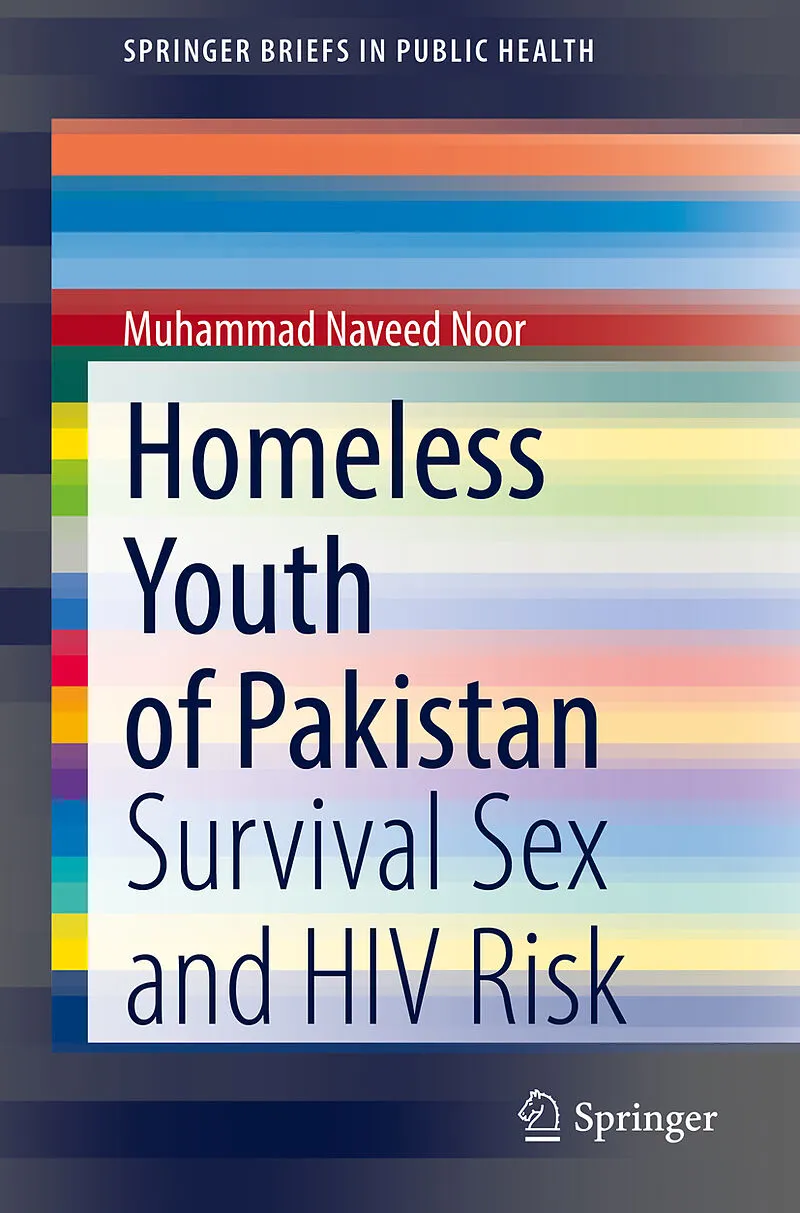
Homeless Youth of Pakistan
Beschreibung
While homeless young people (HYP) are typically perceived as irresponsible and morally suspect individuals who lack essential social skills to navigate their lives, this book offers an alternative and more positive perspective. It demonstrates that HYP improv...Format auswählen
- E-Book (pdf)CHF 59.90
- Kartonierter EinbandCHF 67.20

Wird oft zusammen gekauft
Andere Kunden kauften auch
Beschreibung
While homeless young people (HYP) are typically perceived as irresponsible and morally suspect individuals who lack essential social skills to navigate their lives, this book offers an alternative and more positive perspective. It demonstrates that HYP improvise with resources available on the streets to improve their social and financial status, although they experience significant social structural constraints.
This ground-breaking text provides an analysis of social processes that contribute to young people's homelessness, their engagement in sex work, their establishment of intimate partnerships, and sexual practices which may increase their risk of HIV and other sexually transmitted infections (STIs). The book demonstrates how the ongoing social and financial instability and insecurity neutralises HYP's knowledge of HIV/STIs, and how financial considerations, fear of violence by clients, and social obligations in intimate partnerships contribute to their sexual risk-taking. The author argues that the conventional approach of promoting health through raising awareness regarding HIV/STI prevention may continue to bring less than promising outcomes unless we focus on how structural and contextual conditions operate in the backdrop and produce conditions less conducive for young people.
Included in the coverage:
- factors that contribute to youth homelessness
- factors that shape sexual practice
- a Bourdieusian analysis of youth homelessness and sexual risk-taking
- a health promotion approach that can potentially reduce youth homelessness and their risk of HIV/STIs Homeless Youth of Pakistan: Survival Sex and HIV Risk will attract undergraduate and postgraduate students, and researchers interested in exploring issues such as youth homelessness, sexual risk-taking, and HIV/STIs.
Autorentext
**Muhammad Naveed Noor, MSc, MPhil, PhD **is an Assistant Professor of Health Policy and System Research at the Aga Khan University, Karachi, Pakistan. Dr. Noor is trained in anthropology and social medicine. He received a PhD in social research in health from the University of New South Wales, Sydney, Australia. He has contributed to various programmatic studies into maternal health, sexual and reproductive health, and women's dietary practices in the context of Pakistan. Dr. Noor is currently part of an international team that investigates conflict of interest in medical profession and practice and how this contributes to overprescribing of antibiotics in Pakistan.
Inhalt
Chapter 1: Introduction
This chapter is composed of three main sections. First, I provide a brief overview of the history of HIV in Pakistan, and how the epidemic is linked with high-risk population groups including injecting drug users, sex workers, men who have sex with men, and transgender individuals. I, then, describe while internationally there is a clear link between homelessness and HIV, there is a dearth of social scientific research into sexual risk-taking among homeless young people (HYP) in Pakistan. Second, I describe the overarching aim of my research, which is to explore the lived experiences of HYP in Pakistan. I explore why young people become homeless, what contributes to their engagement in sex work despite knowing that it is illegal and carries an immense stigma, and why homeless young people engage in sexual risk-taking even while being cognisant of the risk of HIV/STIs. Third, I describe the organisation of the book.
Chapter 2: Understanding homelessness
As HYP have lives characterised by a lack of resources, this can contribute to their decisions to engage in sex work. To have a better understanding of HYP's sexual practices, I explore factors contributing to their homelessness in the first place. In the first section, I explore the agency/structure-divide evident in many previous explanations of youth homelessness. My analysis suggests that rather than bifurcating the experiences of homelessness into micro- or macro-level forces, homelessness might be differently understood as an outcome of the combination of these antecedents. In the second section, I explore the strategies, HYP adopt to negotiate the adversity of homelessness. My analysis suggests that HYP are agential and resourceful, as they work to improve their financial status and construct a social and emotional support mechanism, although they often engage in social undesirable practices (i.e., sex work, drug dealing, theft, and panhandling).
Chapter 3: Understanding sexual behaviour
While HYP are often seen to be engaging in sexual risk-taking due to their limited knowledge about HIV/STIs, some studies suggest knowledge of HIV/STIs may not always help, as social structural forces can neutralise it, and can provide contexts of sexual risk-taking. To understand this complexity, first, I analyse biomedical, epidemiological, and public health research and explore why 'lay' beliefs about HIV/STI and sex exist despite advancement in biomedical knowledge and health promotion. Second, I investigate where these 'lay' beliefs about sex and HIV/STIs originate. Third, I review social psychology studies to examine the extent to which biomedical knowledge about HIV/STIs can help young people to practise safer sex. This review indicates that explanations of whether beliefs impact sexual behaviour are inconsistent, with some of them providing hints of how social structural forces can constrain individuals' sexual behaviour. Finally, I use sociological and anthropological research to explore the relationships between structural conditions and sexual behaviour.
Chapter 4: The theory of capital and social practice
In developing a study that can examine the relationships between various social structural- and interpersonal-level forces, it is critical to draw on a social theory that has a relational view of social practice. Therefore, the theoretical framework adopted is based on the constructivist sociology of Pierre Bourdieu. The first section describes the main tenets of Bourdieusian theory, including how the interrelationship between social fields, habitus, and capital produces social practice. The second section provides a detailed description of social fields, which are social spaces in which individuals navigate their social lives by accumulating and deploying various forms of capital. The third section describes habitus: individuals' long-lasting dispositions structured by their past and present experiences, which also orient their behaviour in specific contexts. The fourth section discusses the forms of capital: financial, social, and cultural resources that individuals accumulate and deploy to improve their socioeconomic status in a given social field.
Chapter 5: Methodological approach to the study This chapter is concerned with the methodological aspects of the present research. Based on the view that reality is socially constructed through the process of meaning-making, the research was underpinned by an idealist ontology and constructionist epistemology....


