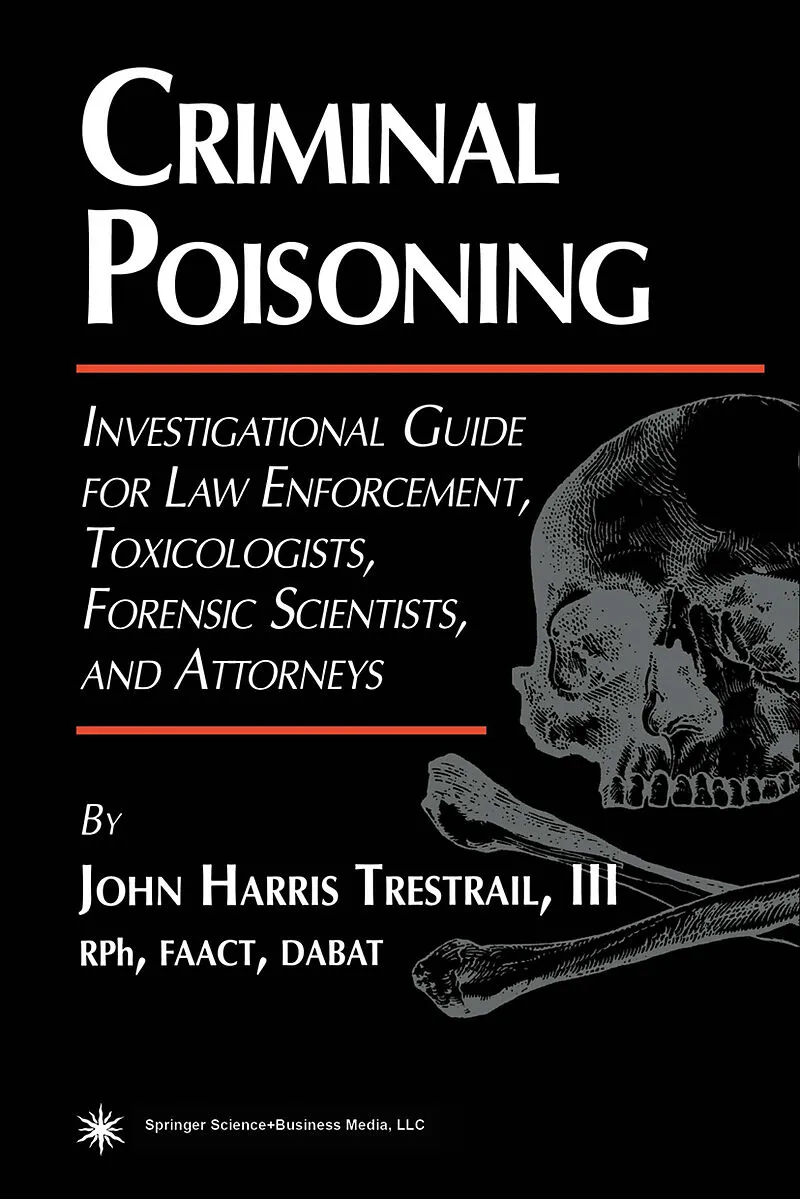
Criminal Poisoning
Beschreibung
In Criminal Poisoning: Investigational Guide for Law Enforcement, Toxicologists, Forensic Scientists, and Attorneys, leading forensic scientist John Trestrail offers a pioneering survey of all that is known about the use of poison as a weapon in murder. Topic...Format auswählen
- E-Book (pdf)CHF 106.90

Wird oft zusammen gekauft
Andere Kunden kauften auch
Beschreibung
In Criminal Poisoning: Investigational Guide for Law Enforcement, Toxicologists, Forensic Scientists, and Attorneys, leading forensic scientist John Trestrail offers a pioneering survey of all that is known about the use of poison as a weapon in murder. Topics range from the use of poisons in history and literature to convicting the poisoner in court, and include a review of the different types of poisons, techniques for crime scene investigation, and the critical essentials of the forensic autopsy. The author also examines what is known about poisoners in general (psychological profile, types, and statistical analyses) and their victims (who gets poisoned, investigative considerations, and classic symptoms of poisoning). Two chapters probe the problems of proving poisoning and convicting the poisoner in court.
Comprehensive and informative, Criminal Poisoning: Investigational Guide for Law Enforcement, Toxicologists, Forensic Scientists, and Attorneys offers forensic scientists, police and private investigators, forensic psychologists, and criminal prosecutors a unique one-volume summary of the knowledge and techniques needed to solve the near-invisible crime of poisoning and convict the perpetrator.
Klappentext
Passion {poison} often makes fools of clever men; sometimes even makes clever men of fools. La Rochefoucauld This book represents a pioneering work dealing exclusively with poi sons in the hands of the murderer, tamperer, and terrorist. One of the oldest offensive killing weapons developed by humanity, after the stick, stone, and fist, were the poisons. Yet, after nearly 5000 years of recorded history I no in-depth work has ever been produced dealing exclusively with poisons as weapons for homicide. The author's review of the intemationalliterature has revealed only a few scattered scientific papers dealing with the psychology of the poisoner I and books on medical jurisprudence and forensic investiga tion have devoted only a few pages to this important subject, usually stating that it is a rare " " occurrence. How do we know the true rarity of the use of poisons for homicide? All one has to do is look at the number of poisonings that are first documented only after the exhu mation of the deceased to raise the logical question: If we missed this one, how many more have been missed? If all those buried in our cemeteries who had been poisoned could raise their hands, we would probably be aghast at the numbers! For years, the homicidal poisoner has remained shrouded in mys tery.
Inhalt
Chapter 1-Poisoners Throughout History. Poisons in Ancient Times: Introduction. The Sumerians. The Ancient Egyptians. The Hebrews. The Asian Indians. Nicander of Colophon. Philon of Tarsus. Mithridates. The Greeks. The Romans. The 'Italian School of Poisoners'. The 'French School of Poisoners'. Poisoners in the Modern Era. William Palmer MD , 'The Rugeley Poisoner'. Edward William Pritchard MD, 'The Philandering Poisoner'. George Henry Lamson MD, 'The Slight-of-Hand Poisoner'. Thomas Neill Cream MD , 'The Lambeth Poisoner'. Cordelia Botkin, 'The Scorned Poisoner'. Johann Otto Hoch, 'The Stockyards Bluebeard'. Hawley Harvey Crippen MD, 'The Mild Mannered Murderer'. Fredericki Seddon, 'The Poisoning Miser'. Henri Girard, 'The First Scientific Murderer'. Arthur Warren Waite, DDS 'The Playboy Poisoner'. Murderers of Mike Malloy, 'The Case of the Man Who Wouldn't Die'. Rev. Frank Elias Sipple, 'The Poisoning Pastor'. Sadamichi Hirasawa, 'The Poisoning Bank Robber'. Christa Ambros Lehmann, 'The Poisonous Neighbor'. Arthur Kendrick Ford, 'The Accidental Poisoner for Sex'. Nannie ('Arsenic Annie') Doss, 'The Poisonous Romantic'. Graham Frederick Young, 'The Toxicomaniac'. Ronald Clark O'Bryan, 'The Halloween Killer'. Rev. James Warren Jones, 'The Minister Who Went Mad'. Murder of Georgi Markov, 'The Umbrella Assassination'. Unknown Offender 'The Tylenol, Tamperer'. Stella Maudine Nickell, 'The Camouflaged Poisoner'. Donald Harvey, 'The Angel of Death'. George Trepal, 'The Eccentric Genius'. Conclusion. References. Suggested Readings. Chapter 2-Types of Poisons. Definitions. Characteristics of 'Ideal' Poisons. Contrasts Between Poisons and More Traditional Weapons. How Do Poisons Kill?: Central Nervous System (CNS) Effects. Other Categories of Poisons. Elements of Poisoning Investigations: Access. Knowledge. Sources. References. Suggested Readings. Chapter 3-Poisoners. Types: Type S (where a specific victim is targeted). Type R (where a random victim is targeted).Misconceptions About Poisoners. Poisoner Schematic. Poisoner Thought Process. Psychological Profile of Poisoners. Public Perceptions of Poisoners. The Toxicomaniac. Statistical Analysis of Homicidal Poisonings: Most Common Poison Used. Poisoner's Background. Poisoner's Gender. Number of Victims. Poisoner's Motive. Offender's Conviction Status. Multiple Offenders on Victim(s). Gender of the Offender vs Number of Victims. References. Suggested Reading. Chapter 4-Victims. Who Gets Poisoned? Investigative Considerations. Distinctive Pathological Findings. Classic Symptoms of Poisoning. References. Suggested Readings. Chapter 5-Crime Scene Investigation. Physical Evidence. Investigative Considerations. Search Warrants. Poisoning Deaths Compared with Other Types of Violent Deaths. Investigating a Criminal Poisoning. Physical Evidence: Product Tampering. Analytical Toxicology. Analysis of Cremated Remains. How Did the Poison Get in the Patient? References. Suggested Readings. Chapter 6-The Forensic Autopsy. Chapter 7-Proving Poisoning. Key Elements to Be Proven. Statistical Analysis of Poisonings in the United States. References. Suggested Reading. Chapter 8-Poisoners in Court. Battery by Poison. Standard Defense Arguments: Poisoning Not the Cause of Death. Poisoning Not Homicidal. No Homicidal Intent. Substance Not a Poison. Accused Had a Reason to Have the Poison in His/Her Possession. Problems Proving Intentional Poisoning. References. Suggested Reading. Chapter 9-Poisoning in Fiction. Chapter 10-Conclusion. Appendix-Common Homicidal Poisons. Arsenic. Botulinus Toxin. Cyanide. Sodium Fluoroacetate. Strychnine.Thallium. Bibliographies. Poisoners Throughout History. Poisoning in Fiction. Forensic Poisoning. Analytic Toxicology. Index.


