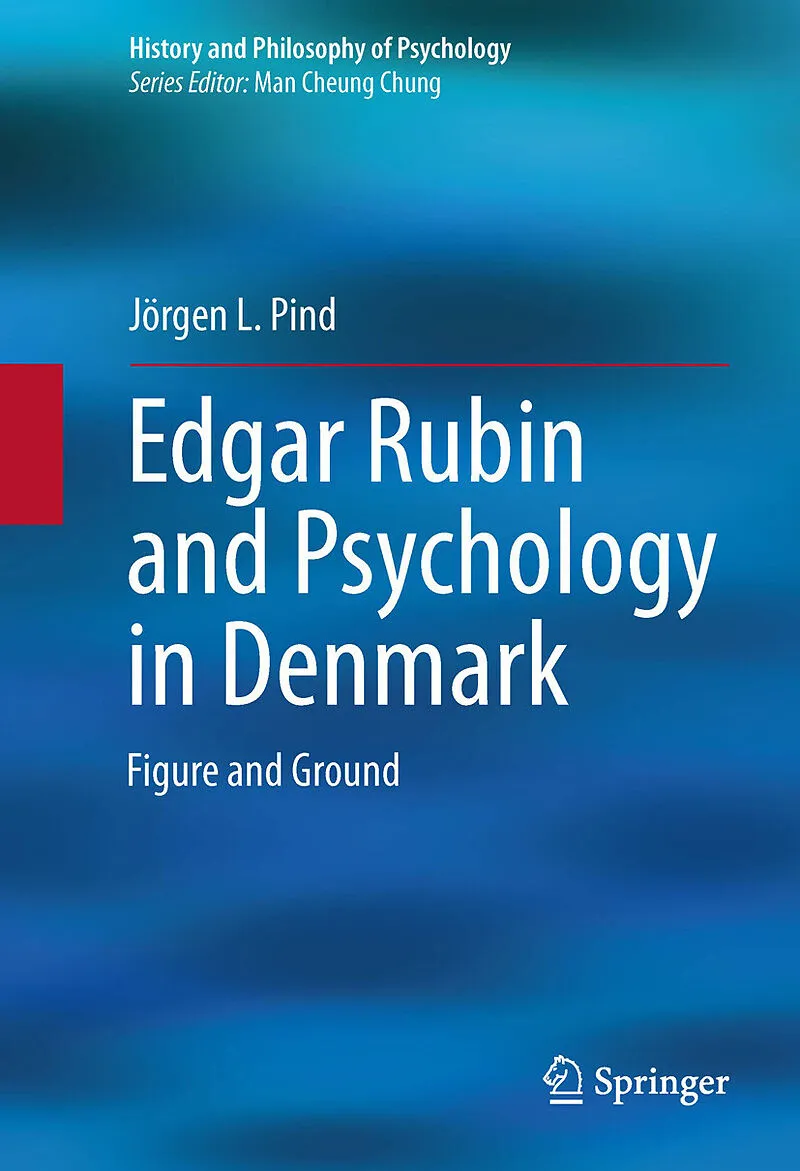
Edgar Rubin and Psychology in Denmark
Beschreibung
Is it a glass centerpiece--or is it really two faces? The familiar optical illusion known as the Rubin Vase embodies the complexities of the brain's recognition of visual figures and backgrounds. Its creator's accomplishments, however, extend far beyond this ...Format auswählen
- E-Book (pdf)CHF 59.90
- Fester EinbandCHF 120.80
- Kartonierter EinbandCHF 120.80
Wird oft zusammen gekauft
Andere Kunden kauften auch
Beschreibung
Is it a glass centerpiece--or is it really two faces? The familiar optical illusion known as the Rubin Vase embodies the complexities of the brain's recognition of visual figures and backgrounds. Its creator's accomplishments, however, extend far beyond this well-known concept.
Edgar Rubin and Psychology in Denmark tours a tumultuous century of history, politics, culture, and thought as reflected in the intellectual life of Denmark following the Golden Age of Kierkegaard and H. C. Andersen. Rubin's scholarly journey takes him from the debate over the scientific study of "the soul" to the maturation of perceptual psychology, providing both human context for our modern understanding of consciousness and a timeline for the recognition of psychology as science. Besides his revolutionary discoveries in visual perception, less-known aspects of his work are explored, such as his observations on taste and the perception of speech, as is his relationship--and reluctant contribution--to Gestalt theory. In these pages, Rubin is portrayed as a thinker simultaneously of his time and place and distinctly universal and modern. Included in this fascinating biography:
- The role of philosophy in the development of psychology.
- From psychophysics to experimental psychology.
- The education of psychologists.
- Rubin and the phenomenological approach in psychology.
- The impact of Rubin's work on Visually Experienced Figures and why it still resonates today.
- Setback and perseverance during World War Two.
- Niels Bohr and Edgar Rubin.
Rubin's later work and legacy to modern psychology. For those interested in the history of psychology and the history of ideas, and for students and specialists in perceptual psychology, Edgar Rubin and Psychology in Denmark will inform, inspire, and even delight.
Autorentext
Jörgen L. Pind is a professor of psychology at the University of Iceland. After a career in experimental psychology, he worked on the History of Psychology for the past 7-8 years, writing one book and a number of articles. He has spent two sabbatical terms at the Institute of Psychology at the University of Copenhagen, where he researched archival sources dealing with the history of psychology in Denmark, in particular relating to Rubin. He speaks and reads Danish fluently having been brought up bilingually in Danish and Icelandic. He studied in England (MSc and DPhil in Experimental Psychology, University of Sussex) and spent 1993-1994 as a visiting scientist at MIT.Klappentext
Is it a glass centerpiece--or is it really two faces?
The familiar optical illusion known as the Rubin Vase embodies the complexities of the brain's recognition of visual figures and backgrounds. Its creator's accomplishments, however, extend far beyond this well-known concept.
Edgar Rubin and Psychology in Denmark tours a tumultuous century of history, politics, culture, and thought as reflected in the intellectual life of Denmark following the Golden Age of Kierkegaard and H. C. Andersen. Rubin's scholarly journey takes him from the debate over the scientific study of "the soul" to the maturation of perceptual psychology, providing both human context for our modern understanding of consciousness and a timeline for the recognition of psychology as science. Besides his revolutionary discoveries in visual perception, less-known aspects of his work are explored, such as his observations on taste and the perception of speech, as is his relationship--and reluctant contribution--to Gestalt theory. In these pages, Rubin is portrayed as a thinker simultaneously of his time and place and distinctly universal and modern. Included in this fascinating biography:
- The role of philosophy in the development of psychology.
- From psychophysics to experimental psychology.
- The education of psychologists.
- Rubin and the phenomenological approach in psychology.
- The impact of Rubin's work on Visually Experienced Figures and why it still resonates today.
- Setback and perseverance during World War Two.
- Niels Bohr and Edgar Rubin.
Rubin's later work and legacy to modern psychology. For those interested in the history of psychology and the history of ideas, and for students and specialists in perceptual psychology, Edgar Rubin and Psychology in Denmark will inform, inspire, and even delight.
Zusammenfassung
Edgar Rubin was one of the outstanding pioneers of perceptual psychology in the early twentieth century. His approach involved a turning away from an earlier elementaristic psychology towards an approach based on perceptual wholes. Rubin's approach is closely linked to the Gestalt revolution in perceptual psychology and was eagerly embraced by the Gestaltists. This has often led to Rubin being classified as a Gestalt psychologist. This misrepresents his position as is shown in the book. Rubin's aim was to develop a descriptive psychology or aspective psychology to use his terminology which would do full justice to the complex nature of psychological phenomena. Thus he rejected attempts by the Gestalt psychologists to explain diverse phenomena within a single overarching framework. While Rubin is internationally often misclassified as a Gestalt psychologist, in Denmark he is often hailed as a pioneer of a specific Danish school of phenomenology. This also misrepresents Rubin's approach who was highly critical of psychological schools. His criticisms of the overambitious theoretical aspirations of Gestalt psychology, his negative attitude towards school formation in psychology were both highly prescient. What remains today of Gestalt psychology is primarily its descriptive parts; the idea of schools of psychology, so common in early twentieth century psychology is now seen as a totally outmoded viewpoint. There is an interesting moral in this story for the history and status of psychology; to wit, that Rubin's emphasis on the correct description of psychological phenomena shows what is likely to live on as classic contributions to psychology. This certainly holds for his own work on figure and ground which, after almost a century, is still universally known and admired by psychologists. He was indeed a consummate psychological observer. The book argues for the importance of description in psychology.Inhalt
- Growing up in Copenhagen.- Copenhagen, 1833.- Jews in Denmark.- Family and early years.- Education.- Gazing into the heavenly light.- 2. Psychology without a soul.- The lure of metaphysical longings.- A bon papa sort of man.- A quality of familiarity.- Food for thought.- Tutorials in the Philosophical Factory.- 3. Apprentice in Lehman's Laboratory.- The psychologist dares not experiment on the soul.- The intrepid experimenter.- Aristotle and Socrates in Copenhagen.- Ekliptika.- Paradoxical warmth.- Magister artium.- 4. Triumph and tragedy in academia.- Sympathetic understanding.- Purgatory in Göttingen.- Høffding's last lecture.- Rubin's revolution in perception.- The boat of my soul staggers.- Høffding's successor.- 5. Philosopher or psychologist.- Competing for a professorate.- The metaphysician in overalls.- Lehmann's successor.- The end of an era.- Drawn unto the Gestalt bandwagon.- 6. The aspective psychologist.- Explorations in the human sensorium.- An old-fashioned introspectionist.- Playing the part of your bad conscience.- Popularizing psychology.- Pest over Europe.- A taste for England.- Aspective Psychology.- Occupation, arrest, and the flight to Sweden.- 7. Final years and legacy.- The return from Sweden.- Remembering Rubin.- Rubin and Bohr.- The consummate observer.- Rubin's vase.
Produktinformationen
Weitere Bände aus der Buchreihe "Behavioral Science"


- Edgar Rubin and Psychology in Denmark
- Jörgen L. Pind
