Beschreibung
Makes factor investing more approachable with concrete and practical real-world examples Helps readers understand which factors have value and how to incorporate them into a portfolioIncludes ideas from academic research alongside the author's expertise as a ...Makes factor investing more approachable with concrete and practical real-world examples Helps readers understand which factors have value and how to incorporate them into a portfolioIncludes ideas from academic research alongside the author's expertise as a finance practitioner
Autorentext
Fadi Zaher is responsible for LGIM's Index Solutions. His role includes defining and leading LGIM's Index Solutions across ESG, factor based investing and tailored index strategies. Prior to that, he was Head of Fixed Income Strategy and Research at Barclays Wealth and Investment Management, Head of Bonds and Currencies at Kleinwort Benson, and held other senior positions at various financial institutions in the past 12 years. In his earlier career, Fadi worked at the European Central Bank and was previously a researcher and senior lecturer of finance and econometrics in Sweden. Fadi graduated from Lund University and holds a PhD in financial economics and MSc in economics.
Klappentext
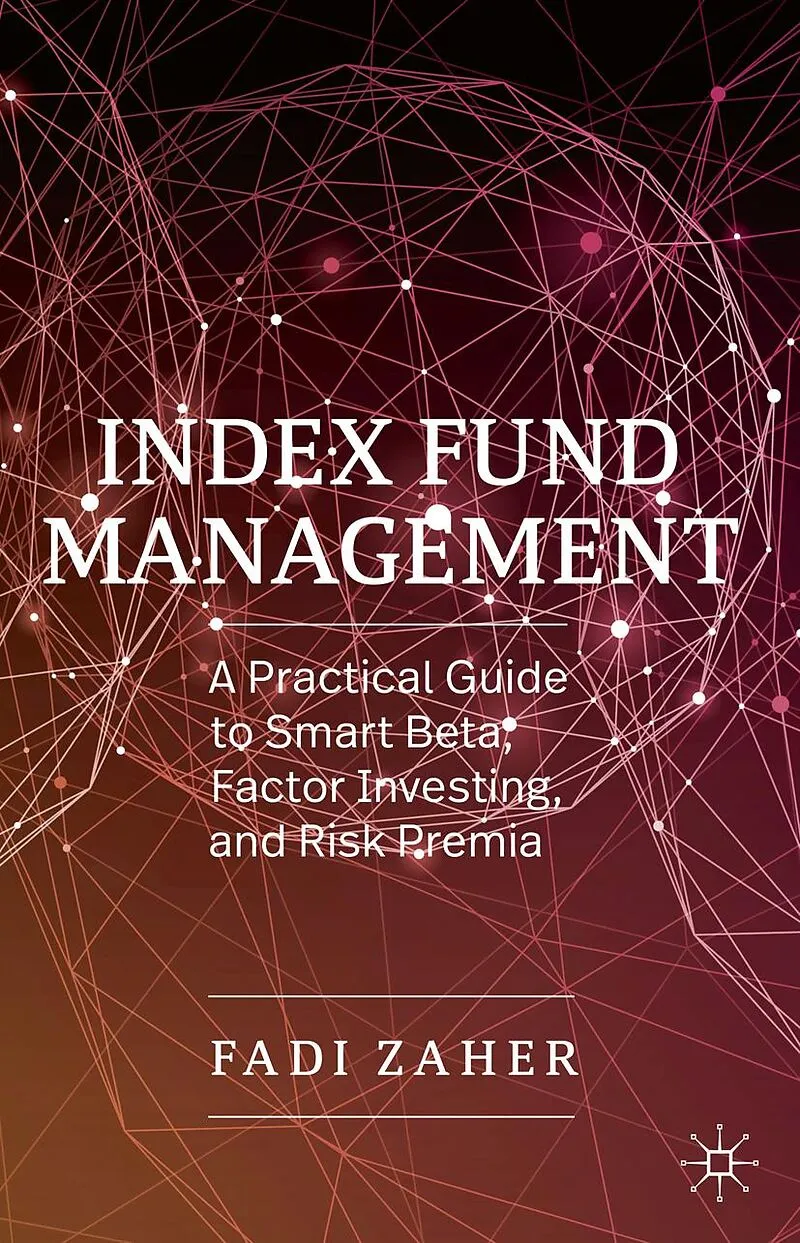
This book brings simplicity to passive investing, smart beta, and factor investing, which is the fastest growing type of investment in the asset management industry. The subject has a strong academic foundation but often taught and presented in a quite complex and unorganized way.In recent years, index and factor investing solutions have been bestsellers. But factor investing success is not a foregone conclusion, and there are plenty of quirks and misprints in the literature. Do investors need a novel approach? The book provides answers to some of these questions in an open and objective fashion.
Index fund management is increasingly taught in finance courses at universities. For market practitioners including trustees and investors, this book facilitates an increased understanding of how to invest in index and smart beta strategies, how to implement them, and what to be aware of with concrete and practical real-world examples.
Inhalt
1Introduction: What we talk about in factor investingPART I2.Stepping up to factor investing2.1.History of significant advances in indices and indexed funds2.2.Growth and adaptation of factor strategies2.3.The taxonomy of risks and returns2.4.Factor investing versus traditional index and active2.5.The misconception of factor investing in the press2.6.Consideration when looking at factor investing2.7.Concluding remarks3.Architecture and art of indexation3.1.Why index architecture matters3.2.Representativeness of the index strategy3.3.Modularity of an index3.4.Availability: the amount of stocks and bonds outstanding3.5.Stock and bond weightings3.5.1.Market value weighting3.5.2.Equal weighting3.5.3.Price weighting3.5.4.Outcome-oriented weighting: Tilting and optimisation3.6.Index maintenance and operations3.7.Replication and management of index funds3.7.1.Trading strategies3.7.2.Securities lending3.7.3.Cash management3.8.Crowding risk of index funds3.9.The capacity of index funds3.10.Concluding remarks4Equity Factor Investing: Value Stocks4.1Schools of value investing4.2The value and growth debate4.3Intrinsic value4.4Systematic screening approaches4.4.1Benjamin Graham screen4.4.2Price-to-book screen4.4.3Price-to-Earning screen4.4.4Price-to-sales ratio4.4.5Comparison and combination of screens4.4.6What constitutes good screen criteria?4.5Behavioural drivers of value factor4.6Market structure and reward for risk4.7Considerations for value investing4.8Concluding remarks5Equity Factor Investing: High Quality5.1Investment horizon for quality5.2Quality factor screens5.2.1Profitability screen5.2.2Asset growth and investment screen5.2.3Leverage screen5.2.4Earning accruals screen5.2.5Corporate governance screen5.2.6Combined quality screens among practitioners5.3Drivers of the quality premium5.4Quality and valuation of stocks5.5Consideration for quality strategies5.6Concluding remarks6Equity Factor Investing: Low Risk6.1Why considering low volatility factor investing?6.2Low-risk factor approaches and construction6.3Common low volatility factor indices6.4Behavioural drivers of the factor premium6.5Market structures driving the factor premium6.6Considerations when implementing low volatility strategies6.7Low volatility in asset allocation6.8Concluding remarks7Equity Factor Investing: Momentum7.1Evolution of momentum investing7.2Rules-based momentum index strategies7.2.1Cross-sectional momentum strategies7.2.2Time series momentum strategies7.3Market-based index strategies7.4Behavioural drivers of momentum premium7.4.1Herding behaviour7.4.2Representativeness and Confirmation bias7.5The reward for risk and market structures7.6Consideration for momentum strategies7.7Concluding remarks8Equity Factor Investing: Size8.1Defining the size factor8.2Construction of size-based index strategy8.3The existence of the size premium8.4Risk-based explanation of the size premium8.5Non-risk based explanation8.5.1The January effect8.5.2Inefficient pricing8.5.3Attention, coverage and transparency8.5.4Behavioural drivers of the...