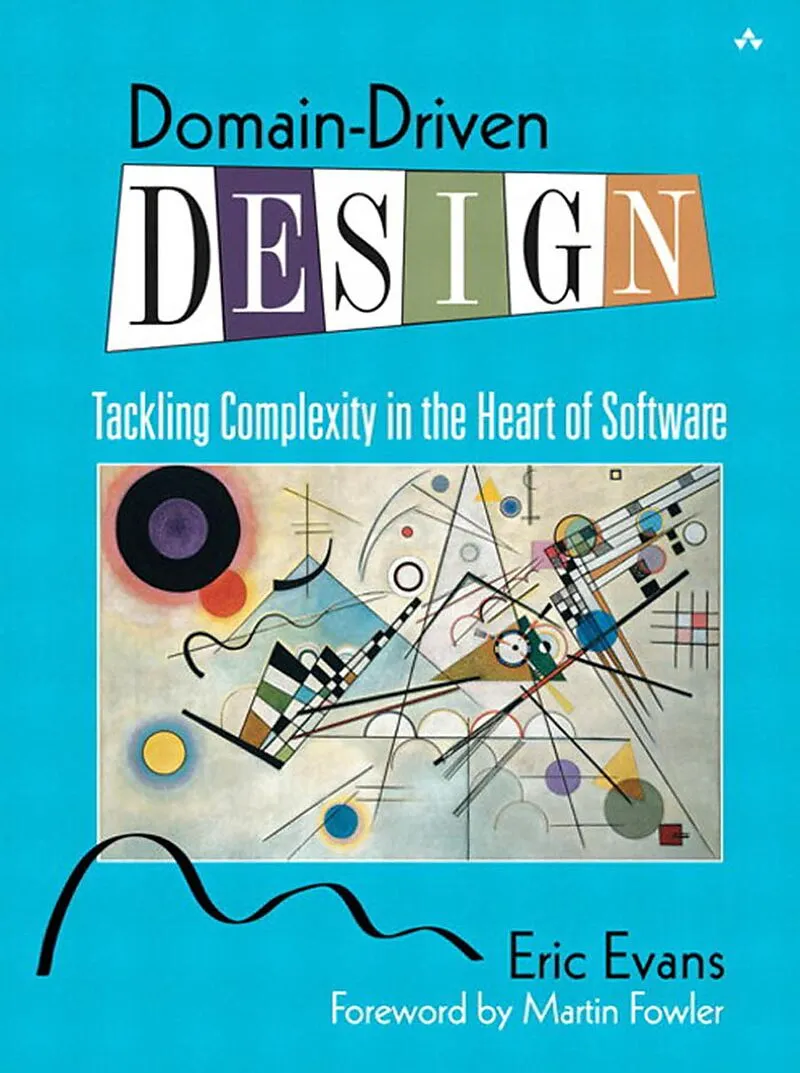
Domain-Driven Design
Beschreibung
Domain-Driven Design fills that need. This is not a book about specific technologies. It offers readers a systematic approach to domain-driven design, presenting an extensive set of design best practices, experience-based techniques, and fundamental principle...Format auswählen
- E-Book (epub)CHF 35.90
- E-Book (pdf)CHF 51.10
- Fester EinbandCHF 70.65

Wird oft zusammen gekauft
Andere Kunden kauften auch
Beschreibung
Domain-Driven Design fills that need. This is not a book about specific technologies. It offers readers a systematic approach to domain-driven design, presenting an extensive set of design best practices, experience-based techniques, and fundamental principles that facilitate the development of software projects facing complex domains. Intertwining design and development practice, this book incorporates numerous examples based on actual projects to illustrate the application of domain-driven design to real-world software development.
Readers learn how to use a domain model to make a complex development effort more focused and dynamic. A core of best practices and standard patterns provides a common language for the development team. A shift in emphasis-refactoring not just the code but the model underlying the code-in combination with the frequent iterations of Agile development leads to deeper insight into domains and enhanced communication between domain expert and programmer. Domain-Driven Design then builds on this foundation, and addresses modeling and design for complex systems and larger organizations.Specific topics covered include:
With this book in hand, object-oriented developers, system analysts, and designers will have the guidance they need to organize and focus their work, create rich and useful domain models, and leverage those models into quality, long-lasting software implementations.
Autorentext
Eric Evans is the founder of Domain Language, a consulting group dedicated to helping companies build evolving software deeply connected to their businesses. Since the 1980s, Eric has worked as a designer and programmer on large object-oriented systems in several complex business and technical domains. He has also trained and coached development teams in Extreme Programming.
Inhalt
Foreword. Preface. Acknowledgments. I. PUTTING THE DOMAIN MODEL TO WORK.
- Crunching Knowledge.
Ingredients of Effective Modeling.
Knowledge Crunching.
Continuous Learning.
Knowledge-Rich Design.
Deep Models.
- Communication and the Use of Language.
UBIQUITOUS LANGUAGE.
Modeling Out Loud.
One Team, One Language.
Documents and Diagrams.
Written Design Documents.
Executable Bedrock.
Explanatory Models.
- Binding Model and Implementation.
MODEL-DRIVEN DESIGN.
Modeling Paradigms and Tool Support.
Letting the Bones Show: Why Models Matter to Users.
HANDS-ON MODELERS.
II. THE BUILDING BLOCKS OF A MODEL-DRIVEN DESIGN. 4. Isolating the Domain.
LAYERED ARCHITECTURE.
Relating the Layers.
Architectural Frameworks.
The Domain Layer Is Where the Model Lives.
THE SMART UI "ANTI-PATTERN"
Other Kinds of Isolation.
- A Model Expressed in Software.
Associations.
ENTITIES (A.K.A. REFERENCE OBJECTS).
Modeling ENTITIES.
Designing the Identity Operation.
VALUE OBJECTS.
Designing VALUE OBJECTS.
Designing Associations That Involve VALUE OBJECTS.
SERVICES.
SERVICES and the Isolated Domain Layer.
Granularity.
Access to SERVICES.
MODULES (A.K.A. PACKAGES).
Agile MODULES.
The Pitfalls of Infrastructure-Driven Packaging.
Modeling Paradigms.
Why the Object Paradigm Predominates.
Nonobjects in an Object World.
Sticking with MODEL-DRIVEN DESIGN When Mixing Paradigms.
- The Life Cycle of a Domain Object.
AGGREGATES.
FACTORIES.
Choosing FACTORIES and Their Sites.
When a Constructor Is All You Need.
Designing the Interface.
Where Does Invariant Logic Go?
ENTITY FACTORIES Versus VALUE OBJECT FACTORIES.
Reconstituting Stored Objects.
REPOSITORIES.
Querying a REPOSITORY.
Client Code Ignores REPOSITORY Implementation; Developers Do Not.
Implementing a REPOSITORY.
Working Within Your Frameworks.
The Relationship with FACTORIES.
Designing Objects for Relational Databases.
- Using the Language: An Extended Example.
Introducing the Cargo Shipping System.
Isolating the Domain: Introducing the Applications.
Distinguishing ENTITIES and VALUE OBJECTS.
Role and Other Attributes.
Designing Associations in the Shipping Domain.
AGGREGATE Boundaries.
Selecting REPOSITORIES.
Walking Through Scenarios.
Sample Application Feature: Changing the Destination of a Cargo.
Sample Application Feature: Repeat Business.
Object Creation.
FACTORIES and Constructors for Cargo.
Adding a Handling Event.
Pause for Refactoring: An Alternative Design of the Cargo AGGREGATE.
MODULES in the Shipping Model.
Introducing a New Feature: Allocation Checking.
Connecting the Two Systems.
Enhancing the Model: Segmenting the Business.
Performance Tuning.
A Final Look.
III. REFACTORING TOWARD DEEPER INSIGHT. 8. Breakthrough.
Story of a Breakthrough.
A Decent Model, and Yet....
The Breakthrough.
A Deeper Model.
A Sobering Decision.
The Payoff.
Opportunities.
Focus on Basics.
Epilogue: A Cascade of New Insights.
- Making Implicit Concepts Explicit.
Digging Out Concepts.
Listen to Language.
Scrutinize Awkwardness.
Contemplate Contradictions.
Read the Book.
Try, Try Again.
How to Model Less Obvious Kinds of Concepts.
Explicit Constraints.
Processes as Domain Objects.
SPECIFICATION
Applying and Implementing SPECIFICATION.
- Supple Design.
INTENTION-REVEALING INTERFACES.
SIDE-EFFECT-FREE FUNCTIONS.
ASSERTIONS.
CONCEPTUAL CONTOURS.
STANDALONE CLASSES.
CLOSURE OF OPERATIONS.
DECLARATIVE DESIGN.
Domain-Specific Languages.
A Declarative Style of Design.
Extending SPECIFICATIONS in a Declarative Style.
Angles of Attack.
Carve Off Subdomains.
Draw on Established Formalisms, When You Can.
- Applying Analysis Patterns. 12. Relating Design Patterns to the Model.
STRATEGY (A.K.A. POLICY).
COMPOSITE.
Why Not FLYWEIGHT?
- Refactoring Toward Deeper Insight.
Initiation.
Exploration Teams.
Prior Art.
A Design for Developers.
Timing.
Crisis as Opportunity.
IV. STRATEGIC DESIGN. 14. Maintaining Model Integrity.
BOUNDED CONTEXT.
Recognizing Splinters Within a BOUNDED CONTEXT
CONTINUOUS INTEGRATION.
CONTEXT MAP.
Testing at the CONTEXT Boundaries.
Organizing and Documenting CONTEXT MAPS.
Relationships Between BOUNDED CONTEXTS.
SHARED KERNEL.
CUSTOMER/SUPPLIER DEVELOPMENT TEAMS.
CONFORMIST.
ANTICORRUPTION LAYER.
Designing the Interface of the ANTICORRUPTION LAYER.
Implementing the ANTICORRUPTION LAYER.
A Cautionary Tale.
SEPARATE WAYS.
OPEN HOST SERVICE.
PUBLISHED LANGUAGE.
Unifying an Elephant.
Choosing Your Model Context Strategy.
Team Decision or Higher.
Putting Ourselves in Context.
Transforming Boundaries.
Accepting That Which We Cannot Change: Delineating the External Systems.
Relationships with the External Systems.
The System Under Design.
Catering to Special Needs with Distinct Models.
Deployment.
The Trade-off.
When Your Project Is Already Under Way.
Transformations. …