Beschreibung
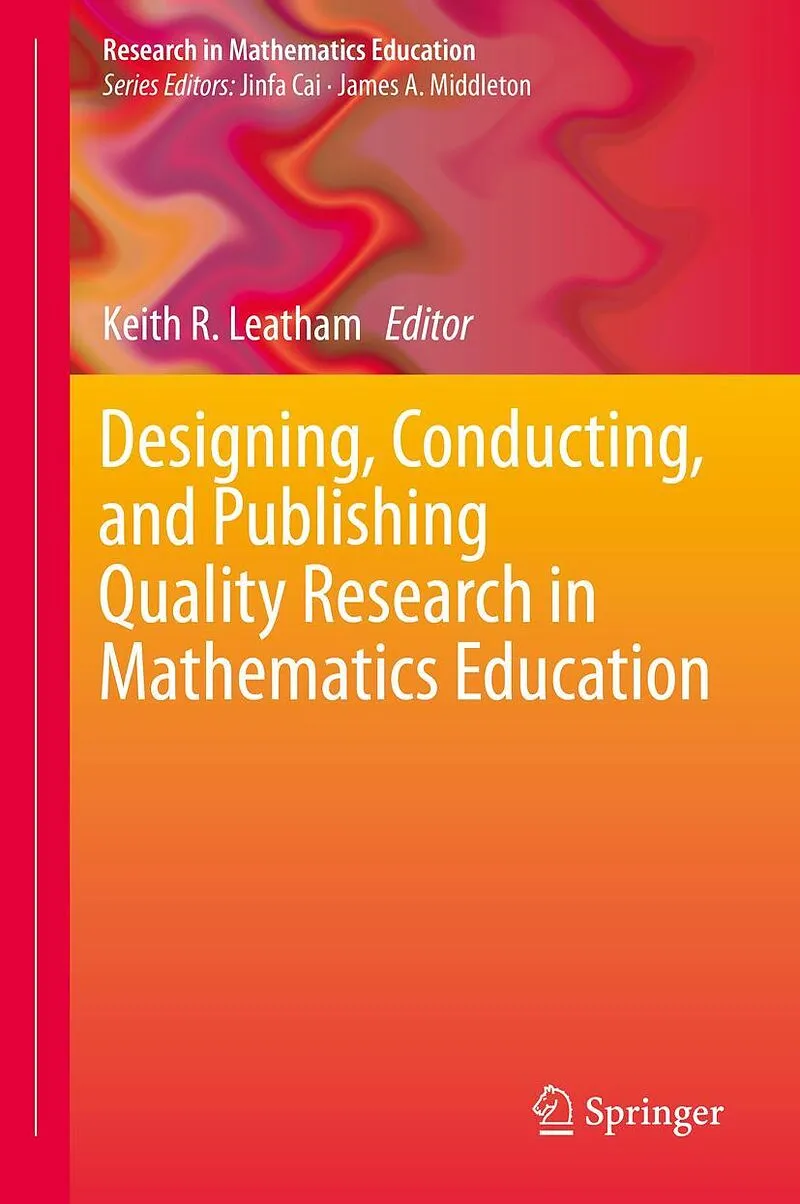
The purpose of this book is to collect, organize and disseminate collective wisdom with respect to designing, conducting, and publishing quality research in mathematics education. This wisdom will be gleaned from among those who, over the past several decades...The purpose of this book is to collect, organize and disseminate collective wisdom with respect to designing, conducting, and publishing quality research in mathematics education. This wisdom will be gleaned from among those who, over the past several decades, have been instrumental in guiding the field in the pursuit of excellence in mathematics education research-insightful editors, educative reviewers, prolific writers, and caring mentors. Each chapter is written to the novice researcher with the intent of aiding them in avoiding common pitfalls, navigating difficult intellectual terrain, and understanding that they are not alone in experiencing rejection, frustration, confusion, and doubt. This book differs from existing literature in the sense that it is written about the enterprise of designing, conducting and publishing research in mathematics education as opposed to being reports of the results of such work. It also differs in the sense that it is written with the intent to mentor the rising generation as opposed to capture the state of the field (as would happen in a handbook, for example). It is written for the express purpose of helping the field work collectively to aid in the often isolated enterprise of mentoring new researchers. The primary audience is a potentially wide one: graduate students, novice researchers, graduate faculty, advisors, and mentors - or anyone seeking to improve their own abilities to design, conduct, and publish quality research in mathematics education.
Autorentext
Keith R. Leatham is Professor of Mathematics Education in the Department of Mathematics Education at Brigham Young University. He received his PhD in Mathematics Education from the Department of Science and Mathematics Education at the University of Georgia. He has served on the Editorial Board and as Associate Editor for the Journal for Research in Mathematics Education and is the editor or co-editor of three contributed volumes related to the topics of mathematics education research and mathematics teacher education.
Inhalt
Section 1: Designing Quality Research in Mathematics Education
Denise Spangler and Steve Williams ^
Theoretical Frameworks: What Are They, Where Do You Find Them, and What Do You Do With Them?
In this chapter we will 1) discuss the purposes and uses of theoretical frameworks, including how they affect data collection and analysis; 2) discuss how theoretical frameworks are found or built; 3) distinguish different types of frameworks (epistemological, conceptual, theoretical); and 4) provide some examples of the use of frameworks in the literature.
Dan Siebert ^
Conducting a Literature Search
A chapter on how to conduct a literature search in a timely manner, including such issues as where to start, how to gather sources, how to identify which sources to read, how to draw upon the expertise of mentors and advisors, how to bound the literature search, how to manage ideas and findings, and how to know when to stop.
Carolyn Maher ^
Developing a Research Program
I would like to address the establishment of a research program, over time, attending to the issues of developing a community of researchers, funding, and shifts in focus as new knowledge suggests attention to new ideas. Our research program, now in its 4th decade, with longitudinal and cross-sectional studies, has produced a collection of video and related metadata that is now available open source, worldwide. Opportunities for sharing data will be explored.
Doug Clements & Julie Sarama ^
Relationships between Research and Development: How Can We Study Curricula?
Evaluation of mathematics curricula should move beyond weak claims that a given curriculum is research-based and even horse-race comparisons to research and development (R&D) in which curriculum creation and research are integrated at each of several phases. We describe the opportunities and approaches of such an approach from the phase of planning a curriculum through large scale-up efforts.
Eva Thanheiser ^
Developing a Research Program in the Context of Conducting Research in Your Own Classroom
In this chapter I reflect on how I designed and enacted a research program in the context of teaching university preservice elementary teachers. I discuss the cyclical nature of such a research program where each research project lays the foundation for the following ones. I also discuss how to build collaborative research programs with other researchers interested in similar research.
Section 2: Conducting Quality Research in Mathematics Education
David Stinson ^
Philosophical Considerations Always Already Entangled in (Mathematics Education) Research
In this chapter, the author explores how research (mathematics education or otherwise) is always already entangled with the ontological, epistemological, and ethical considerationsthat is the philosophical considerationsof the researcher (or research team) from beginning to end. The danger in too much of the existing mathematics education research, however, is a limited understanding of how these philosophical considerations drive both knowledge production and dissemination in the field. Practical descriptions of ontology, epistemology, and ethics are provided, as well as a discussion of how the field might better prepare future mathematics education researchers in understanding this crucial philosophical component of the research process.