Beschreibung
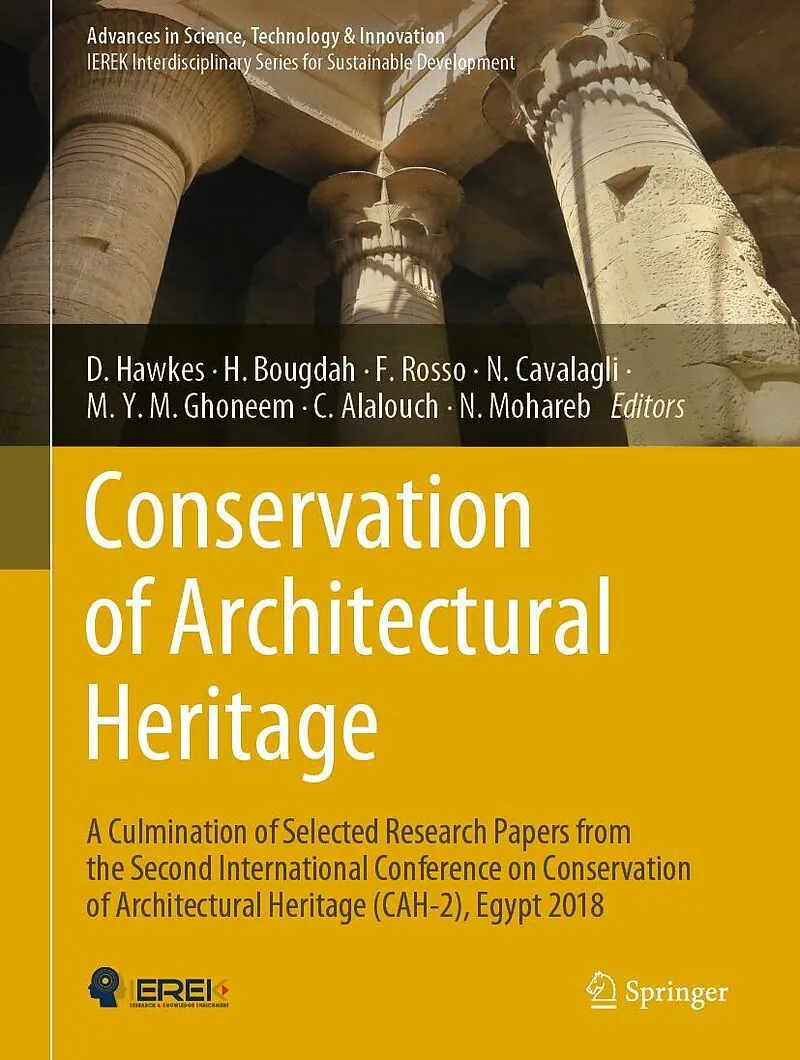
Discusses 16 issues regarding the cultural and architectural heritage in a clear presentation with colored figures Details the whole process of conservation for a variety of heritage and culture Includes a clear diversified process with multilateral solutions...Discusses 16 issues regarding the cultural and architectural heritage in a clear presentation with colored figures
Details the whole process of conservation for a variety of heritage and culture
Includes a clear diversified process with multilateral solutions which are useful to different cultures and contexts
Autorentext
Dean Hawkes (Cardiff University, UK)
Professor Dean Hawkes is a British architect and an award-winning academic. His career combines practice, teaching and research. He has received a number of awards for both academic and professional work, with the most recent one being the RIBA Annie Spink Award for Excellence in Architectural Education in 2010. In 2002 he was awarded the Leverhulme Emeritus Research Fellowship to study The Environmental Function of Architecture. He has had several books published, including The Environmental Tradition: Studies in the Architecture of Environment and the Selective Environment: An Approach to Environmentally Responsive Architecture. In addition, he has published a number of essays on architecture with contributions to many journals, including the Architects' Journal and the Architectural Review.
Hocine Bougdah (University for the Creative Arts, UK)
Professor Hocine Bougdah has over 25 years of experience in the field of Architectural Technology and Environment. Professor Bougdah's teaching and research interests are focused on the technological, ecological and human aspects of architectural design. His research interests cover topics such as sustainable design, innovative low-tech, low-energy, low-impact buildings, the spatial experience of users and the issues of culture, urbanization and globalization. He is currently working on a number of research projects on the following topics, ultra-low energy housing, communication and workflow in the design process, immateriality in architecture (exploration of the user's spatial experience, climate change adaptation through community-driven Initiatives in the global South, and the relationship between culture and space in the post-colonial architecture of Algeria.
Federica Rosso (Sapienza University of Rome, Italy)
Dr. Federica Rosso currently holds a position as postdoctoral researcher at Sapienza University of Rome, Italy. During her Ph.D. thesis, she spent an academic year as visiting research scholar at the Department of Civil and Urban Engineering of New York University Tandon School of Engineering in USA. She won, together with other Italian researchers, an award for Italy at the 4th International Conference on Countermeasures to Urban Heat Island in Singapore, 2016. She has published more than 10 papers and book chapters in the field of architecture, her most recent work being a book chapter called A Cost-Effective Human-Based Energy-Retrofitting Approach and an article titled New cool concrete for building envelopes and urban paving: Optics-energy and thermal assessment in dynamic conditions. Her main research interests include energy efficiency, sustainable architecture, sustainable development, solar and green buildings, energy conservation and construction technology, as well as innovative materials and construction elements for buildings and urban environment.
***Nicola Cavalagli (Universita degli Studi di Perugia, Italy)***
Professor Nicola Cavalagli has more than 10 years of experience in the field of civil and architecture engineering. Professor Cavalagli aim to design, validate and promote responsive systems and solutions for effective resilience of CH against climate change effects. This is considered to be a mandatory premise holistic, multidisciplinary approach through the involvement of different expertise's including end-users, industry/SMEs, scientists, conservators/restorers and social experts, decision, and policy makers. Professor Cavalagli's research interest includes Civil Engineering, Architecture Engineering, Finite Element Method, and Computation Mechanics.
Mahmoud Yousef M. Ghoneem (Helwan University, Egypt)
Professor Mahmoud Ghoneem has more than16 years of Academic and profession experience in the field of Architecture, landscape and Urban Design. In addition to that he participated in different projects, such as Hotels & Resorts, Commercial, Residential & Recreational and other Miscellaneous projects in Egypt & the Middle East. He has a proficient knowledge of architectural design and its applications. Moreover, he has Strong analytical skills with ability to identify, implement and follow-up opportunities for efficiency. He had many Diplomas concerning about Environmental Engineering (AUC, 2011) and Urban Management for climate cha...
Klappentext
History is one of the main aspects that shapes a country's culture and leaves its traces on the built environment in the form of an architectural heritage. Such a heritage records the existence of humans, their past endeavours and in doing so preserves their cultures and traditions for future generations and contributes to the formation of their identities by acting as an inspiration for their architectural achievements. From this perspective, conservation of architectural heritage becomes important to both current and future architectural endeavours.
This book discusses several topics of great importance and relevance to the conservation of worldwide architectural heritage. From historic cities and cultural landscapes to some of the largest archaeological sites in the world, conserving such a legacy is a challenging task that requires commitment, effort and international cooperation that this book proves possible.
The book has an abundance of information that undoubtedly covers major areas in the field of architecture heritage. It discusses the challenges faced in the field and demonstrates the importance of such an undertaking to individuals, communities, and cities' identity all over the world. It also highlights the role of individuals and organizations in the precise and complex process of conserving architectural heritage.
Inhalt
Management & Development of historic Area.- Cultural & Religious Identities & their manifestation of heritage.- Awareness of heritage rehabilitation project.- Legislative tools and policies for cultural heritage protection.- Economics of Conservation and Sustainable environment.