Beschreibung
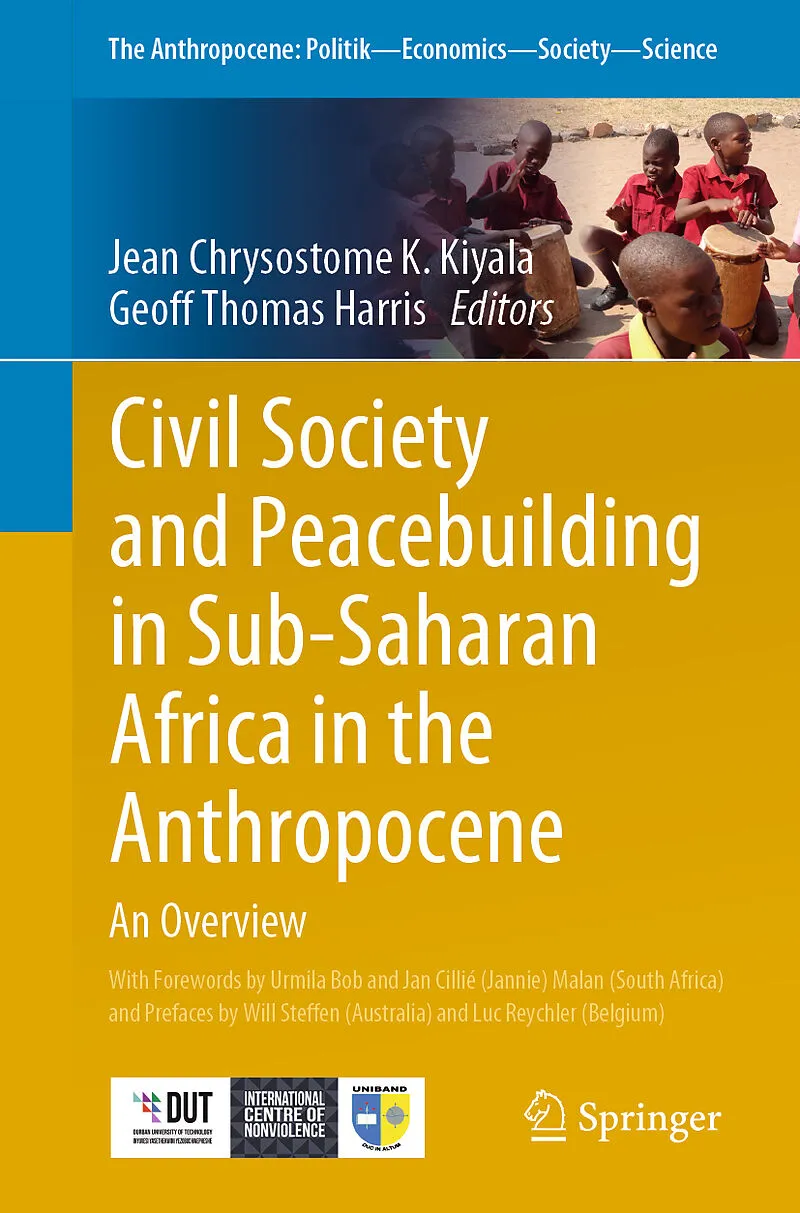
This book examines civil society's peacebuilding role in sub-Saharan Africa in the context of climate change and the pursuit of environmental peace and justice in the Anthropocene. Five main research themes emerge from its 20 chapters: · The roles of environm...This book examines civil society's peacebuilding role in sub-Saharan Africa in the context
of climate change and the pursuit of environmental peace and justice in the Anthropocene.
Five main research themes emerge from its 20 chapters:
· The roles of environmental peacemaking, environmental justice, ecological
education and eco-ethics in helping to mitigate the impacts of climate change
· Peacebuilding by CSOs after violent conflicts, with particular reference to accountability, reconciliation and healing
· CSO involvement in democratic processes and political transition after violent
conflicts
· Relationships between local CSOs and their foreign funders and the interactions
between CSOs and the African Union's peace and security architecture.
· The particular role of faith-based CSOs
The book underlines the centrality of dialogue to African peacebuilding and the indigenous wisdom and philosophies on which itis based. Such wisdom will be a key resource in
confronting the existential challenges of the Anthropocene.
The book will be a significant resource for researchers, academics and policymakers
concerned with the challenge of climate change, its interactions with armed conflict and the
peacebuilding role of CSOs.
· This pathbreaking book shows why peacebuilding analysis and efforts need to be
urgently re-oriented towards the existential challenges of environmental peace and
justice.
· It explains the emerging conceptual frameworks which are needed for this new role.
· It explains the critical role that CSOs - local and international - will play in
implementing this new peacebuilding approach, with particular reference to sub-
Saharan Africa.
Autorentext
Jean Chrysostome K. Kiyala (South Africa, DRC) is Assoc. Prof., Univ. of Bandundu, DRC & Senior Lecturer, International Centre of Nonviolence, Durban Univ. of Technology (DUT). He holds Diplomas & B.A.s in Philosophy, Theology, Mission and in Religious Studies, M.Phil. from St Augustine College, a conferred M. Tech. in Public Management, and in 2016, he was awarded a Ph.D. in Management Sciences (Peacebuilding programme) by DUT. His research interests comprise child soldiering, restorative justice, transitional justice, and peacebuilding. Geoff Harris (South Africa, Australia) is Prof., International Centre for Nonviolence, Durban University of Technology, where he set up its postgraduate Peacebuilding Programme. His research interests include restorative justice, reintegration of prisoners and demilitarisation. He held posts at La Trobe Univ., Australia (1969-71), Univ. of Papua New Guinea (1972-78), Lincoln Univ., New Zealand (1978-80), Univ. of New England, Australia (1980-99), Univ. of Natal and Univ. of KwaZulu-Natal (1999-2011) and at DUT (2012- ), South Africa.
Inhalt
Part I Civil Society Organisations as Key Players in Peacebuilding in the Anthropocene 1 General IntroductionJean Chrysostome K. Kiyala and Geoff Harris 2 Peace Ecology in the Anthropocene for AfricaHans Günter Brauch 3 Civil Society, Climate Change, Security Risks Management and Peacebuilding in the AnthropoceneJean Chrysostome K. Kiyala 4 Faith-based Organisations and Environmental Peace: Impact of Laudato Si' and Its Relevance in the Anthropocene Jean Chrysostome K. Kiyala5 Healing Nature and Creation in the Anthropocene: A Reflection on the Role of ReligionDumisani Ngwenya Part II: Micro-level Case Studies 6 Empowering Women to Build Peace: A Case Study of Grace to Heal Trust in Lupane DistrictNtombizakhe Moyo-Nyoni and Jean Chrysostome K. Kiyala 7 Peacebuilding through Indigenous Knowledge Systems: Lessons from Civil Society Organisations in ZimbabweAshton Murwira 8 Civil Society and Peacebuilding in the Kivu Provinces of the Democratic Republic of CongoBosakaibo Bomino Georges9 Zimbabwe's National Peace and Reconciliation Commission and Civil Society: Partners in Peacebuilding?Lawrence Mhandara 10 Civil Society and Peacebuilding in the Democratic Republic of Congo: Opportunities, Challenges and RecommendationsJean Chrysostome K. Kiyala 11 Promoting Democratisation in DR Congo: The Case Study of Act for Transparent and Peaceful ElectionsJean Chrysostome K. Kiyala and Gerard Mpang'de Bisambu 12 Civil Society Organisations and School Peace Clubs in South Africa: An Outcome EvaluationDorothy Moyo 13 The Challenges and Opportunities for Civil Society in Peacebuilding: Lessons from the Matabeleland Collective, ZimbabweDumisani Ngwenya 14 The Role of Civil Society Participation in Social Cohesion Processes in KwaZulu-Natal, South AfricaPaul Kariuki 15 Building the Capacity of Civil Society Organisations in Nonviolent Campaigning: A Case Study from South SudanMoses Monday John 16 How Informal Peace Committees Complement Macro-infrastructures for Peace in ZimbabweNorman Chivasa 17 Protecting and Nurturing Children Born from Rape in South Kivu Communities: A Challenge for Civil SocietyJosephine Kimanu Mauwa, Sylvia Blanche Kaye and Denis Mukwege Mukengere Part III: Macro-level Case Studies 18 Indigenous Peacebuilding Approaches and the Accountability of Former Child Soldiers: African Case StudiesJean Chrysostome K. Kiyala 19 Navigating Channels for Civil Society Participation in Conflict Prevention and Peace-Making in the African Peace & Security ArchitectureMichael Aeby Part IV Enhancing the Role of Civil Society in Peacebuilding 20 Centre-periphery Relations Between Civil Society Organisations and External Funding Partners: A Case Study of South Kivu's Peace and Development AgendaPhilippe Mulume-Oderhwa Kaganda and Jean Chrysostome K. Kiyala [Backmatter] A Manifesto with Proposals for Action Towards a Peace Ecology and an Ecological Peace Policy: A Global Research Partnership Between Organisations in Sub-Saharan Africa and Countries in the Global NorthHans Günter BrauchOn Durban University of TechnologyOn International Centre of Nonviolence (ICON) On University of BandunduOn the EditorsOn the ContributorsIndex