Beschreibung
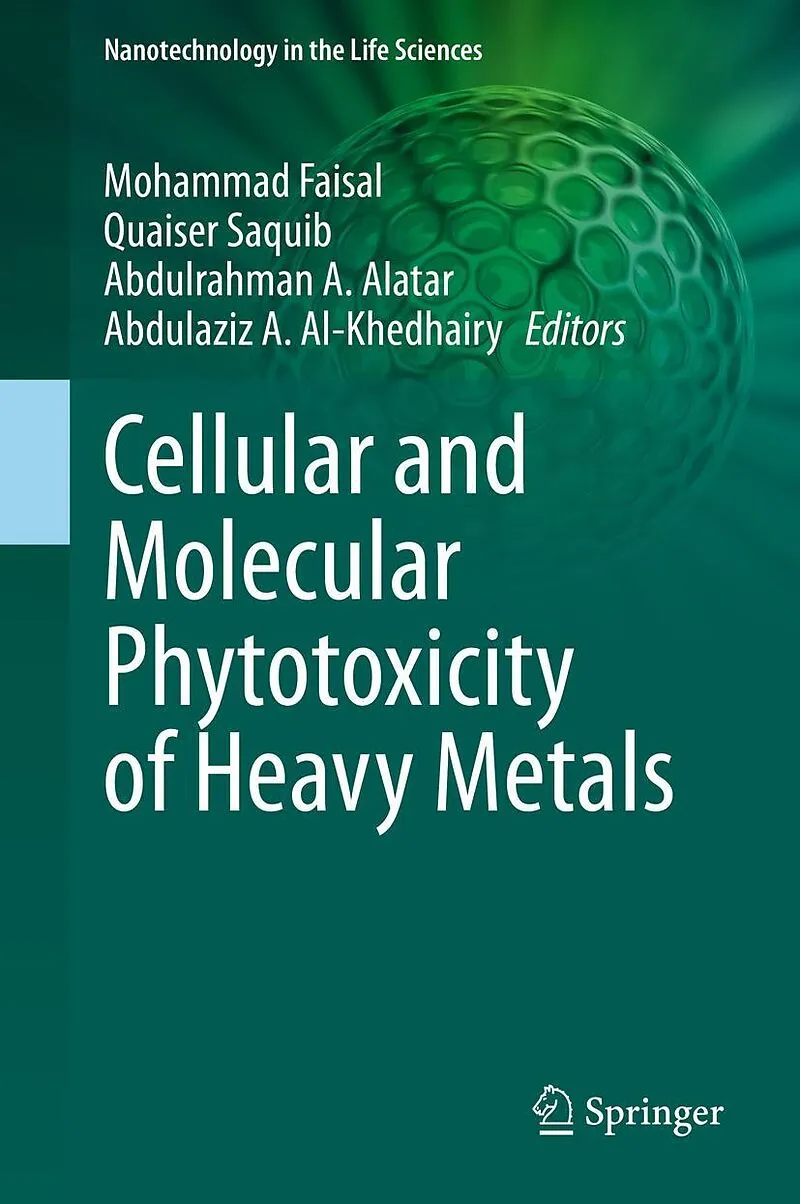
Plant growth and development is closely dependent on the plant environment, including the wide-spread presence of organic and inorganic xenobiotics and pollutants. Currently, heavy metals are the most common inorganic environmental pollutants and they have pr...Plant growth and development is closely dependent on the plant environment, including the wide-spread presence of organic and inorganic xenobiotics and pollutants. Currently, heavy metals are the most common inorganic environmental pollutants and they have pronounced effects and consequences not only for plants, but also for the ecosystem in which the plants form an integral component. It has been suggested that these contaminants accumulate in agricultural crops, thus entering the food chain and posing a significant health risk. Plants growing in polluted sites exhibit altered metabolism, reduced growth, and decreased biomass production. These pollutants adhere to plant roots and exert physical or chemical toxicity and subsequently cell death in plants. Yet, plants have developed various defence mechanisms to counteract the toxicity induced by heavy metals.
Only detailed study of the processes and mechanisms would allow researchers and students to understand the interactions, responses, and adaptations of plants to these pollutants; however, there are several unresolved issues and challenges regarding the interaction and biological e ects of heavy metals. Therefore, this volume provides relevant, state-of-the-art findings on environmental phytotoxicity and the mechanisms of such interactions at the cellular and molecular levels. This volume consists of chapters on relevant topics contributed by different experts or group of experts so as to make available a comprehensive treatise designed to provide an in-depth analysis of heavy metals phytotoxicity.
This book may serve as a reference to scientists, researchers and students in the fields of toxicology, environmental toxicology, phytotoxicology, plant biology, plant physiology, plant biochemistry and plant molecular biology, and especially those interested in heavy metals toxicology.
Autorentext
Dr. Mohammad Faisal currently works as Associate Professor in the Department of Botany & Microbiology, King Saud University, Riyadh, Saudi Arabia, with over 12 years of research experience in plant biotechnology. ****He was the recipient of NESA's Plant Biotechnologist Award-2017 from SESR, India and Scientist of the Year Award-2015, and several National and International Fellowships. He is a member of several academic bodies / societies, and a SESR Fellow. He has published over 78 research articles, 7 book chapters and 5 books. He is in the editorial board of the several reputed journals.
Dr. Quaiser Saquib is currently working as an Assistant Professor and Coordinator in Al-Jeraisy Chair for DNA Research, Zoology Department, College of Science, King Saud University, Riyadh, Saudi Arabia. He has conferred with Scientist of the Year Award-2016 by NESA-India, **Young Scientist Award 2008 by EMSI-India. Dr. Saquib published 46 research articles, 3 books and 4 book chapters.
Dr. Abdulrahman Alatar is working as Professor in the Department of Botany & Microbiology, King Saud University, Riyadh, Saudi Arabia. He also serving as consultant for human resource and management in the Ministry of Higher Education, Saud Arabia. He has been the PI and Co-I of various projects and supervised 3 PhD and 7 MSc students. He published more than 70 scientific articles, 2 books and his work has been cited in various leading journals.
Professor Abdulaziz A. Al-Khedhairy is currently serving as Director of Al-Jeraisy Chair for DNA Research in King Saud University, Riyadh, Saudi Arabia. He has published 160 research articles, 9 book chapters, 2 books and one USA patient. As a PI and CO-I, he has successfully supervised several projects funded by KACST, KSA.
Inhalt
Preface**
Chapter titles and Names of the Contributors and emails:
**
Heavy metals - definition and nanoparticle uptake in plants
Cristina Buzea 1, * (a) and Ivan Pacheco 1,2,3 (a,b,c)
1IIPB Medicine Corporation, Owen Sound, ON N4K 6S5, Canada
2Department of Pathology, Grey Bruce Health Services, 1800 8th St East, Owen Sound N4K 6M9, Canada
3Department of Pathology and Laboratory Medicine, Schülich School of Medicine & Dentistry, Western University, London, Ontario, N6A 5C1 Canada
Corresponding author e-mail: cristinabuzea@mdcorporation.ca
2. Cellular and molecular responses of plant cell against heavy metal toxicity
Shatrohan Lal, Sheel Ratna and Rajesh Kumar*
Department of Microbiology
Babasaheb Bhimrao Ambedkar University (A Central University)
Raibareli Road, Lucknow 226025, India
Corresponding author e-mail: rajesh_skumar@yahoo.co.in
3. Effect of heavy metal stress on growth and yields of crop plants
Zahir Muhammad
Department of Botany, University of Peshawar, Peshawar, Pakistan****
Corresponding author e-mail: kzahirmuhammad@yahoo.com
4. Heavy metal induced toxicity responses in plants: an overview from physicochemical to molecular level
Ritu Chaturvedi1, * and Garima Malik2
1St. John's College, Agra (U.P.), India, 2R.G. (PG) College, C.C.S University, Meerut (U.P.), India
Corresponding author e-mail: rituchaturvedi88@gmail.com
Heavy metal stress responsive phyto-miRNAs
Özge Çelik*
Department of Molecular Biology & Genetics, Faculty of Science and Letters, Istanbul Kultur University, Istabul, Turkey
Corresponding author e-mail: ocelik@iku.edu.tr****
Muhammad Ehsan* National Technological Baccalaureate System, Tlaxcala State, Mexico
Corresponding author e-mail: muhammadehsan2000@yahoo.com
7.Heavy metal contaminated soils: weeds as potential phytoremediation agents - issues and prospects
Abdul Majeed, Zahir Muhammad, Rehmanullah and Habib Ahmad***
Department of Botany, Government Degree College Naguman
Peshawar, Pakistan
Corresponding author e-mail: saikatgantait@yahoo.com
Renu Bhardwaj
Department of Botanical & Environmental Sciences Guru Nanak Dev University, Amritsar-143005, India****
Corresponding author e-mail: renubhardwaj82@gmail.com
Mechanisms of heavy metal tolerance in plants
Bahman Khoshru1, Mehdi Taghizadeghan 2, Behnam Asgari Lajayer1, Mansour Ghorbanpour3*
1Department of Soil Science, Faculty of Agriculture, University of Tabriz, Tabriz, Iran, 2Department of Plant Biotechnology and Breeding, Faculty of Agriculture, University of Tabriz, Tabriz, Iran, 3Department of Medicinal Plants, Faculty of Agriculture and Natural Resources, Arak University, Arak 38156-8-8349, Iran *Corresponding author e-mail: ...