Beschreibung
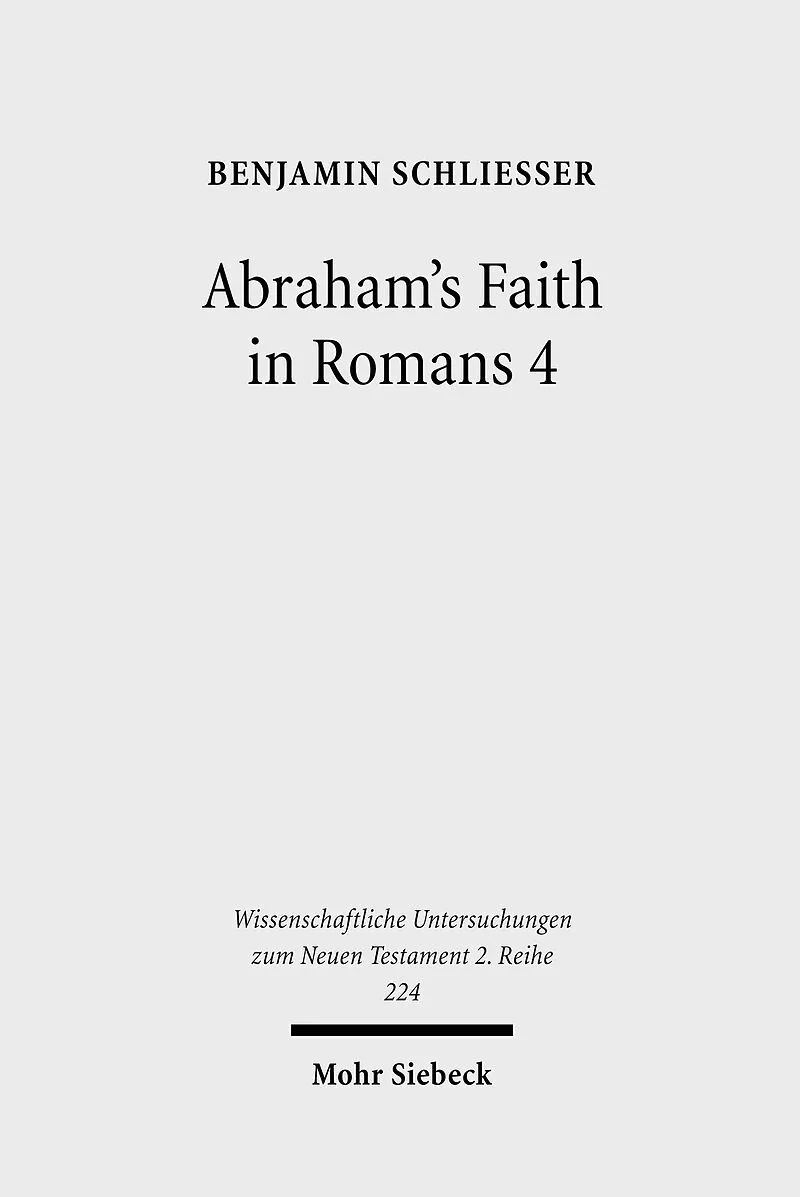
The concept of faith is at the core of Paul's theology, and the classic assage for his understanding of pistis is Genesis 15:6. After discussing the history of scholarship on the Pauline concept of faith, Benjamin Schließer explores the literary, traditi...The concept of faith is at the core of Paul's theology, and the classic assage for his understanding of pistis is Genesis 15:6. After discussing the history of scholarship on the Pauline concept of faith, Benjamin Schließer explores the literary, tradition-historical and structural questions of Genesis 15 and offers a detailed exegesis of verse 6 with its fundamental terms 'count', 'righteousness', and 'believe'. He then points to the theological significance of this testimony on Abraham for the Jewish identity; it comes into sight in a multifaceted and nuanced process of reception, from later Old Testament texts (Psalm 106; Nehemiah 9) to a broad array of literature from Second Temple Judaism (Septuagint, Sirach 44, Jubilees 14, 4QPseudo-Jubilees, 4QMMT, 1Maccabees, Philo). In the final and most substantial step, he asks about Paul's 'hermeneutics of faith': How does Paul, in his exegesis of the Genesis quote in Romans 4, come to view Abraham as the father of all believers? What is the concept of faith that he develops on the basis of Genesis 15:6? Taking into account the manifold textual and thematic links between Romans 4, Romans 3:21-31, and Romans 1:16-17, a unique, twofold structure of 'faith' discloses itself: Pistis designates first a divinely established sphere of power, i.e., a new, christologically determined salvation-historical reality, and second human participation in this reality, i.e., individual believing in the community of believers. Particularly the first aspect is generally overlooked in modern scholarship.
Geboren 1977; Studium der Ev. Theologie in Tübingen, Glasgow und Pasadena; 2006 Promotion; 2010-16 Oberassistent in Zürich; 2020 Habilitation; seit 2016 Ausserordentlicher Professor für Neues Testament am Institut für Neues Testament der Universität Bern.
Klappentext
The concept of faith is at the core of Paul's theology, and the classic assage for his understanding of pistis is Genesis 15:6. After discussing the history of scholarship on the Pauline concept of faith, Benjamin Schließer explores the literary, tradition-historical and structural questions of Genesis 15 and offers a detailed exegesis of verse 6 with its fundamental terms 'count', 'righteousness', and 'believe'. He then points to the theological significance of this testimony on Abraham for the Jewish identity; it comes into sight in a multifaceted and nuanced process of reception, from later Old Testament texts (Psalm 106; Nehemiah 9) to a broad array of literature from Second Temple Judaism (Septuagint, Sirach 44, Jubilees 14, 4QPseudo-Jubilees, 4QMMT, 1Maccabees, Philo). In the final and most substantial step, he asks about Paul's 'hermeneutics of faith': How does Paul, in his exegesis of the Genesis quote in Romans 4, come to view Abraham as the father of all believers? What is the concept of faith that he develops on the basis of Genesis 15:6? Taking into account the manifold textual and thematic links between Romans 4, Romans 3:21-31, and Romans 1:16-17, a unique, twofold structure of 'faith' discloses itself: Pistis designates first a divinely established sphere of power, i.e., a new, christologically determined salvation-historical reality, and second human participation in this reality, i.e., individual believing in the community of believers. Particularly the first aspect is generally overlooked in modern scholarship.
Zusammenfassung
Was versteht Paulus unter dem für ihn so zentralen Begriff des Glaubens? Benjamin Schließer geht dieser Frage anhand der paulinischen Exegese von Genesis 15,6 im 4. Kapitel des Römerbriefes nach. Dort arbeitet Paulus sein Verständnis der Rechtfertigung Abrahams aus Glauben und dessen Vaterschaft aller Glaubenden heraus. Ausgehend vom Thema des Briefes (Römer 1,16-17) und unter Berücksichtigung der Verzahnung von Römer 4 mit Römer 3,21-31 eröffnet sich eine doppelte Struktur des paulinischen Glaubensbegriffes, die markant vom Glaubensverständnis seiner jüdischen Zeitgenossen, aber auch von modernen Konzeptionen abweicht: zum einen nimmt "Glaube" ( Pistis) die Dimension einer überindividuellen Machtsphäre, einer von Gott in Christus gesetzten heilsgeschichtlichen Realität an, zum anderen die Dimension der Partizipation an dieser neuen Realität, des persönlichen Glaubens in der Gemeinschaft der Glaubenden. Gerade der erste Aspekt wird in der Forschung durchgängig übersehen.