Beschreibung
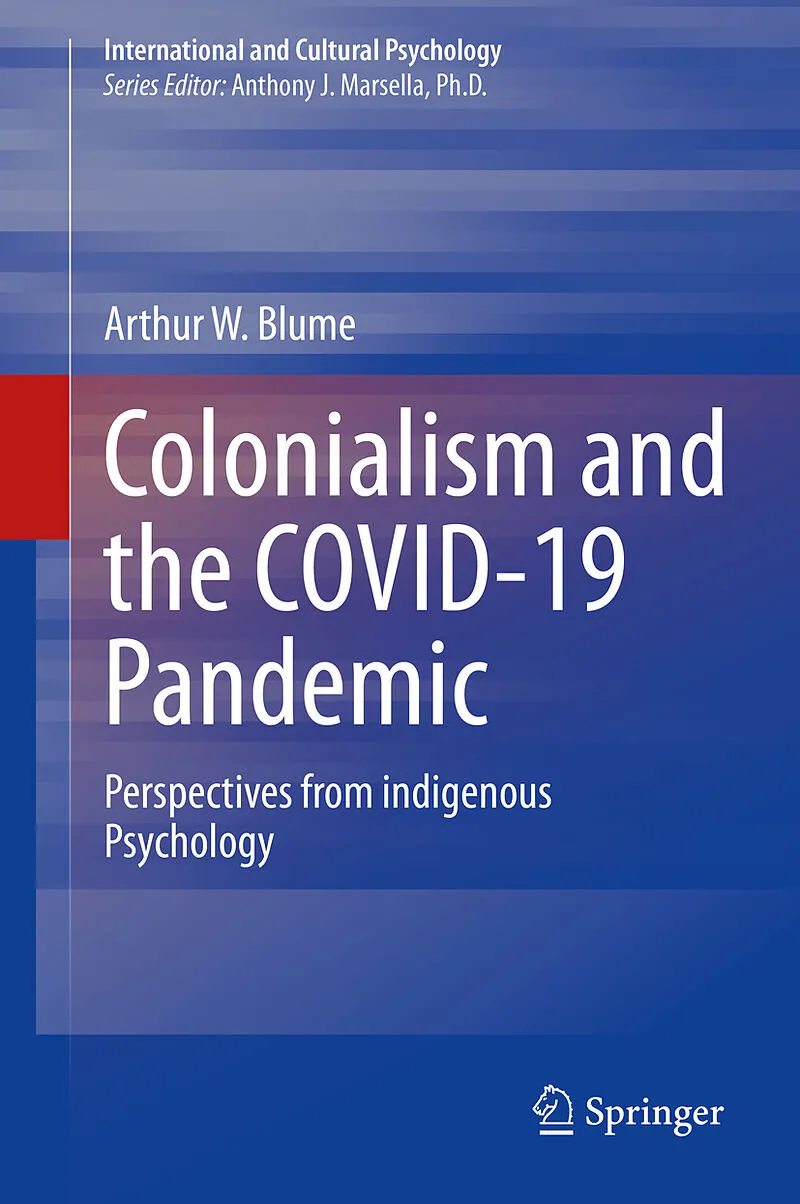
This book views responses to the Covid 19 virus through the lens of indigenous thinking which sheds light on some of the failures in dealing with the pandemic. Colonial societies maintain beliefs that hierarchies are part of the natural order, and that certai...This book views responses to the Covid 19 virus through the lens of indigenous thinking which sheds light on some of the failures in dealing with the pandemic. Colonial societies maintain beliefs that hierarchies are part of the natural order, and that certain people are entitled to privileges that others are not. These hierarchies have contributed to racism as well as health, and wealth disparities that have increased vulnerabilities to the virus. Indigenous societies, on the other hand, view individuals as interdependent, and hold an optimistic view that this tragedy can yield important lessons for future improvement. This book examines the legacy of colonial societies in contributing to existing vulnerabilities, and incorporates an indigenous perspective in re-imagining the problem and its solutions.
Autorentext
Art Blume, Ph.D., is an American Indian psychologist and Professor of Clinical Psychology at Washington State University. He has been honored as a fellow of the American Psychological Association and as a past recipient of the Trimble and Horvath award for significant contributions to Indigenous psychology. He has authored or edited six books, including, A new psychology based on community, equality, and care of the Earth, and Indigenous Relapse Prevention, as well as over 100 scholarly publications at the intersection of multicultural psychology and health. He served as the 2020 president of the Society for the Psychological Study of Culture, Ethnicity, and Race (Division 45 of the American Psychological Association) and is also a past president of the Society of Indian Psychologists.
Inhalt
Chapter 1. Colonialism and Pandemics
Chapter 1 begins with an overview of the circumstances of the colonialism and assumptions that are foundational to the colonial worldview, including beliefs of colonial superiority that was divinely ordained, of beliefs in the inferiority of others that contributed to mistreatment, conquest, slavery, assimilation, and confiscation of land and resources that were also considered divinely sanctioned activities. The relationship of colonialism with past epidemics and pandemics is introduced. Colonial societies have consistently been hierarchical as a result of these beliefs, hierarchies that left many vulnerable in these societies. That vulnerability continues to haunt colonial societies in ways that negatively impact them today. Indigenous assumptions are contrasted with colonial assumptions to set the stage for critiques in subsequent chapters and for proscribing how to decolonize attitudes and beliefs to improve health and mental health.
Chapter 2. The Colonial War with the Environment
An Indigenous worldview assumes humans are interdependent creatures within an egalitarian and sacred natural world. Indigenous people have long recognized the risks in violating the balances of nature. Colonialism has long believed that exploitation of the natural world was divinely sanctioned--that the needs of the privileged supersede the needs of others. The culture of exploitation continues today, resulting in imbalances that have contributed to considerable environmental degradation including global climate change. From the perspective of Indigenous psychology, people are only as healthy as their relationships with others, including relationships with the natural world upon which they are dependent. Exploiting the environment inevitably harms the psychological wellness of interdependent human creatures. Colonial exploitation has set the stage for increased exposure and vulnerability to health and mental health problems, including those transmitted by viruses. Indigenous psychology offers another way to think and act that reduces exploitation and its risks.
Chapter 3. The Colonial Economics of COVID-19
Economic gain has been an essential part of colonialism. Therefore, it is no surprise that conflicts arose between concerns balancing economics with health during the COVID-19 pandemic. Economics played a significant part in the decision making of policy makers during the pandemic, and those decisions were informed by colonial hierarchical assumptions that significantly informed priorities. Because of the use of colonial assumptions, many groups were overlooked and mistreated. Existing income and wealth disparities exacerbated the extent of the pandemic and its treatment. In addition, evaluations of who was necessary and important to the well-being of societies was turned on its head by the realities of the pandemic. Psychologically speaking, the economic consequences of the pandemic were immense and mirror past inequities visited upon the victims of colonization. Indigenous psychology is used to evaluate how to address those psychological consequences which will be with us for many years to come.
Chapter 4. Colonial -isms and COVID-19
The colonial hierarchical assumptions of superiority versus inferiority have contributed to a me or us versus them mentality within societies that has persisted to this day. The me/us versus them perspectives has contributed to what I refer to as the -isms in society, with an -ism reflecting group-based biases that have psychologically harmed outgroups in society. Specifically, this chapter will discuss how those biases contributed to the outcomes that have been observed in many societies subsequent to the COVID-19 pandemic, and ho those consequences mirror past historical events in colonial nations. From an Indigenous psychologically speaking, activities such as a history of deception, colonial splitting, hate, and xenophobia have contributed to a great deal of psychological unwellness in colonial societies. Anger and fear have been externalized in unhealthy ways to the detriment of all. Indigenous psychology will be used to evaluate how those unhealthy realities may be undone.
Chapter 5. Colonialism, COVID-19, and Education
Colonialism always struggles to protect the most vulnerable in societies due to a de-valuing of the contributions by those not deemed to be fully autonomous, such as children. As a result, many education...