Beschreibung
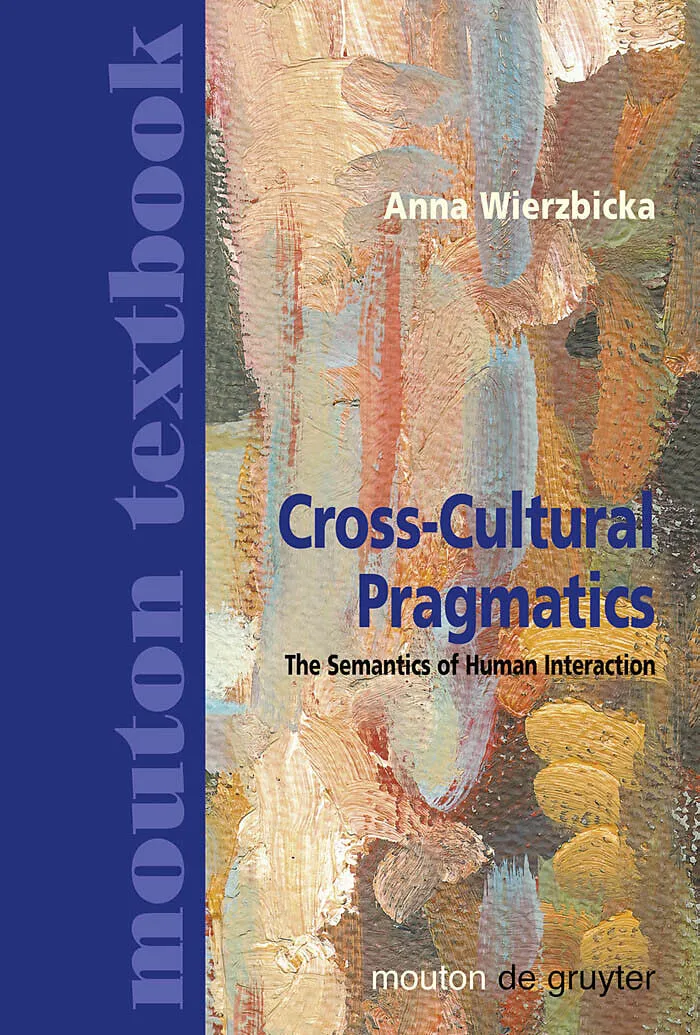
This book, which can be seen as both a research monograph and a text book, challenges the approaches to human interaction based on supposedly universal "maxims of conversation" and "principles of politeness", which fly in the face of reality as experienced by...This book, which can be seen as both a research monograph and a text book, challenges the approaches to human interaction based on supposedly universal "maxims of conversation" and "principles of politeness", which fly in the face of reality as experienced by millions of people - refugees, immigrants, crosscultural families, and so on. By contrast to such approaches, which can be of no use in crosscultural communication and education, this book is both theoretical and practical: it shows that in different societies, norms of human interaction are different and reflect different cultural attitudes and values; and it offers a framework within which different cultural norms and different ways of speaking can be effectively explored, explained, and taught.
The book discusses data from a wide range of languages, including English, Italian, Russian, Polish, Yiddish, Hebrew, Japanese, Korean, and Walmatjari (an Australian Aboriginal language), and it shows that the meanings expressed in human interaction and the different "cultural scripts" prevailing in different speech communities can be described and compared in a way that is clear, simple, rigorous, and free of ethnocentric bias by using a "natural semantic metalanguage", based on empirically established universal human concepts. As the book shows, this metalanguage can be used as a basis for teaching successful cross-cultural communication and education, including the teaching of languages in a cultural context.
Autorentext
Anna Wierzbicka is Professor at Australian National University, Canberra.
Inhalt
Chapter 1 Introduction: semantics and pragmatics
Language as a tool of human interaction
Chapter 2 Different cultures, different languages, different speech acts
Preliminary examples and discussion
Chapter 3 Cross-cultural pragmatics and different cultural values
'Self-Assertion'
Chapter 4 Describing conversational routines
Conversational analysis: linguistic or non-linguistic pragmatics?
Chapter 5 Speech acts and speech genres across languages and cultures
A framework for analysing a culture's 'forms of talk'
Chapter 6 The semantics of illocutionary forces
Are illocutionary forces indeterminate?
Chapter 7 Italian reduplications: its meaning and its cultural significance
Italian reduplication: preliminary discussion
Chapter 8 Interjections across cultures
Preliminary discussion
Chapter 9 Particles and illocutionary meanings
English quantitative particles
Chapter 10 Boys will be boys: even 'truisms' are culture-specific
The meaning of tautologies
Chapter 11 Conclusion: semantics as a key to cross-cultural pragmatics