Beschreibung
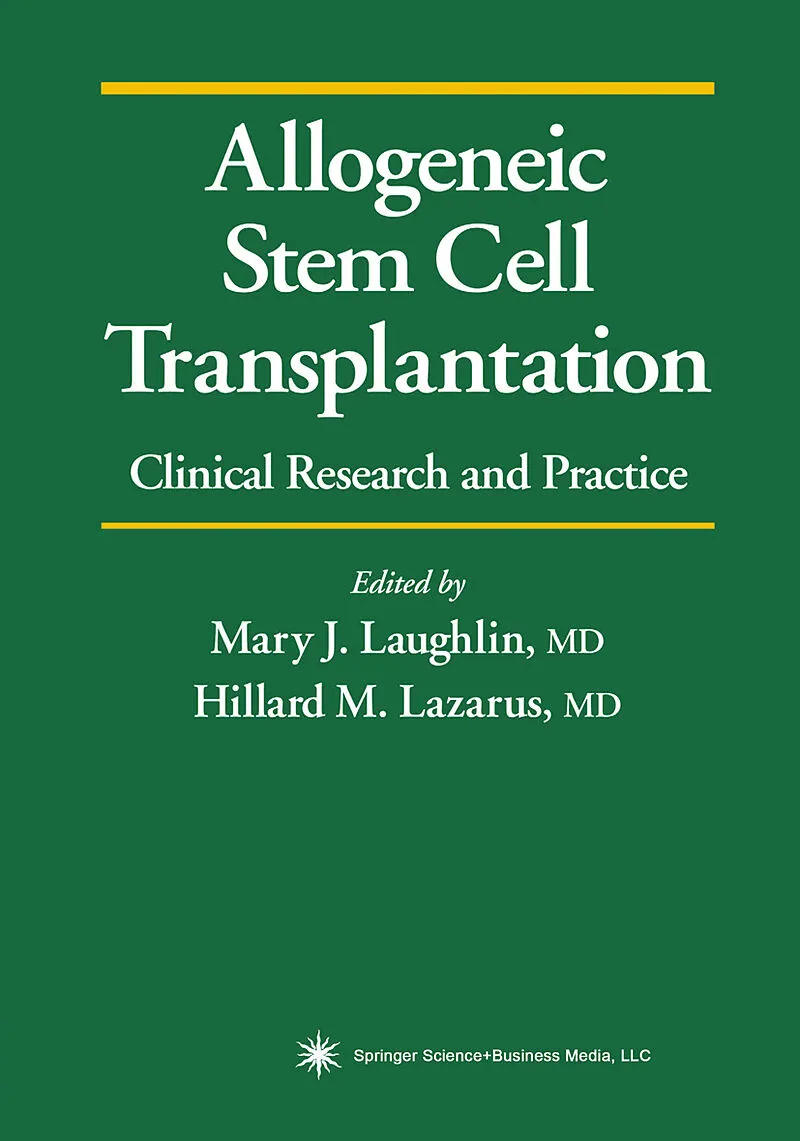
Allogeneic transplantation has dramatically grown in importance as a curative cellular therapy for patients with hematologic malignancies and selected solid tumors, marrow failure disorders, and inherited metabolic diseases. In Allogeneic Stem Cell Transplant...Allogeneic transplantation has dramatically grown in importance as a curative cellular therapy for patients with hematologic malignancies and selected solid tumors, marrow failure disorders, and inherited metabolic diseases. In Allogeneic Stem Cell Transplantation: Clinical Research and Practice, internationally recognized physicians and researchers review both the basics of allogeneic stem cell transplantation and recent advances in the field, particularly as they relate to antitumor effects and graft-vs-host disease. They also provide unique decision-tree analyses to guide clinicians in selecting and managing their allogeneic transplant patients. The innovations discussed cover a variety of areas, ranging from stem cell mobilization in normal donors, to indications for allogeneic transplantation other than hematologic malignancies, to the use of non-myeloablative conditioning regimens. The authors also explore new developments in the optimal selection of unrelated allogeneic grafts (e.g., matched unrelated donor, partially mismatched family member, or umbilical cord blood), the use allogeneic peripheral blood stem cell vs marrow-derived grafts for transplantation, and the kinetics of immune reconstitution after transplantation.
Comprehensive and up-to-date, Allogeneic Stem Cell Transplantation: Clinical Research and Practice offers both clinicians and researchers concise advice on today's best clinical practice, as well as insightful analysis of the promising new lines of laboratory research that are leading to safer and more effective allogeneic transplant procedures.
Klappentext
Internationally recognized physicians and researchers review both the basics of allogeneic stem cell transplantation and recent advances in the field, particularly as they relate to antitumor effects and graft-versus-host disease They also provide unique decision-tree analyses to guide clinicians in selecting and managing their allogeneic transplant patients. The innovations discussed cover a variety of areas, ranging from stem cell mobilization in normal donors, to indications for allogeneic transplantation other than hematologic malignancies, to the use of nonmyeloablative conditioning regimens. The authors also explore new developments in the optimal selection of unrelated allogeneic grafts (e.g., matched unrelated donor, partially mismatched family member, or umbilical cord blood), the use allogeneic peripheral blood stem cell vs marrow-derived grafts for transplantation, and the kinetics of immune reconstitution after transplantation.
Inhalt
Part I. Historical Perspective Hematopoietic Stem Cell Transplantation: A Historical Perspective Frederick R. Appelbaum Part II. Disease Indications: Allogeneic Transplantation Allogeneic Hematopoietic Cell Transplantation for Adult Patients with Acute Myelogenous Leukemia Henry C. Fung and Stephen J. Forman Allogeneic Stem Cell Transplantation for Adult Acute Lymphoblastic Leukemia Partow Kebriaei and Wendy Stock Chronic Myelogenous Leukemia Edward Copelan Allogeneic Stem Cell Transplantation for Breast Cancer Abby B. Siegel and Linda T. Vahdat Allogeneic Transplantation for the Treatment of Multiple Myeloma Stefano Tarantolo and Philip J. Bierman Non-Hodgkin's Lymphoma Igor Espinoza-Delgado and Dan L. Longo Part III. Allogeneic Graft Selection Blood vs Marrow Allogeneic Stem Cell Transplantation Daniel Anderson and Daniel Weisdorf Haploidentical Stem Cell Transplantation Hillard M. Lazarus and Jacob M. Rowe Umbilical Cord Blood Transplantation Juliet Barker and John E. Wagner Mesenchymal Stem Cells in Allogeneic Transplantation Omer N. Koç and Stanton L. Gerson Cytokines in Allogeneic Stem Cell Mobilization Ravi Vij, Randy Brown, and John F. DiPersio Nonmyeloablative Allogeneic Transplantation David A. Rizzieri and Nelson J. Chao Part IV. Supportive Care in Allogeneic Transplantation Recent Developments in Epidemiology and Management of Invasive Fungal Infections Andreas H. Groll and Thomas J. Walsh Immune Recovery Following Allogeneic Blood Transplantation: Mechanisms of Immune Dysfunction James E. Talmadge Grading and Management of Graft-vs-Host Disease Donna Przepiorka Posttransplant EBV-Associated Disease Thomas G. Gross and Brett J. Loechelt PartV. Prevention and Management of Relapse After Allogeneic Transplantation Allogeneic Antitumor Vaccine Strategies Ginna G. Laport and Carl H. June Donor Leukocyte Infusions Robert H. Collins, Jr. Second Hematopoietic Stem Cell Transplantation for the Treatment of Graft Failure, Graft Rejection, or Relapse Steven N. Wolff Part VI. Preclinical Studies in Allogeneic Transplantation The Role of T Cell Depletion in Bone Marrow Transplantation Yair Reisner and Massimo F. Martelli Minimal Residual Disease in Allogeneic Recipients Jerald P. Radich Nonhuman Primate Models of Hematopoietic Stem Cell Transplantation Steven M. Devine and Ronald Hoffman In Vivo Models for the Study of Graft-vs-Host Disease and Graft-vs-Tumor Effects Kai Sun, William J. Murphy, and Lisbeth A. Welniak Allogeneic Effector Cell Populations: Separating GVL from GVHD Michael R. Verneris and Robert S. Negrin Dendritic Cells: Immunobiology and Potential Use for Cancer Immunotherapy David Avigan Part VII. Epilogue Epilogue, James R. Mason and Ernest Beutler Index