Beschreibung
Designing and constructing load-bearing building elements Columns, walls and floors make up the skeleton of nearly every building. This third volume in the series SCALE, Support | Materialise , takes an in-depth look at these load-bearing structures, covering...Designing and constructing load-bearing building elements
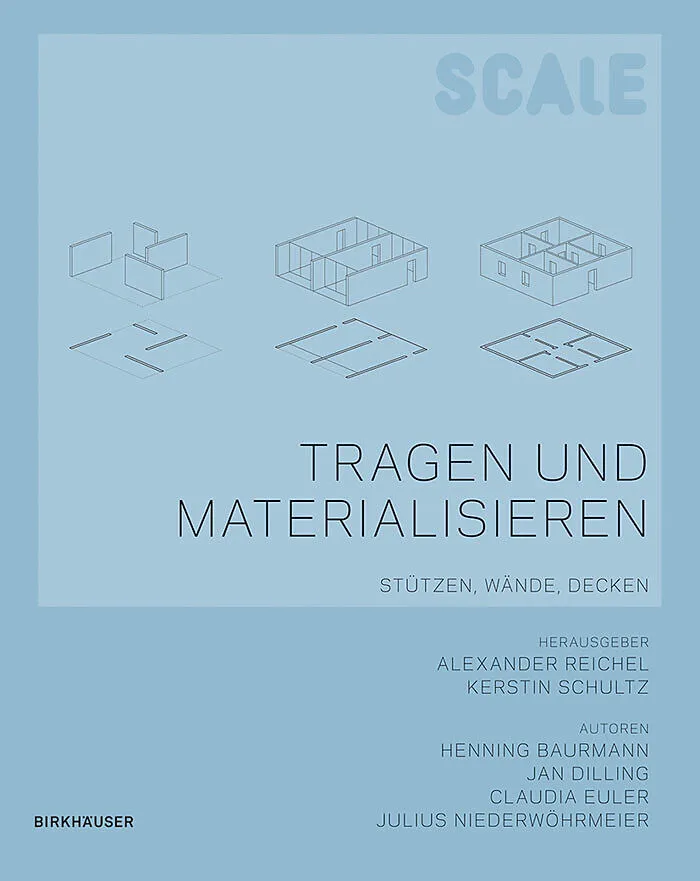
Columns, walls and floors make up the skeleton of nearly every building. This third volume in the series SCALE, Support | Materialise , takes an in-depth look at these load-bearing structures, covering the development and realization of appropriate constructions from idea and design intention all the way to constructional implementation. Following the traditional building methods of massive, cross-wall, and skeleton construction, it points the way toward a material-appropriate constructional approach to these defining structural elements columns, walls, and floors. Special attention is given to how constructional and technical considerations can be harmonized with spatial and formal commitments. The load-bearing elements are organized, described, and explored in detail from a material as well as a formal and constructional perspective. Their practical implementation is illustrated by a series of international examples.
Autorentext
Alexander Reichel
Reichel Architekten BDA, Kassel, zahlreiche Veröffentlichungen und Auszeichnungen, u.a. Gastprofessor für Baukonstruktion an der TU Darmstadt, Autor zahlreicher Artikel und konstruktiver Fachbücher.
Kerstin Schultz
liquid architekten, Darmstadt, Professorin im Fachbereich Architektur, Gebäudesanierung - Schwerpunkt Gebäudeausbau und Gestaltung an der Hochschule Darmstadt, zahlreiche Veröffentlichungen und Auszeichnungen.
Klappentext
Designing and constructing load-bearing building elements
Columns, walls and floors make up the skeleton of nearly every building. This third volume in the series SCALE, Support | Materialise, takes an in-depth look at these load-bearing structures, covering the development and realization of appropriate constructions from idea and design intention all the way to constructional implementation. Following the traditional building methods of massive, cross-wall, and skeleton construction, it points the way toward a material-appropriate constructional approach to these defining structural elements - columns, walls, and floors. Special attention is given to how constructional and technical considerations can be harmonized with spatial and formal commitments. The load-bearing elements are organized, described, and explored in detail from a material as well as a formal and constructional perspective. Their practical implementation is illustrated by a series of international examples.
Inhalt
1.1 Einführung ins Thema
1.2 Baugrundstück
1.3 Gebäude
Welches Tragwerk eignet sich wofür: Massstäblichkeit und Nutzengen: Hallenbauten, Wohnungsbau, Bürobau?
1.4 Gestalterische Qualität von Tragwerken
Unterscheidung zwischen sichtbaren und nicht sichtbaren Tragwerken
1.5 Tragwerke
1.6 statische Systeme
1.7 Anforderungen an Materialeigenschaften
1.8 Nachhaltigkeit
Darstellung der Tragwerkssysteme (Lasten, Tragen, Aussteifen)
Materialisierung (auf Bauteile Wand und Decke bezogen?)
2.2 Skelettbau (inklusive Fachwerkbauweisen)
Tragwerkssystem ( Lasten, Tragen, Aussteifen)
Bauteile, Funktion/ Aufgabe: Stützen, aussteifende Elemente (Kerne, Decken, Wände, Seile...), Träger (hier dann auch Fachwerkträger), ausgefachte Bauteile, Wände und Decken
Materialisierung: Stahl, Stahlbeton, Holz
Anschlüsse/ Zeichnungen: Zusammenfügen der einzelnen Teile, Schichtaufbau, Anschlüsse, Wand Boden Decke, jeweils zwischen gleichen und unterschiedlichen Materialien
2.3 Sonderformen
Projektliste Beispielteil:
Cukrowicz Nachbaur, St. Gerold, Vorarlberg, Österreich, Holz, Passivhaus
Hermann Kaufmann, St. Georgen im Attergau, Österreich, Holz, aus Serienprodukten
Jensen & Skodvin Architekturkontor, Tautra im Tronheimfjord, Norwegen, Holz, Tragwerk aus Brettschichtholz
Arbeitsgemeinschaft für Alpine Bauten, Rolf Furrer Architekten, Sent, Schweiz, Innenausbau historisches Haus
Tham Videgard Arkitekter, 2006, Inseln bei Stockholm, Schweden, Holzhaus
Tham Videgard Arkitekter, 2005, Stocksund, Djursholm, Schweden, Holz-Rahmenbau, Nominated as the best Nordic project, 2005
David Chipperfield, 2009, Berlin, Recyclte Ziegelsteine im Reichsformat, Vormauerschale 25 cm
Fioretti Marquez, 2009, Berlin Köpenik, Ziegelmauerwerk massiv, teilweise innen gedämmt
Laurent Sacioz architete, Schweiz, Erweiterung und Innenausbau in Beton
Burkaerd, Meyer + Partner, 1998-1999, Baden, Schweiz, Mauerwerksbau, massiv
Carouso St John Architects, 2001-2005, London, GB, Mauerwerk, 2005 Brick Awards Special Award/ 2006 RIBA Award/ 2006 London Building of the Year Award/ 2006 RIBA StirlingPrize 2007 European Union Prize for Contemporary Architecture Mies van der Rohe Award
Wespi de Meuron Architekten BSA, 2008, Brione/ Locarno, Schweiz, Natursteinmauerwerk
Morscher Architekten BSA SIA AG, 2008, Bünzmatt III, Schweiz, Beton
Christian Kerez, 1999-2003, Zürich, Beton, Scheibenbauweise
Toyo Ito, Japan, Beton- Schalenbau
Hiendl Schieneis, 2008, Stahlbau
Bucher-Beholz, 2008, München, Holz- Stahlskelettbau ohne tragende Wände