Beschreibung
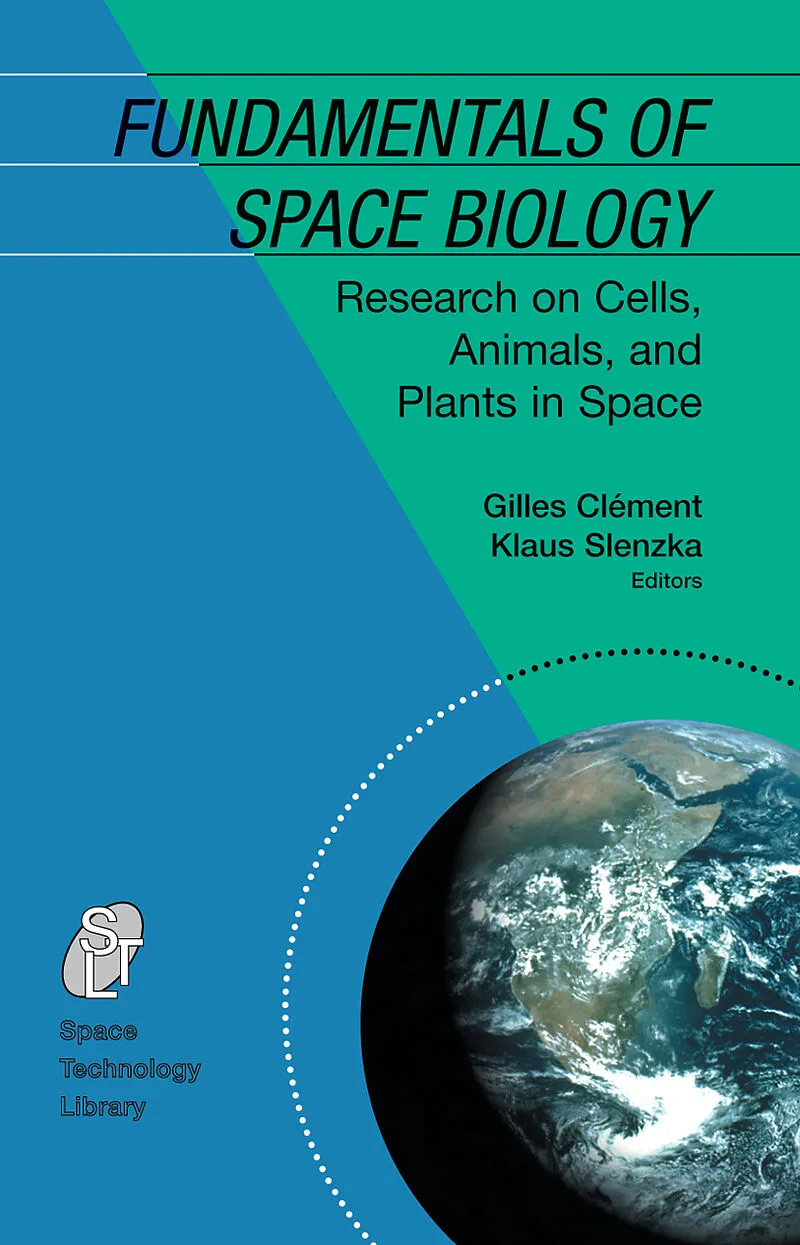
Fundamentals of Space Biology is the third textbook addressing Space Life Sciences in this Space Technology Library series. The first of these books focused on the psychological and psychiatric issues that affect people who live and work in space (Volume 16, S...Fundamentals of Space Biology is the third textbook addressing Space Life Sciences in this Space Technology Library series. The first of these books focused on the psychological and psychiatric issues that affect people who live and work in space (Volume 16, Space Psychology and Psychiatry). The second book described the physiological and medical issues of living in a space environment (Volume 17, Fundamentals of Space Medicine). The objective of this third book was to review the effects of spaceflight on less complex biological systems, from single cells to animals and plants. Indeed, to better understand the changes at the function level, it is necessary to comprehend the changes at cellular and tissue levels. Studies of cell cultures, for example, allow the investigation of the indirect effects of gravity; i.e., those which occur not because of changes in the stimulation of dedicated gravity-sensing organs, but because of the new physical properties resulting from the reduction in gravitational force within the cell.
Gives a unique account of what we know about the effects of zero gravity on life Features an introduction and review of past, current and future research in space biology in layman's terms For specialists and non-specialists alike Each chapter includes perspectives for future research and a list of references
Autorentext
Gilles Clément received Doctoral degrees in Neurobiology from the University of Lyon in 1981 and in Natural Science from the University of Paris in 1986. Dr. Clément is currently Professor of Space Life Sciences in International Space University (ISU), Strasbourg, France. Prior to this position, he was Director of Research from the French National Center for Scientific Research (CNRS), Toulouse, France. Research in space life sciences has been his primary focus with experiments on Salyut-7 (1982), MIR (1988), and on more than 25 Space Shuttle flights (1985 present). His research topics include influence of microgravity on posture, eye movements, spatial orientation, and cognition in humans. To date, he gathered data on more than 100 astronauts, during and after space missions on the Space Shuttle and the International Space Station. Dr. Clément has written more than 100 peer-viewed research papers in scientific journals.
Klappentext
This book is intended as an overview at the undergraduate or early university level and describes the effects of spaceflight at cellular and organism levels. Past, current, and future research on the effects of gravity--or its absence--and ionizing radiation on the evolution, development, and function of living organisms is presented in layman's terms by researchers who have been active in this field. The purpose is to enlighten science and non-science readers to the benefits of space biology research for conducting basic and applied research to support human exploration of space. Also covered are the advantages of approaching the space environment as a laboratory for scientific, technological, and commercial research.
The first chapters present an overview of the major focuses of space research in biology, as well as the history and the list of animals and plants that have flown in space to date. The following chapters describe the main results of space studies in gravitational biology, developmental biology, radiation biology, and biotechnology. A brief background is given in each chapter, so that only a minimum of prior coursework in biology is necessary for full comprehension.
Inhalt
to Space Biology.- Animals and Plants in Space.- Facilities for Gravitational Biology.- Cell Biology.- Animal Development in Microgravity.- Plant Development in Microgravity.- Radiation Biology.- Biotechnology in Space.
Tief- preis